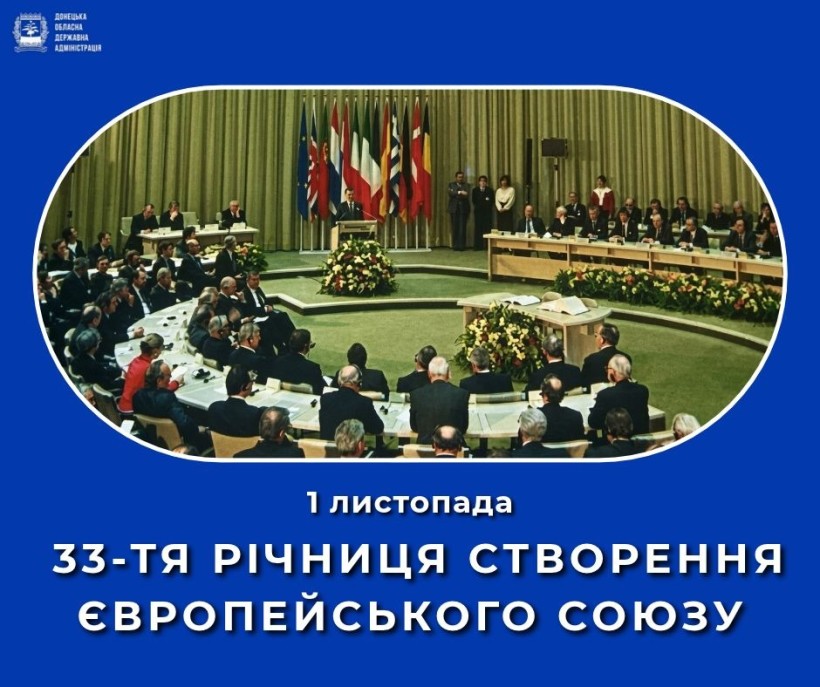
On November 1, 1993, the Maastricht Treaty came into force, promoting the unification of European nations in their pursuit of peace, stability, and shared economic prosperity. The treaty was signed on February 7, 1992. It laid the foundation for the creation of the European Union as we know it today.
After World War II, European countries sought ways to ensure lasting peace, rebuild their devastated economies, and avoid new military conflicts. In 1957, the signing of the Treaties of Rome established the European Economic Community (EEC) and the European Atomic Energy Community (Euratom), which laid the groundwork for further political and economic integration among European nations. The idea of a united Europe began to gain momentum, and eventually the need arose for a new, more comprehensive approach to cooperation among nations.
The Maastricht Treaty served as the starting point for the creation of the European Union. It established the three main pillars of the EU: the European Communities, a common foreign and security policy, and cooperation in the areas of justice and home affairs. The treaty also laid the groundwork for the introduction of a single currency—the euro—which was officially adopted in 1999. The founding of the EU gave its members the opportunity to move and work freely within the Union, to jointly address issues of security and human rights protection, and to ensure high environmental and social standards. The European Union has also become one of the most powerful economic communities in the world.
Today, the European Union comprises 27 member states and ensures a high level of integration and cooperation. The single market has boosted economic activity, reduced trade costs, and created millions of jobs. The EU has become a model for regional unions around the world, demonstrating how countries with different cultures, languages, and histories can cooperate for the common good. At the same time, the war in Ukraine has posed a serious challenge for the European Union, which, despite the difficulties, has proven itself to be a reliable partner for Ukraine.
Russia’s war against Ukraine has threatened the entire European security architecture established after World War II. This war has compelled EU countries to strengthen their defense capabilities, deepen cooperation with NATO, support Ukraine in its struggle for sovereignty, and rethink the foundations of their foreign and security policies. EU countries have realized that stability in Eastern Europe is critical to the continent’s overall security, and that indifference to Russia’s aggression could pose a threat to the European Union itself.
At the same time, the issue of EU enlargement has once again become a pressing concern. On February 28, the fifth day of the largest war on the European continent since World War II, Ukraine submitted its application for EU membership. This step was an asymmetric response to the threat to Ukraine’s very existence and was dictated by the need to preserve all the achievements and transformations in European integration that Ukraine had been implementing since 2014
On March 10–11, 2022, at an informal summit of EU member states’ leaders in Versailles, the European Council stated that “Ukraine belongs to our European family” and invited the European Commission to issue its opinion on Ukraine’s application for EU membership.
In June 2022, Ukraine was granted EU candidate status. After receiving this status, all branches of government in Ukraine began preparing the country for accession to the European Union amid Russia’s ongoing full-scale military aggression against Ukraine.
Negotiations on EU accession are organized into six thematic clusters. Currently, four of the six clusters are open:
Fundamentals of the Accession Process
This cluster, opened in June 2026, covers the core values and principles upon which the EU is built—from the rule of law to strong democratic institutions.
External Relations
This cluster, launched in July 2026, sets out the parameters for how candidate countries align their international, trade, and defense policies with the EU.
Internal Market
This cluster, opened in October 2026, covers EU policies related to the free movement of goods, services, workers, and capital.
Competitiveness and Inclusive Growth
This cluster, opened in October 2026, covers EU policies such as taxation, economic and monetary policy, industry, employment, education, and research.
During the negotiations, Ukraine must implement reforms aimed at aligning with EU laws and standards, also known as the acquis. Even during the war, Ukraine has demonstrated an impressive ability to achieve results in reform.