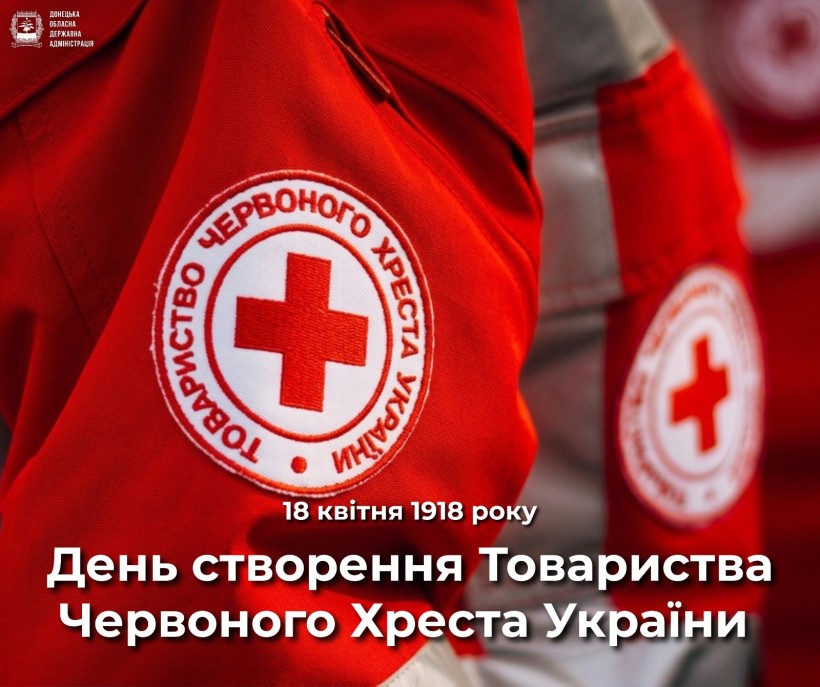
The founding of the Ukrainian Red Cross Society is linked to the events of 1918, when, amid the formation of Ukrainian statehood, a national humanitarian organization was established to provide assistance to those affected by military conflict, epidemics, and social crises.
On April 15–18, 1918, a congress was held in the Ukrainian capital, at which the Ukrainian Red Cross Society was established. The forum brought together activists of the movement, as well as representatives of medical and health organizations from the Union of Zemstvos and the Union of Cities. April 18, 1918, marks the official start of the Ukrainian Red Cross. Its founding fathers were a group of public figures and medical professionals led by Yevmen Lukashevych and Boris Matyushenko.
During the Ukrainian Revolution of 1917–1921, the organization played a vital role in providing medical care to the wounded, supporting the civilian population, combating epidemics, and meeting people’s basic needs amid the harsh conditions of war and instability. Volunteers and medical workers often operated in dangerous conditions, saving lives and setting an example of self-sacrifice and service to society. At the initiative of the Ukrainian Red Cross Society, public laundries and bathhouses were built, and paramedic and midwifery stations, pharmacies, and hygiene supply stores were established. During the famine of 1921–1923, free soup kitchens were organized, and food rations were distributed to peasants.
In 1923–1925, the Ukrainian Red Cross officially joined the Union of Red Cross and Red Crescent Societies of the USSR.
Starting in 1923, the Society began providing military-medical training to the population for the defense of the state. Consequently, the focus shifted from humanitarian to military-defense activities.
By the 1930s, the Ukrainian Red Cross Society owned 119 medical facilities, 206 preventive and pediatric institutions, a quarter of all tuberculosis dispensaries, 36 health resorts, 800 bathhouses, 300 paramedic and midwifery stations, 400 pharmacies and stores selling sanitary and hygiene products. However, in 1938, by a resolution of the Council of People’s Commissars, all facilities belonging to the Ukrainian Red Cross were seized. The organization’s autonomy was completely eliminated, and it was subsequently regarded as part of the state healthcare system.
In the 1940s–1970s, the Red Cross Society of the Ukrainian SSR placed great importance on continuing to strengthen ties and cooperation with health authorities and institutions, as well as on engaging the general public in efforts to address the sanitary consequences of the war. The Society began restoring a network of medical facilities, as well as bathhouses, health resorts, and dining halls. The Red Cross Society of Ukraine established its own medical service, comprising 180,000 volunteers.
In 1986, more than 10,000 volunteers, members of medical posts, and Red Cross teams participated in the evacuation and resettlement of those affected by the Chernobyl disaster, providing them with medical, social, psychological, and material assistance.
By Decree of the President of Ukraine No. 548/92 of October 28, 1992, “On the Red Cross Society of Ukraine,” the Red Cross Society of Ukraine was recognized as the sole National Red Cross Society on the territory of Ukraine, authorized to assist government authorities in their humanitarian activities.
On September 29, 1993, the Ukrainian Red Cross Society finally received official recognition from the International Committee of the Red Cross in Geneva, and on October 28, it became a full member of the International Federation of Red Cross and Red Crescent Societies.
Today, amid a full-scale war, the role of the Ukrainian Red Cross Society has once again taken on special significance. Volunteers and staff of the organization work in frontline regions and the rear, evacuate the population, provide first aid, support internally displaced persons, and deliver humanitarian aid and psychological support. Their work continues the traditions established over a century ago.