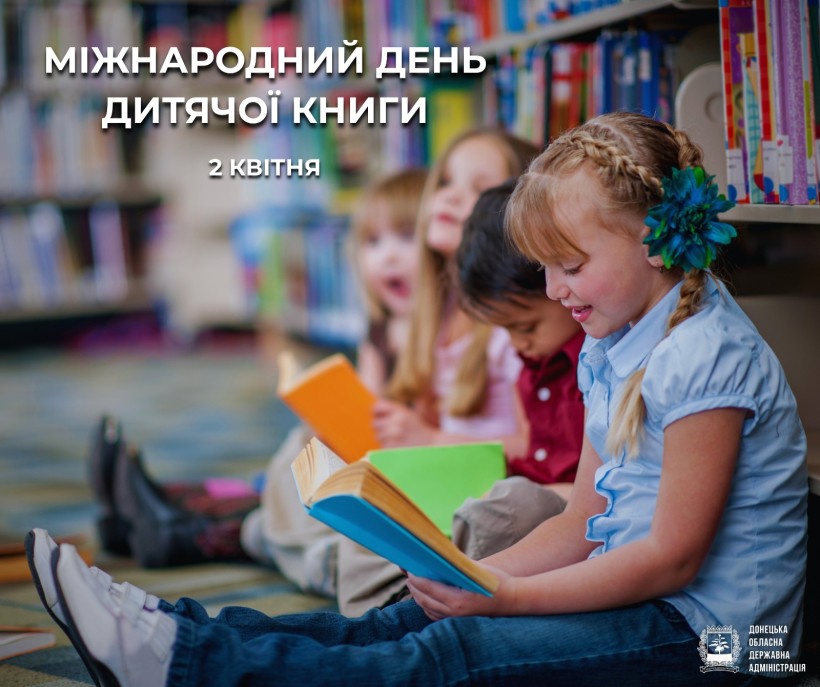
Every year on April 2, the birthday of the renowned Danish storyteller Hans Christian Andersen, International Children’s Book Day is celebrated. The holiday was established in 1967 on the initiative of the International Board on Books for Young People with the aim of drawing attention to children’s literature, promoting reading, and fostering in children a love of books as an important source of knowledge and spiritual development.
Children’s literature as a genre did not emerge until relatively recently. Entertaining and instructive stories were mostly passed down by word of mouth. Lullabies, fairy tales, and folk tales formed the beginnings of children’s literature. However, the first serious steps toward creating children’s literature did not appear until the 18th century, after the concept of childhood began to be discussed. Prior to that, children were treated as equals to adults, so no separate specialized literature was published for them.
In 1744, the first entertaining children’s book, titled “A Little Pretty Pocket Book,” was published. Its author and publisher was John Newbery, a pioneer of children’s books of that era. The book stood out for its beautiful cover and captivated children with fun games and vivid illustrations.
The development of printing, the spread of literacy among the general public, the emergence of new readers, and the drop in prices for printed publications—all of this led to an increase in demand for children’s books. And 1865 was marked by the emergence of a new style in children’s literature, as Lewis Carroll’s fantasy book *Alice’s Adventures in Wonderland* was published.
The first printed children’s book in Ukraine appeared in 1574. It was an educational publication titled “Ruska Gramatika, or Bukvar.” The textbook was published by the first Ukrainian publisher, Ivan Fedorov, at a printing house in Lviv. The publication included the alphabet, as well as reading samples and exercises. At that time, children’s books were mostly educational. It wasn’t until the 18th century that books for reading began to appear.
Well-known children’s writers of that era included Ivan Maksymovych, Ignatius Maksymovych, Ivan Pashkovsky, Hryhorii Skovoroda, and others. It was thanks to Hryhorii Skovoroda that educational ideas first appeared in children’s literature. His well-known children’s works include “Oi, Ptashino-Zhovtoboko,” “Hey, Fields, Green Fields,” various fables, epigrams, and more.
Ivan Franko made a tremendous contribution to the development of Ukrainian children’s literature. Toward the end of the 18th and beginning of the 19th centuries, fairy tales and stories for young readers began to appear. The author does not simply write fairy tales but seeks to guide children’s imaginations from fairy-tale characters and events toward the realities of real life. Franko’s stories depict the lives of ordinary rural children—such as “Little Myron,” “Hryts’ School Lessons,” “Under the Fence,” “The Pencil,” and many others. The children were captivated by the fairy tale “Mikyta the Fox.”
Contemporary Ukrainian children’s literature is represented by a number of prominent figures, including Vsevolod Nestayko, Kateryna Mikhalitsyna, Tatusya Bo, Sashko Dermanksy, Halyna Vdovichenko, Serhiy Hrydin, and many others.
Literary and artistic events held in the Donetsk region prior to the full-scale Russian invasion of Ukraine—such as the “Kalmius” Literary and Art Festival and the New York Literary Festival—introduced young readers to contemporary children’s literature, fostering a culture of reading.
Unfortunately, today, the enemy continues its deliberate destruction of Ukrainian culture, demolishing printing houses, shelling, and burning libraries along with their collections. In the occupied territories, there have been numerous reported cases of the seizure and destruction of Ukrainian fiction books. All of this is part of a strategy to destroy Ukrainian identity and the nation’s cultural code.
International Children’s Book Day is not just about literature. It is about the bond between generations, about the power of words that can support, teach, and inspire even in the most difficult times. Today, Ukrainian children’s books are about both childhood and resilience: they help young Ukrainians grow up with light in their hearts, faith in goodness, and an awareness of their own role in the country’s future.