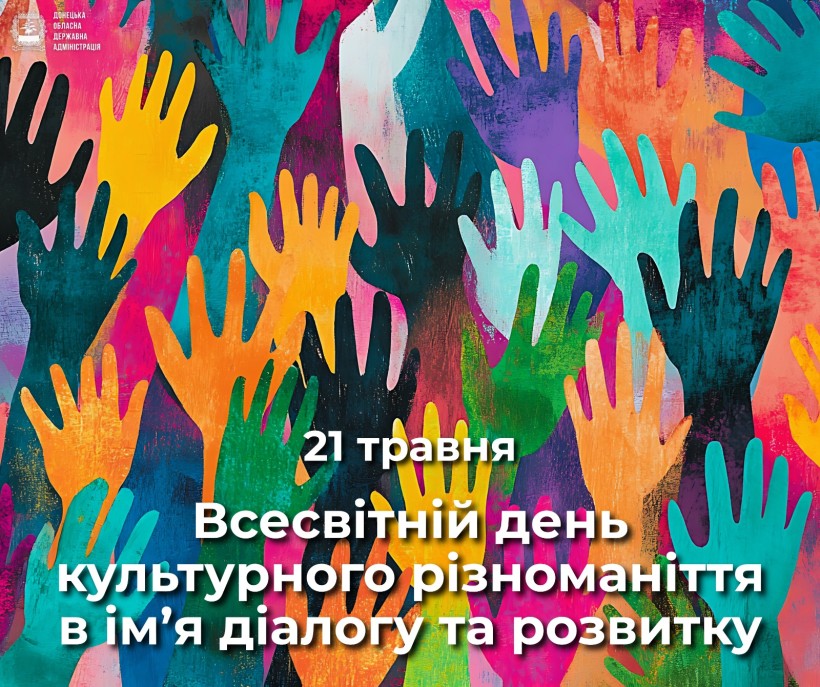
Every year on May 21, the world celebrates the International Day for Cultural Diversity for Dialogue and Development. This date was established in accordance with UN General Assembly Resolution A/RES/57/249 in 2002, following UNESCO’s adoption of the Universal Declaration on Cultural Diversity.
The purpose of this day is to promote respect for the cultural diversity of the world’s peoples, support intercultural dialogue, mutual understanding, and peaceful coexistence. In today’s world, culture is not only an important part of national identity but also a powerful factor in the development of society, the strengthening of democracy, and international cooperation.
Cultural diversity encompasses the languages, traditions, arts, customs, spiritual values, and historical heritage of different peoples. It is through culture that peoples preserve their identity, pass on historical memory to future generations, and shape their own worldview. At the same time, mutual respect for cultural differences is the foundation of tolerance and constructive dialogue in a multinational world.
For Ukraine, this holiday holds special significance. Ukrainian culture has been shaped over the centuries by various historical and regional traditions, creating an exceptionally rich and diverse cultural heritage. On the territory of Ukraine, Ukrainians, Crimean Tatars, Greeks, Jews, Bulgarians, Armenians, and representatives of many other peoples coexisted peacefully and interacted, contributing to the development of the state.
A particular example of a multinational region is the Donetsk region. Historically, the region developed as an industrial and commercial center where representatives of various ethnic communities lived. According to the 2001 All-Ukrainian Population Census, Ukrainians accounted for about 56.9% of the region’s population, Russians for 38.2%, and the region was also home to Greeks, Belarusians, Tatars, Armenians, Jews, Germans, and representatives of other nationalities. Donetsk Oblast was one of the regions of Ukraine with the greatest ethnic diversity and the largest proportion of Greeks in Ukraine. The unique cultural heritage of the Azov region was shaped by Greek communities, which had lived in the territory of the modern region since the 18th century and preserved their own traditions, language, and culture.
Historically, distinct cultural characteristics could be observed in different parts of Donetsk Oblast: in the south of the region, the influence of Greek and Azov cultures was more pronounced; in industrial cities, a multinational urban environment took shape; and the northern regions preserved the traditions of Ukrainian Slobozhanshchyna culture to a greater extent. It was precisely this blend of different cultures that created the region’s unique identity.
In the context of Ukraine’s War of Independence, the issue of protecting cultural heritage and national identity takes on particular importance. Russian aggression is accompanied not only by the destruction of cities and villages, but also by attempts to eradicate Ukrainian culture, language, historical memory, and cultural monuments. That is why, today, the preservation of cultural diversity is an integral part of the struggle for Ukraine’s independence and future.
Despite the difficult circumstances, Ukrainian artists, museum professionals, librarians, educators, and cultural figures continue their work, promoting Ukrainian art around the world, documenting the events of the war, and preserving cultural heritage for future generations. Ukrainian culture has become an important voice of truth and a symbol of our people’s resilience on the international stage.
Supporting cultural diversity in the context of war is not only about preserving traditions, but also about strengthening the nation’s internal unity and respecting the rights of every citizen.