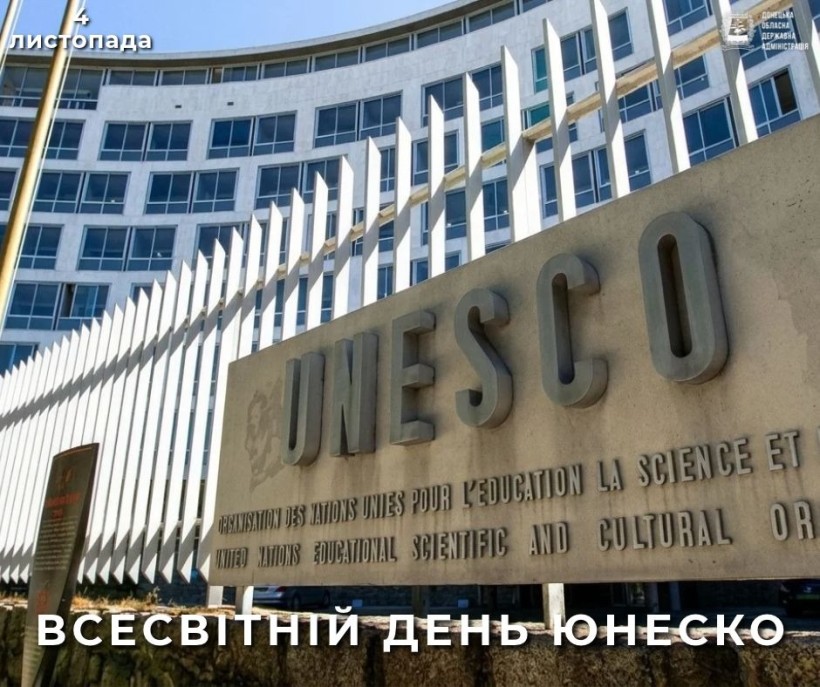
November 4 marks UNESCO Day—a date associated with the founding of the United Nations Educational, Scientific, and Cultural Organization.
The organization was founded after World War II with the aim of promoting peace and international cooperation through education, science, culture, and the dissemination of knowledge. Its Constitution was signed on November 16, 1945, in London by representatives of 44 states, and on November 4, 1946, after ratification by twenty countries, it entered into force. UNESCO’s headquarters are located in Paris, France.
The Organization’s primary mission is to strengthen peace and security by fostering cooperation among nations, protecting human rights, and promoting accessible and high-quality education, scientific research, cultural diversity, and freedom of information.
One of UNESCO’s best-known areas of activity is the protection of the world’s cultural and natural heritage. The organization promotes the preservation of historical monuments, architectural ensembles, natural sites, and intangible cultural traditions that are of value to all of humanity.
UNESCO brings together 194 member states and 12 associate members. Notably, the United States officially rejoined UNESCO in July 2023 after a five-year hiatus.
Ukraine, as a founding member of the United Nations, became a member of UNESCO on May 12, 1954. And as early as 1962, a permanent mission was opened for Ukraine.
UNESCO explores what forms of education, science, culture, and communication will be needed in the future and facilitates the exchange of research findings among member states; it prepares and adopts recommendations; and provides expert services to member states to help them define their development policies and design projects, among other things. The organization documents the consequences of armed conflicts, keeps records of damaged sites, assesses damage to cultural heritage, and takes measures to protect it.
As of 2026, the list of UNESCO World Heritage Sites in Ukraine includes eight sites: seven cultural sites and one natural site (accounting for 0.69% of the total number of World Heritage Sites worldwide). Among them, St. Sophia Cathedral in Kyiv and the Kyiv-Pechersk Lavra are jointly recognized as masterpieces of human creative genius. Additionally, seven Ukrainian elements have been inscribed on the UNESCO List of Intangible Cultural Heritage, reflecting the unique traditions, crafts, and performing arts of our people.