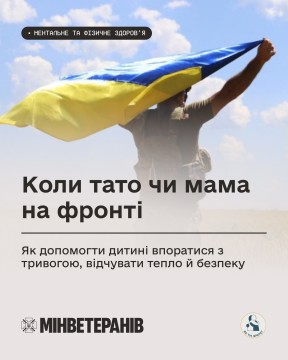
When a parent is deployed, a child experiences this situation in their own way. They may feel sad, anxious, angry, or confused. And even if it’s difficult for the adults themselves, it is their attention and presence that help the child maintain a sense of stability and security.
❗️How to avoid common mistakes
🔷When a father or mother is at war, children have a particularly acute need to feel valued.
They may feel forgotten or “superfluous,” since adults’ main focus is often on the war, the news, or daily concerns.
🔷That’s why every moment you spend paying attention to your child, consulting with them, or involving them in simple tasks or plans serves as a reminder: “I’m important. I’m needed. I’m part of the family, even if Dad or Mom is far away right now.”
🔷Words can hurt, too. Especially for children who are already anxious because their dad or mom is at war. Certain phrases only intensify the pain and create a sense that the child is “superfluous” or “unimportant.”
🔷Avoid statements like these:
❌“You’ll understand when you’re older.”
❌“That’s none of your business.”
❌“This isn’t the time to worry about your problems.”
❌“Don’t bother me—things are hard enough as it is.”
🔷Also, avoid using generalizations like “You always…” or “You never…”. This way, the child feels loved and accepted, even if they sometimes make mistakes. This is especially important when a loved one is far away at war, and a sense of security is needed more than ever.
When a parent is on the front lines, it’s very important for a child to feel trusted and to understand what’s happening. This helps ease anxiety and maintain a sense of security. Calm and honest explanations about a parent’s service help reduce stress and preserve trust. If you don’t have all the information, it’s okay to say so directly: it’s important for the child to know that the adults are nearby and staying in touch.
At the same time, being honest when talking to a child is primarily about providing clear explanations of the situation, not about conveying your own fears. It is precisely this kind of open and attentive communication that helps a child cope more easily with separation and feel the support of their family.
ℹ️Information from the Ministry of Veterans Affairs prepared based on materials from the “How Are You, Brother?” project guide. This is a volunteer project designed to compile best practices on how to maintain relationships, reconnect, and support one another during wartime, and to share these practices with all Ukrainians, both military personnel and civilians.
The guides and lectures are free. You can download the guides from the website or order a printed copy (you will only need to pay for delivery via Nova Poshta) at the link: https://yakty.com.ua/shop