Every year on July 30, the world community celebrates World Day Against Trafficking in Persons. This date is designed to draw attention to one of the most serious crimes against human rights, freedoms and dignity, as well as to remind us of the need for joint action to prevent all forms of exploitation.
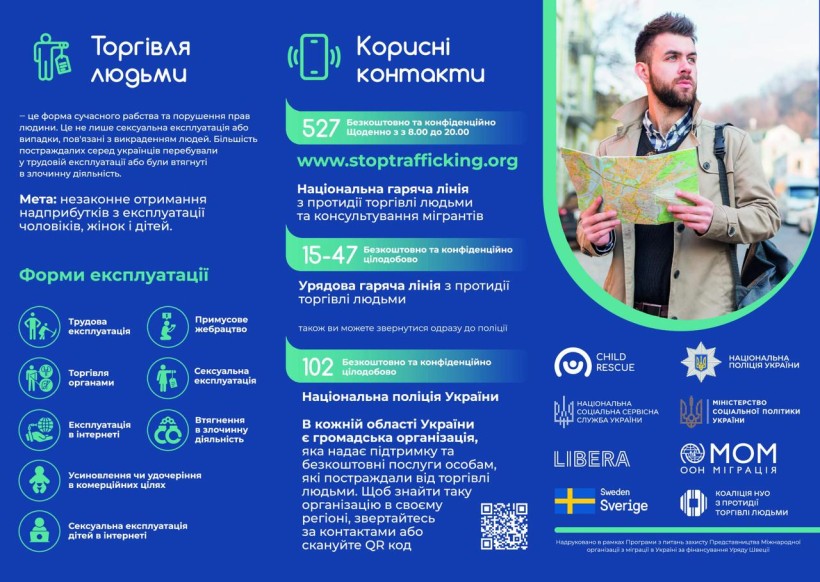
Human trafficking can manifest itself in the form of labor or sexual exploitation, forced labor, involvement in begging or illegal activities, use in armed conflicts, forced marriage, organ removal and other forms of coercion and exploitation.
Any person can be a victim of this crime, regardless of age, gender, education, financial situation or place of residence. Human trafficking is not necessarily associated with crossing a state border. Recruitment, movement and exploitation can take place both abroad and within Ukraine.
In conditions of full-scale war, the risks of falling into a situation of human trafficking increase significantly. Forced displacement, loss of housing and work, difficult financial situation, search for a safe place to live or work increase people's vulnerability to criminals.
Residents of the Donetsk region who were forced to leave their homes due to military operations, are looking for work in other regions of Ukraine or are planning to work abroad should be especially careful.
Possible danger may be indicated by:
* promise of excessively high wages without requirements for education, qualifications or experience;
* lack of reliable information about the employer, intermediary and working conditions;
* offer to work without an official contract;
* demand to make an urgent decision and not to inform anyone about the employment;
* request to hand over a passport, bank card, mobile phone or other personal belongings;
* demand to work off travel, housing or paperwork expenses;
* restriction of freedom of movement and communication with loved ones;
* psychological pressure, threats or physical violence;
* coercion to commit fraudulent, financial or other illegal acts.
To protect yourself, check the information about the employer and the intermediary, insist on concluding a clear written contract, leave copies of documents and information about your whereabouts with loved ones, and agree on regular communication. Do not give your passport, bank cards, passwords, PIN codes and other confidential data to strangers.
If your documents have been taken away from you, your freedom of movement is restricted, you are forced to work without pay, you or your loved ones are threatened, or you are forced to perform illegal acts, this may be a situation of human trafficking.
A person who has been trafficked is not guilty of the crime committed against them. They have the right to protection, confidentiality, free assistance and the establishment of the status of a person who has been trafficked.
Where to turn for help:
* 102 – National Police of Ukraine;
* 1547 – government hotline on combating human trafficking;
* +38 (044) 284 19 43 – for calls from Ukrainian citizens abroad;
* 527 – National toll-free hotline for combating human trafficking and counseling migrants, for calls from mobile phones;
* 0 800 107 527 – National toll-free hotline for combating human trafficking and counseling migrants, for calls from mobile or landline phones.