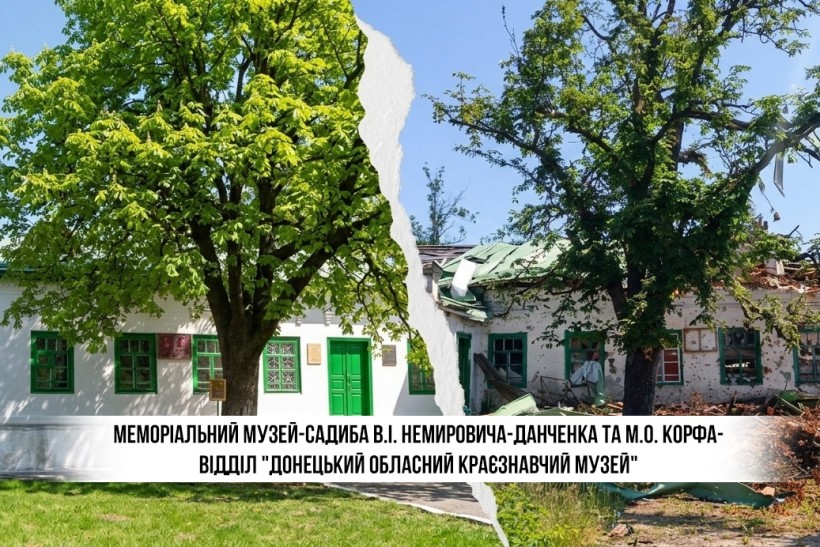
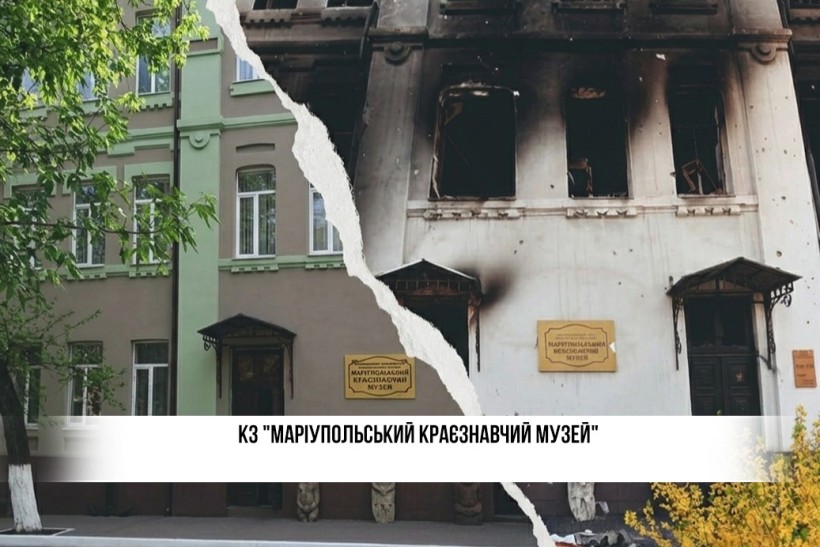
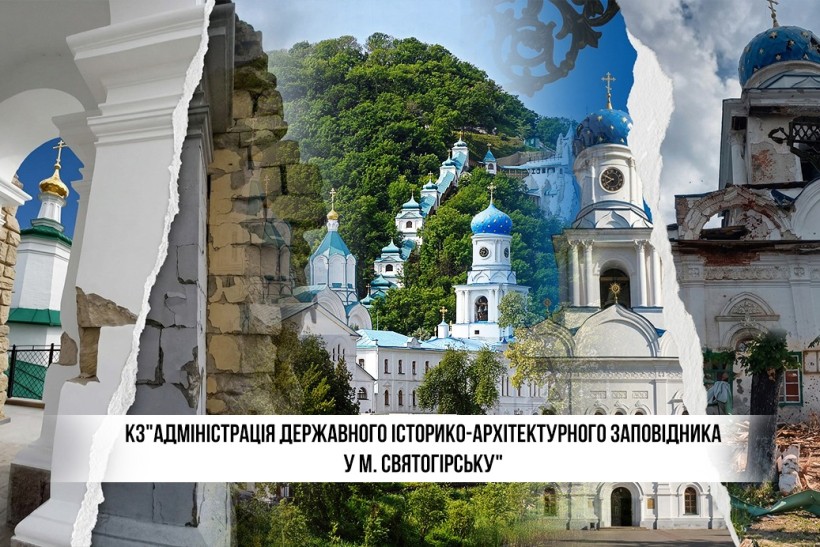
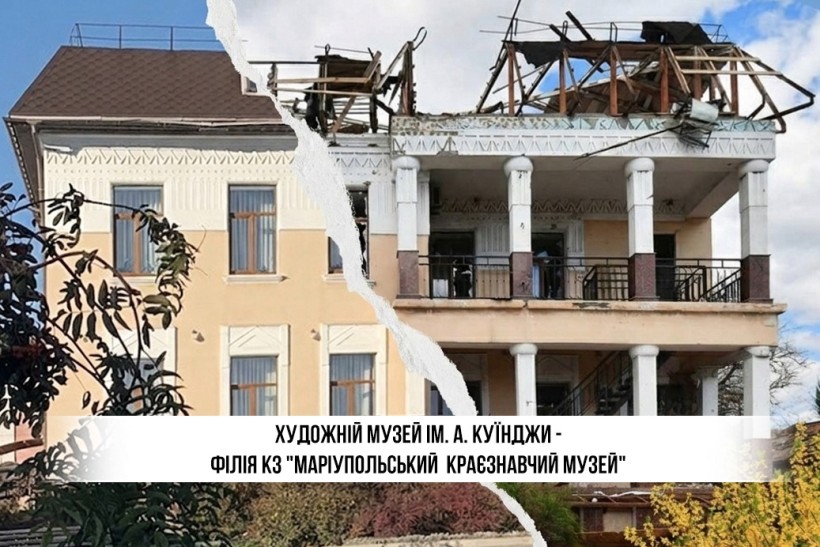
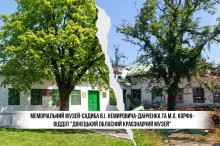
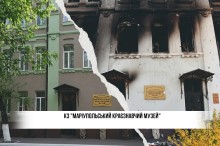
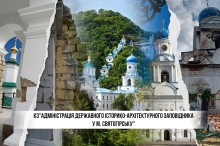
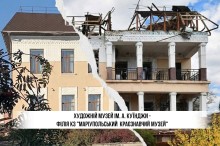
Every year on May 18, the world celebrates International Museum Day—a day when one realizes all too keenly that a museum is not merely a repository for antiquities. It is a place where a people’s memory, their voice, and their roots are preserved. For Donetsk Oblast, museums have been and remain true treasures of history, culture, and spirituality. And that is precisely why they have become one of the targets of Russian aggression.
Until 2014, the Donetsk region had one of the most extensive museum networks in Ukraine. Dozens of museums operated in Donetsk, Mariupol, Bakhmut, Sviatohirsk, Sloviansk, Kramatorsk, Horlivka, Makiivka, the Volnovakha district, and other parts of the region. Their collections housed hundreds of thousands of exhibits—from archaeological finds of the Scythian era to paintings by renowned artists, from early printed books to everyday objects of Ukrainian peasants and Greeks of the Azov region.
The heart of the region’s museum system was the Donetsk Regional Museum of Local History. Its collections told the story of the region from ancient times to the present day. It housed Scythian gold jewelry, Sarmatian weapons, paleontological finds, antique maps, documents on the development of mines and metallurgical plants, and photographs of the founders of industrial Donetsk Oblast.
Alongside it, the Donetsk Regional Art Museum—one of the largest art museums in eastern Ukraine—played an important role. Its halls displayed thousands of works of Ukrainian and world art: icons, paintings, prints, and sculptures. Here, one could see works by Ivan Aivazovsky, Tetyana Yablonska, Mykola Pymonenko, and other prominent artists.
The spiritual center of the Donetsk region is the Svyatogorsk State Historical and Architectural Reserve. Ancient caves, monastic structures on the chalky slopes of the Siverskyi Donets River, and St. Nicholas Church—all of this has created a unique image of a Ukrainian sanctuary that combines history, architecture, and nature.
In the Volnovakha district, amidst the steppe, lies the unique Museum of the History of the Velykoanadol Forest. It tells the story of an amazing experiment to create a man-made forest in the Ukrainian steppe. Its exhibits include rare documents, herbariums, wood samples, and materials on the work of the outstanding forester Viktor von Graff.
A true gem of folk culture is the open-air museum in the Kramatorsk district. In old huts, a granary, a smithy, and a windmill, a 19th-century Ukrainian village comes to life. Here you can see household items, embroidered clothing, tools, and children’s toys that convey the spirit of our ancestors’ traditional way of life.
In Horlivka, there was a museum unlike any other in Ukraine—the Vladimir Razumov Museum of Miniature Books. Its collection housed over nine thousand books from various countries around the world. Some of them were only a few millimeters in size. Here, visitors could see a tiny “Kobzar,” miniature dictionaries, religious texts, and true masterpieces of the art of printing. At the same time, the Horlivka Art Museum held an important place, its collections housing works of Ukrainian and world art, including one of the largest collections in Ukraine of works by Nicholas Roerich and other artists.
Mariupol held a special place in the cultural life of the Donetsk region. The Mariupol Local History Museum housed archaeological finds from the Azov region, ethnographic collections of the Azov Greeks, and ancient documents and photographs. Its branch—the Arkhip Kuindzhi Art Museum—featured works by Kuindzhi himself, as well as paintings by Ivan Aivazovsky and other prominent artists.
The true gems of the Sloviansk Local History Museum’s collection are a bronze water jug (aquamanile) from the 12th–13th centuries—a rare example of medieval artistic casting, a Scythian akynak, a hoard of silver coins from the time of the Khazar Khaganate (Tsaryno Gorodishche), as well as a unique collection of works by Natalia Maksymchenko—an outstanding artist originally from Sloviansk. Her work combined folk motifs, expressive plastic forms, and bold artistic experiments with glazes and color. The artist created original sculptural compositions, decorative vases, tableware sets, and ceramic panels, a significant portion of which were not mass-produced and existed as unique works of art.
The cultural value of the Bakhmut Local History Museum lies in its archaeological finds from the Bakhmut region, materials on the development of salt production in the 17th–18th centuries, as well as documents and photographs related to the history of the city’s industry, education, and cultural life. The museum’s collection includes materials from archaeological excavations, paintings and graphic works, collections of art glass and ceramics, coins and banknotes, as well as documents and photographs from the private archives of Bakhmut residents.
The Druzhkivka History and Art Museum houses unique archaeological, historical, and art collections that reflect the region’s centuries-old history. Of particular scientific value is the collection of fossilized araucaria trees, approximately 250 million years old, found within the Kleban-Byk Regional Landscape Park. These paleontological specimens are a rare testament to the geological past of the Donetsk region and are of great importance for natural science research. A special highlight of its holdings is the collection of porcelain from the Druzhkivka Porcelain Factory. It features tableware sets, vases, figurines, and original decorative items from the second half of the 20th century. This collection is vivid proof that the industrial region developed not only its manufacturing potential but also its own aesthetic tradition and school of decorative and applied arts.
After 2014, many museums in the Donetsk region found themselves in temporarily occupied territory. The collections of the regional local history and art museums remained in Donetsk; in Horlivka, the museum of miniature books and the art museum remained; and in Makiivka, the local history museum remained. Ukrainian specialists have no access to these collections and therefore cannot monitor the conditions under which they are stored.
After the occupation of Mariupol in 2022, news of yet another crime against Ukrainian culture spread around the world. Russian occupiers removed the most valuable exhibits from the city’s museums. Among them were original works by Arkhip Kuindzhi and Ivan Aivazovsky, rare icons, archaeological finds, and ethnographic objects from the collections of the Mariupol Local History Museum and its branch, the Arkhip Kuindzhi Art Museum. A separate loss was the unique collection of medal art by the world-renowned Mariupol artist Yukhim Kharabet, which was housed in the Yukhim Kharabet Museum of Medal Art. The collection included original medals, plaques, miniature jewelry, and sketches dedicated to the history of Ukraine, the Cossacks, prominent cultural figures, and events in national history. This collection was of exceptional artistic value and was the only specialized museum collection of its kind in Ukraine. The occupiers transported part of these cultural treasures to the temporarily occupied city of Donetsk. Such actions constitute a gross violation of international humanitarian law and demonstrate a deliberate policy of appropriating and destroying Ukraine’s cultural heritage.
Currently, the Mariupol Local History Museum is verifying and documenting information about museum items stolen during the occupation in order to prepare official requests through Interpol for their international search and return to Ukraine. In August 2025, the bone figurine “Mariupol Bull” was included in the international list “Ten Most Wanted Antiquities,” published annually by The Antiquities Coalition to draw the attention of the international community, auction houses, collectors, customs, and law enforcement agencies to stolen cultural property and to facilitate its search and return.
Despite all the losses, the museum sector in Donetsk Oblast is alive and well. Relocated museums continue to operate, digitize their collections, and hold exhibitions and educational events. They prove that culture can be temporarily deprived of its walls, but its essence cannot be destroyed.
The museums of Donetsk Oblast are not just exhibits behind glass. They are a testament to the fact that our region has deep historical roots, a rich culture, and its own unique voice.
And as long as we remember these treasures, our history, our identity, and our Ukraine will live on. Let us remember: by protecting our cultural heritage, we protect ourselves.
On International Museum Day, we express our sincere gratitude to museum workers in Donetsk Oblast and throughout Ukraine for their daily work, dedication, resilience, and professionalism in preserving cultural heritage even under the most difficult conditions.