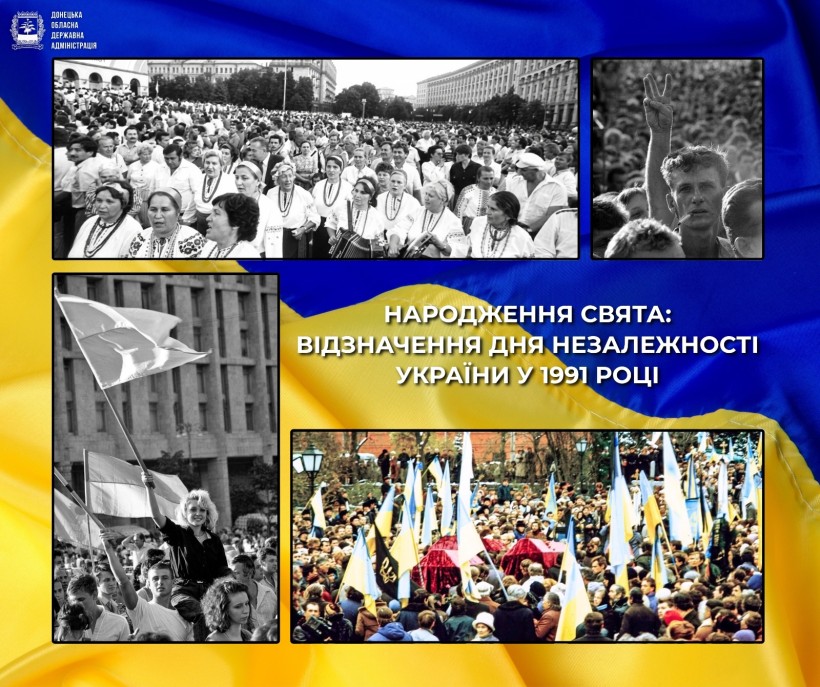
On August 24, 1991, the Supreme Council of the Ukrainian SSR adopted the Act of Declaration of Independence. The document served as legal confirmation that Ukraine is an independent democratic state. A few months later, on December 1, millions of people voted to ratify this decision in a referendum. Since then, August 24 has been Ukraine’s official Independence Day, and since 1992, this date has been enshrined in law as the nation’s main public holiday. It is the day when the country officially regained the right to live its own life after long centuries of foreign rule. In 2026, we will celebrate the 35th anniversary of that fateful date. On the occasion of this national holiday, we invite you to look back at how Ukrainians have celebrated Independence Day over the years.
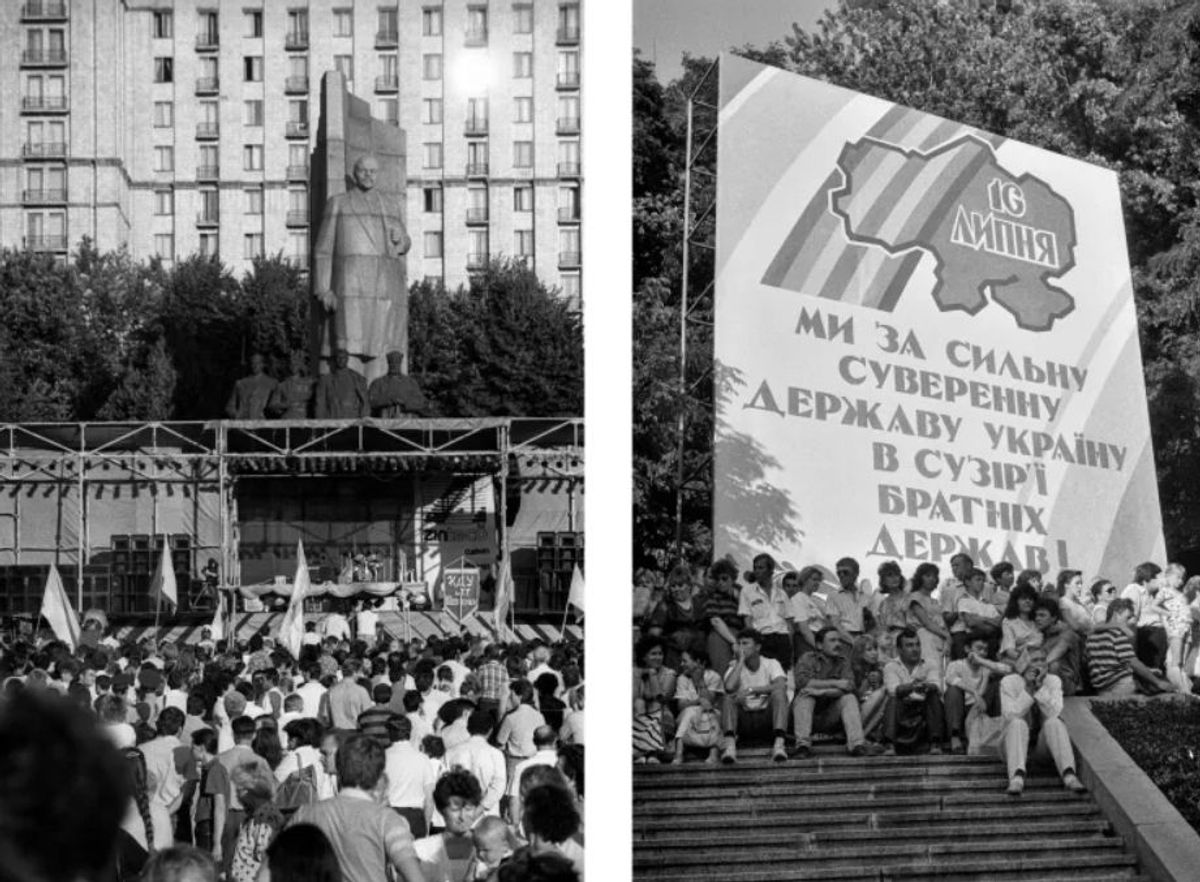
Celebrations marking Ukraine's Independence Day in Kyiv, 1991.
Photo by Oleksandr Klymenko
Few people remember this, but Ukrainians celebrated their very first Independence Day in 1991 not at the end of summer, but on July 16—the day the Declaration of State Sovereignty was adopted. At that time, the celebration took place while Ukraine was still part of the USSR, but it already had a distinct national character. Thousands of Ukrainians marched down Kyiv’s Khreshchatyk Street in traditional dress and carrying blue-and-yellow flags. However, the event was not without its Soviet “legacy.” The leadership of the Communist Party of the Ukrainian SSR laid flowers at Lenin’s monuments and then held a solemn meeting at the “Ukraine” Palace. The celebration concluded with a performance by the Lviv rock band “Braty Hadyukiny” on what is now Independence Square and a festive fireworks display.
In the Donetsk region, on the first anniversary of the adoption of the Declaration of State Sovereignty, at the conclusion of the “Cossack Trails” cultural expedition, representatives of the “People’s Movement of Ukraine” raised the Ukrainian flag for the first time on the Holy Mountains overlooking the Siverskyi Donets River.
On the day the Supreme Council of what was then the Ukrainian SSR adopted the Act of Declaration of Independence of Ukraine, there were no mass celebrations in Donetsk, as there were in Kyiv or Lviv. Most city residents reacted with restraint and calm, according to witnesses of those events. “There were probably no particular reactions specifically to the declaration of independence. I want to note that this atmosphere in Donetsk was largely due to the miners’ strikes,” notes historian Igor Todorov.
Mykola Tyshchenko, a representative of the “movement,” recalls: “It had long been clear that Ukraine was heading toward independence. There were no scenes of people rushing into the streets, demonstrating, or chanting either ‘for’ or ‘against’—nothing like that happened. It was completely ordinary. Completely ordinary.”
Just a few months later, in the referendum on December 1, 1991, nearly 84% of the population of Donetsk Oblast voted in favor of the Act of Declaration of Independence of Ukraine.
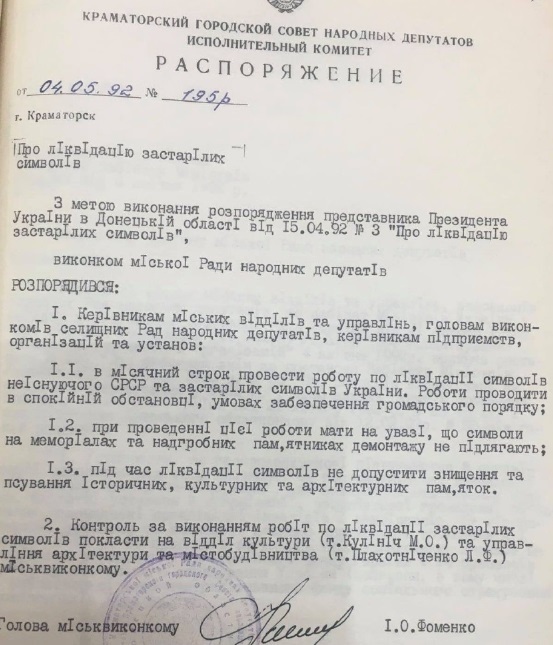
Order on the Removal of Symbols
After the Act of Declaration of Independence of Ukraine was ratified in a nationwide referendum, blue-and-yellow flags were raised over administrative buildings in the Donetsk region.