Maintaining inner peace, finding a source of support, and learning to overcome anxiety during challenging times—this was the focus of an online webinar held for students at institutions of higher education, pre-higher vocational education, and vocational-technical education in the Bakhmut city community.
The event was organized as part of the All-Ukrainian Mental Health Program “How Are You?” and the national project “Side by Side: United Communities.” The event was attended not only by students and young people from Bakhmut but also by representatives of the Kremenchuk City Council. This collaboration served as yet another striking example of how community partnerships create a strong support network for anyone in need.
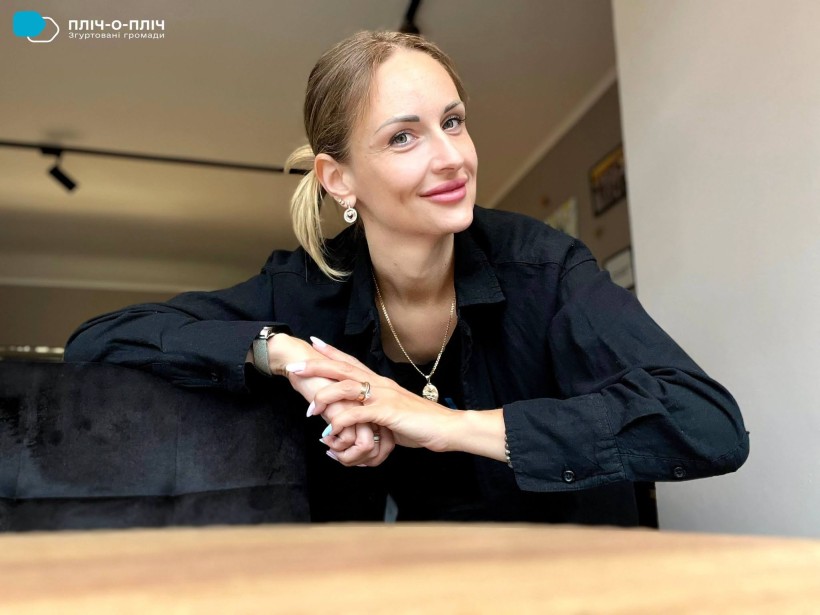
The keynote speaker at the event was Viktoria Goncharova, a young woman from Bakhmut—a certified specialist in neurographics and metaphorical associative maps, and the founder of a unique socially oriented business. She was able to transform her own experience of overcoming a crisis into an innovative solution to support her fellow citizens.
After the full-scale invasion began, Viktoria endured the hardships of forced evacuation, the loss of her property, and relocation to Kremenchuk. While working with displaced persons, she clearly identified the main problem: the deep psychological and emotional exhaustion and anxiety of people who, due to various barriers, lack access to traditional psychological support.
The response to this challenge was the creation of a unique mental health support space in Kremenchuk called “Neuro Kava.” Despite having no prior entrepreneurial experience, Viktoria taught herself financial literacy, developed a business plan, secured a government grant, and made her dream a reality. Thanks to her initiative, hundreds of internally displaced persons have already received free psychological support, overcome their fear of the unknown, and regained confidence in themselves.
During the webinar, Victoria shared practical neurographics techniques with students in Bakhmut—techniques that help relieve tension, transform negative emotions, and visualize a positive future using lines and colors.
Special attention was paid during the discussion to the issues of integration and solidarity. After all, the “Neuro Kava” space in Kremenchuk has already become a hub for mutual support, where other displaced persons are involved in organizing events, and local residents and IDPs are working together to build a resilient and open community.
Based on materials from the Bakhmut City Council