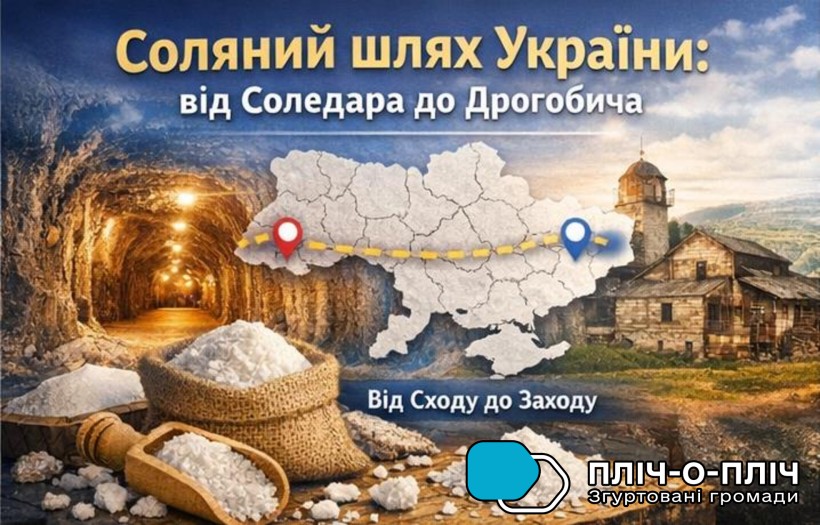
As part of the national project “Side by Side: United Communities,” educators from the Soledar and Drohobych communities joined the online event “Ukraine’s Salt Route: From Soledar to Drohobych,” which brought together active young people for a joint virtual journey along the salt routes of the two cities. It was not just a meeting, but a true “teleportation” across the entire country from east to west.
During the virtual tour, participants made their first stop in Soledar—a city known for its unique salt mines. Viewers had the opportunity to “descend” hundreds of meters underground and see the underground galleries, which are impressive in their scale and beauty. At the same time, the event highlighted the difficult realities the city currently faces, emphasizing its significance for Ukraine.
The route then continued to Drohobych—one of the oldest centers of salt production in Ukraine. Participants learned about the unique salt-boiling technology, which has been preserved since the 13th century, and witnessed the process of creating “white gold” in traditional vats. This continuity of traditions evoked genuine admiration among the audience.
Special attention was given to the historical significance of salt. Through a lively discussion, they explored why salt was called “white gold” in ancient times: it was not only an important food product but also a strategic resource and even a form of currency. Participants actively joined the discussion, demonstrating their interest and knowledge.
The highlight of the event was the interactive Kahoot quiz “Treasures of the Salt Routes,” which turned learning into an exciting competition. Participants eagerly answered questions, testing their attentiveness and quick thinking.
The event proved once again that even salt, which may seem ordinary at first glance, can reveal deep layers of history, unite regions, and become a symbol of national heritage.
Based on materials from the Soledar City Military Administration