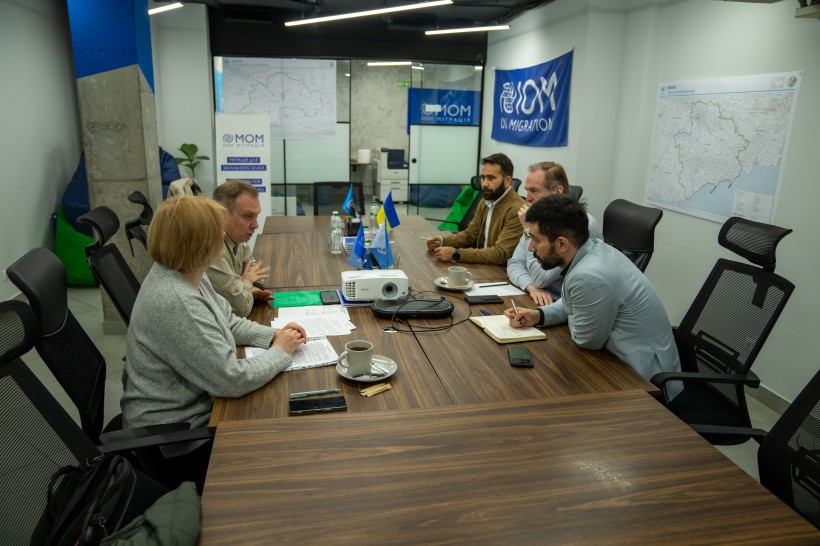
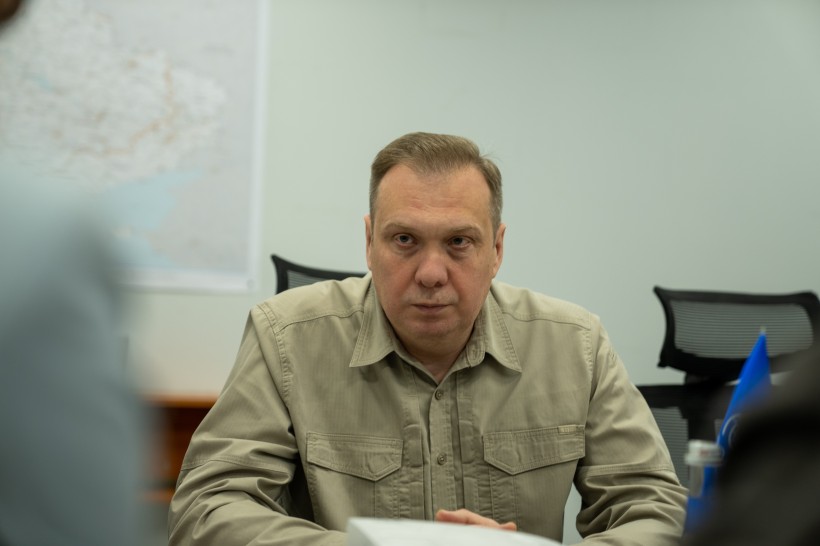
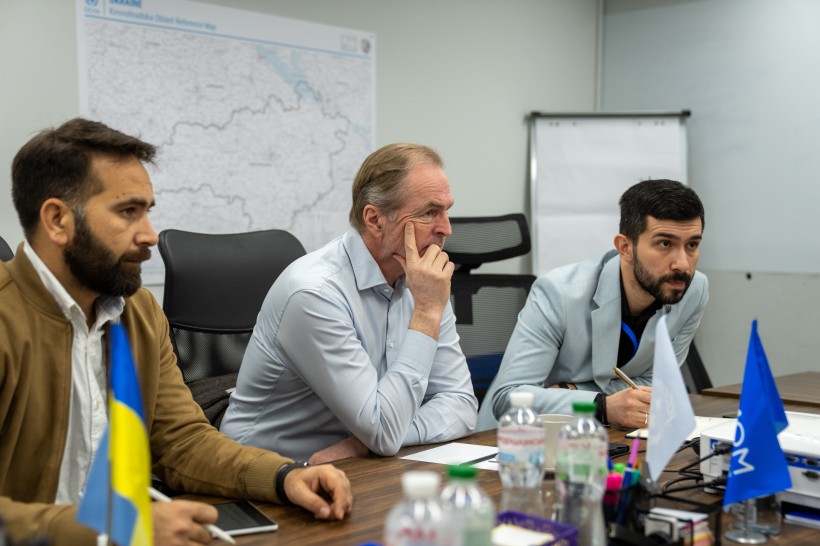
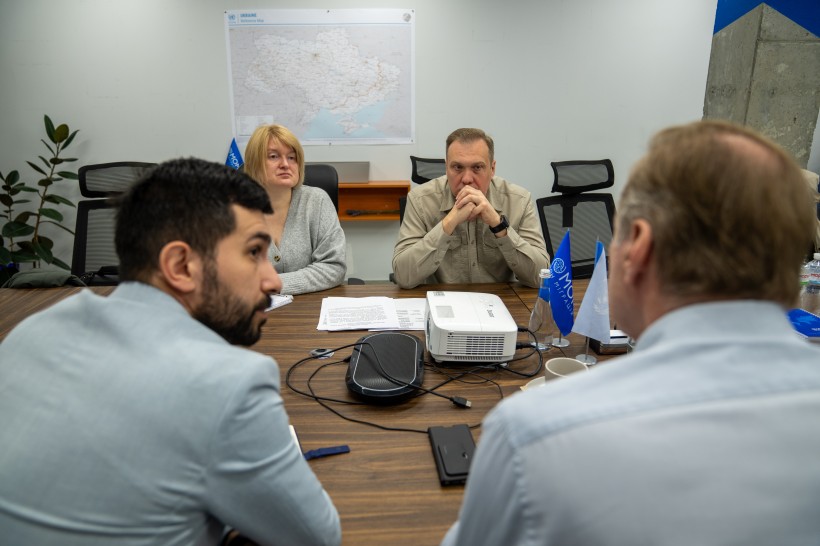
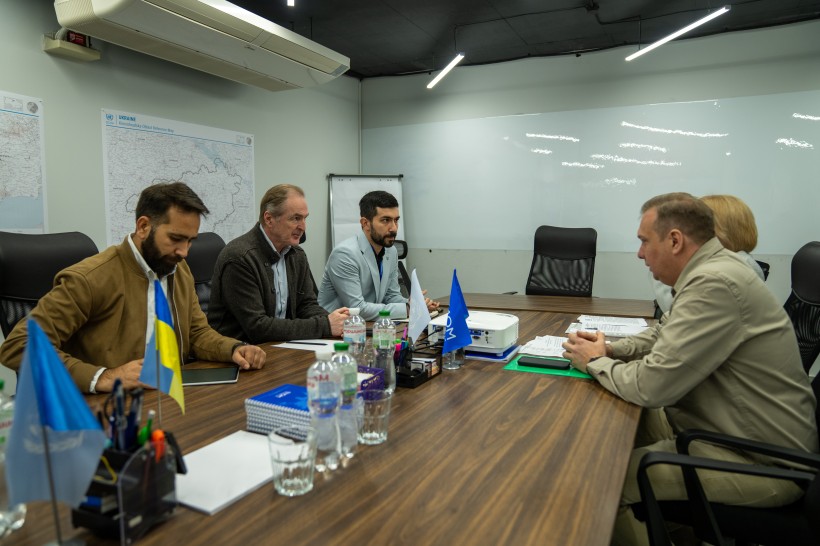
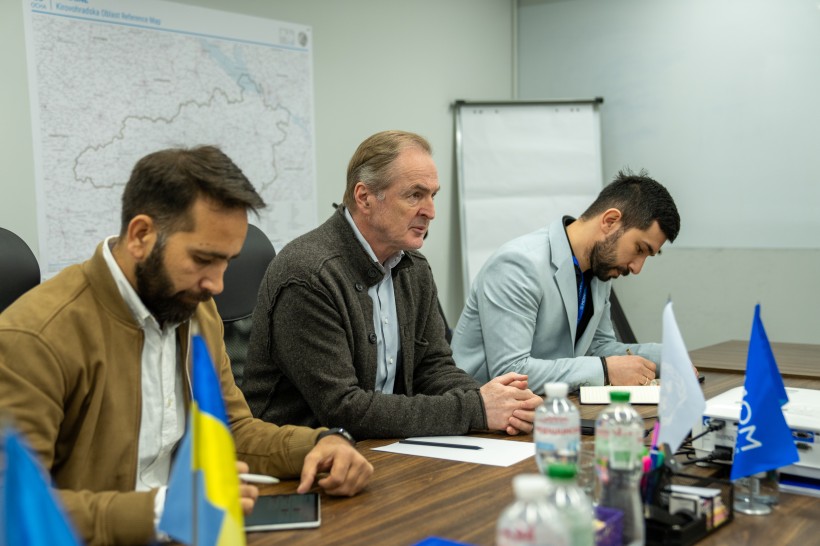
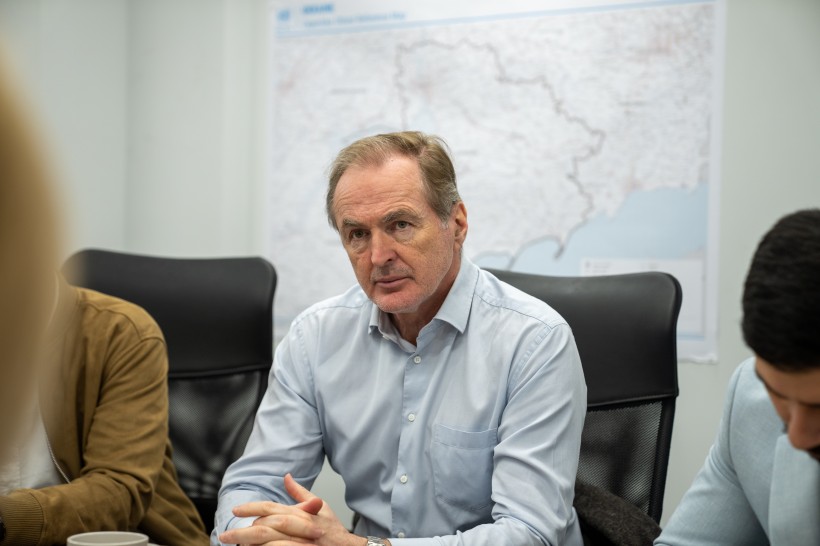
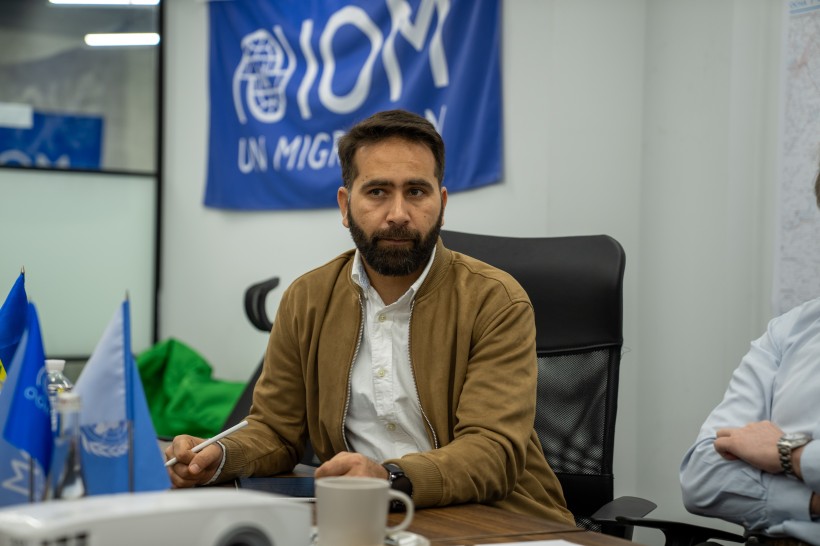

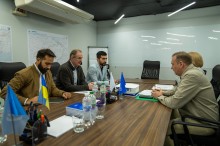
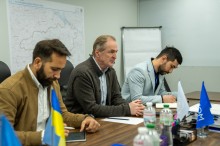
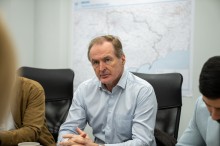

Oleksandr Shevchenko, Deputy Head of the Donetsk Regional State Administration, held a working meeting with a delegation from the International Organization for Migration (IOM) led by Robert Turner, Head of the IOM Mission in Ukraine.
During the meeting, the parties discussed current and future cooperation between the IOM and the Donetsk Regional State Administration, identified the region’s priority needs, and outlined other areas of cooperation of mutual interest.
According to Oleksandr Shevchenko, the Donetsk region has been facing the most severe challenges for 12 years now, caused by unprovoked armed aggression.
“The region is in an extremely difficult situation. We have a significant number of needs that remain critical. These include, in particular, the housing and utilities sector, support for internally displaced persons, and the operation of resilience centers and humanitarian hubs,” he noted.
Oleksandr Shevchenko also highlighted priority areas for supporting the Donetsk region, including assistance to internally displaced persons and ensuring the stable operation of resilience centers.
Separately, he emphasized the need to provide them with necessary resources, including drinking water, fuel, heaters, first-aid kits, electric kettles, and other equipment to ensure their uninterrupted operation and the provision of assistance to the population.
It was also emphasized that to improve the quality of services provided to displaced persons, humanitarian hubs and IDP support centers require additional equipment.
This involves providing furniture, modern office equipment—including laptops, printers, and multifunction devices—electrical appliances such as heaters, generators, charging stations, uninterruptible power supplies, and routers, as well as household appliances, including desk lamps, refrigerators, microwaves, electric kettles, and sewing machines.
An important area is creating appropriate conditions for children’s education and development: setting up children’s corners and providing interactive whiteboards, projectors, flipcharts, and office supplies. In addition, there remains a need for additional equipment, including information stands, clothes racks, and water coolers.
Oleksandr Shevchenko also drew attention to a problematic issue regarding support for internally displaced persons—the reduction in humanitarian aid intended to assist residents of the region who have moved to safer areas and are registered at humanitarian hubs and support centers.
He emphasized that since the events of 2014 began, the International Organization for Migration has consistently supported the Donetsk region. During this time, a number of important initiatives have been implemented to assist the region’s residents—both those who remained in the region and those who were forced to relocate to safer parts of Ukraine.
The Deputy Head of the Regional State Administration expressed his sincere gratitude to the IOM team for their comprehensive support and emphasized the importance of further strengthening the partnership to address humanitarian challenges and rebuild the region.