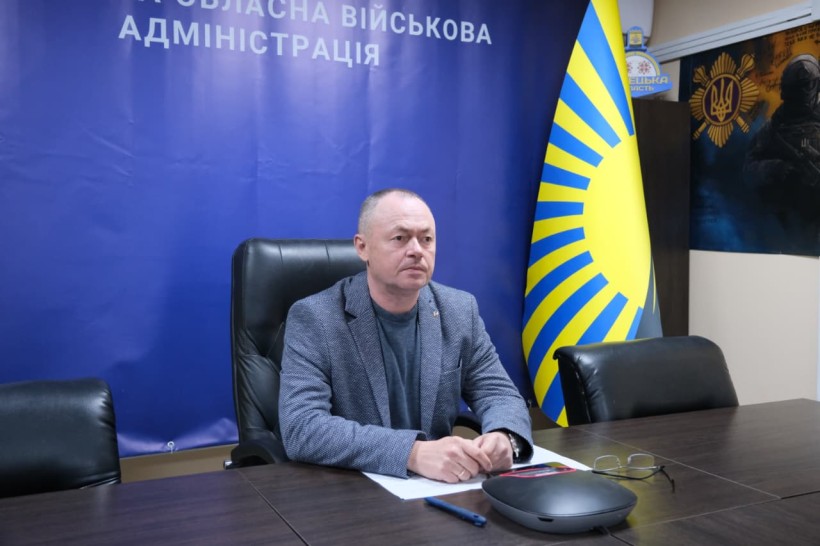
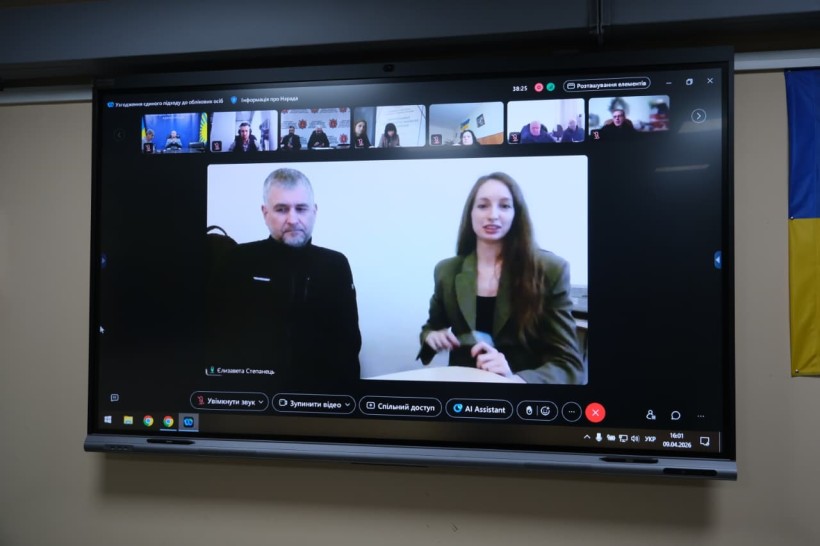
Ihor Boiko and Oleksandr Shevchenko, deputy heads of the Donetsk Regional State Administration, took part in an online meeting organized by the Ministry of Community and Territorial Development of Ukraine, which was attended by representatives of relevant departments of regional state administrations.
During the event, participants discussed harmonizing a unified approach to tracking people passing through transit centers, as well as establishing procedures for compiling and submitting relevant reports.
In his remarks, Ihor Boiko reported that in response to the mass evacuation of the population from the Donetsk region, two transit centers are currently operating in the Dnipropetrovsk and Kharkiv regions, established by the respective regional state administrations.
The transit centers provide comprehensive support to evacuees, including processing one-time cash assistance from international organizations; short-term accommodation (up to 7 days); provision of humanitarian, psychological, and medical assistance; free transportation to a new place of residence; assistance in processing necessary documents; and provision of hot meals.
It was also noted that representatives of the “Coordinating Humanitarian Center” charity are registering evacuees passing through transit centers using a CRM system. They also provide daily updates to the Ministry of Development regarding the number of evacuees by filling out the relevant spreadsheets.
According to Ihor Boiko, since the transit center in Pavlohrad began operations, nearly 47,500 people have received assistance, including 8,500 children and 3,300 residents with limited mobility. After the relocation on August 25, 2025, an additional 18,000 people received assistance.
As of today, between 50 and 100 civilians are evacuated daily through this center, with approximately 90% being residents of Dnipropetrovsk Oblast and 10% from Donetsk Oblast.
He also reported that the transit center in Lozova has provided services to a total of 27,000 people, including 3,900 children and 1,400 residents with limited mobility. Throughout 2026, 360 people were resettled through this center to various regions of Ukraine, including the Rivne, Lviv, Odesa, Kirovohrad, Poltava, Volyn, Kyiv, Ivano-Frankivsk, Chernivtsi, Vinnytsia, Zakarpattia, Zhytomyr, Kharkiv, and Khmelnytskyi regions.
Participation in the meeting allowed for the coordination of further steps to improve mechanisms for registering the evacuated population and enhancing the efficiency of transit centers.