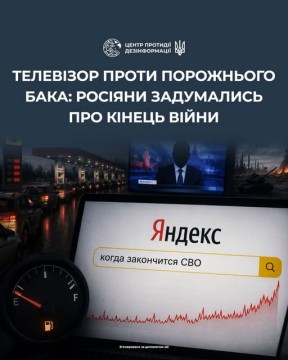
Against the backdrop of the fuel crisis in Russia, government officials and the propaganda machine have launched a campaign of total gaslighting against their own population. Instead of acknowledging the obvious—that the fuel problems are a direct consequence of the war unleashed by the Kremlin—Russians are being told not to believe their own eyes and to blame themselves for everything.
For example, Federation Council Speaker Valentina Matviyenko urges people “not to make a fuss” and “not to dramatize” the fuel problem, while Russian Deputy Prime Minister Alexander Novak blames everything on “logistical issues,” while key propaganda TV channels have completely “forgotten” to mention the kilometer-long lines at gas stations in their evening news broadcasts. Russian media are also reporting on the activity of Kremlin bots on social media, who are en masse blaming the drivers themselves for the fuel shortage, claiming that there is no gasoline due to “panic buying.”
Since the propaganda is completely detached from reality, the average Russian tries to establish some cause-and-effect relationships on their own and eventually begins to “suspect something”: the number of searches for “when will the war end” on Yandex has reached an all-time high.
The connection between an empty gas tank and a protracted war is becoming obvious to Russians. However, they are still asking the wrong questions. Putin can end the war at any moment, and as long as he refuses to do so, the problems within the country will only multiply.
Based on materials from the Center for Countering Disinformation