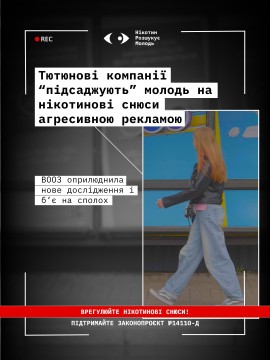
The World Health Organization, in collaboration with the Stanford Research into the Impact of Tobacco Advertising (SRITA) initiative, has released a report exposing large-scale manipulative campaigns by tobacco manufacturers. An analysis of more than 5,000 advertising samples revealed that nicotine snus (pouches) are deliberately targeted at children and adolescents.
The researchers identify key marketing tactics the industry uses to lure minors into chemical dependence:
- Design and flavors: the use of colorful packaging styled after youth trends and sweet fruit flavors that create a false impression of the product’s safety;
- Digital influence: active engagement of social media influencers and sponsorship of sporting events and esports;
- The “discreet” message: an emphasis on the fact that pouches can be used without hindrance in class, during lectures, or at home, since they produce no smoke or distinctive odor.
For Ukraine, the issue of regulating these products is critical. Due to a loophole in the law, the market for nicotine snus remains virtually unregulated, and the nicotine concentration in some pouches can be dozens of times higher than the dose in a cigarette.
The passage of Bill No. 14110-d should serve as a reliable barrier to protect children. The bill provides for a direct ban on the sale of nicotine snus to minors, strict restrictions on advertising and sponsorship, limits on nicotine content, and the introduction of mandatory graphic health warnings.
Protecting children from the aggressive addiction industry is a matter of national security and the health of future generations.