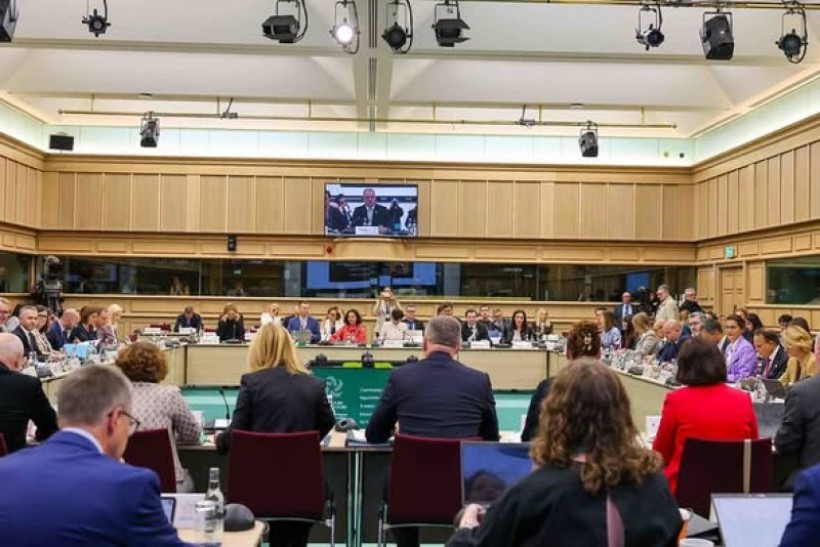
Deputy Prime Minister for European and Euro-Atlantic Integration Vsevolod Chentsov spoke during a working session of the informal meeting of the EU General Affairs Council (GAC) on enlargement in Dublin.
The discussion focused on the practical implementation of reforms, the institutional capacity of candidate countries, and support from the EU and its member states.
The Deputy Prime Minister emphasized that reforms in the areas of the rule of law and the fight against corruption are among the most telling examples of Ukraine’s transformation. At the same time, such changes always require consistent, systematic, and long-term efforts.
It was noted that, within the process of reforming the justice and law enforcement systems, there are no universal models that can be applied identically in every country. Drawing on best European practices, it is necessary to seek the most effective solutions that will strengthen institutional capacity while enabling state institutions to effectively carry out their tasks of countering Russian aggression in wartime.
“Ukraine has high ambitions to implement the European integration agenda as quickly as possible. We are grateful to the European Commission and the member states for their technical assistance and political support. At the same time, it is necessary to move forward in the negotiation process. We adhere to a merit-based approach in the accession process and expect the same approach from the EU,” noted Vsevolod Chentsov.
The Deputy Prime Minister emphasized that Ukraine is technically ready to open the remaining negotiation clusters with the EU. The European Commission had previously confirmed that Ukraine had completed the necessary work on its part and was ready for the clusters to be opened.
Opening the negotiation clusters for Ukraine will allow it to continue making dynamic progress in the negotiations and provide momentum for specific reforms and practical economic and sectoral integration even before gaining EU membership. Specifically, this involves further integration into the EU Single Market, support for Ukrainian industry, and the gradual integration of Ukrainian sectors into the European economic area. The opening of the relevant negotiation clusters should create additional opportunities for practical progress in this work.
“For us, negotiations, reforms, and practical sectoral integration are three interconnected tracks that must move forward in parallel. Gradual integration into EU policies and the Single Market is not an alternative to full membership. On the contrary, it should help make the accession process faster and more effective and ensure tangible results already on the path to membership. Our ultimate goal remains unchanged—Ukraine’s full membership in the European Union,” emphasized Vsevolod Chentsov.
The Deputy Prime Minister also highlighted the potential for developing cross-border cooperation as one of the practical tools for bringing Ukraine closer to the EU, as well as for strengthening regional cooperation. He specifically highlighted the role of the Carpathian Integration Initiative announced by the President of Ukraine, which is designed to strengthen cooperation among countries in the region in areas such as the economy, logistics, security, and others. Vsevolod Chentsov invited partner countries to participate at the highest possible level in the first summit, which will take place in September in Ivano-Frankivsk Oblast.
He also called on interested member states and neighboring countries to participate in the development of joint initiatives that will help strengthen ties between regions, communities, and economies.
He also called on EU member states to continue providing practical support to Ukrainian institutions, in particular through the involvement of European experts and the exchange of experience. According to him, strengthening administrative capacity must proceed in parallel with the alignment of Ukrainian legislation with the EU acquis.
According to information from the website https://eu-ua.kmu.gov.ua