Every year since 1988, World AIDS Day has been observed on December 1.
The main goal of this day is to draw public attention to the problem of HIV/AIDS, raise awareness, and demonstrate solidarity in overcoming this problem.
HIV is a socially dangerous disease that affects the immune system and weakens protection against many infections and some types of cancer that a healthy person's immune system can cope with. The virus destroys and weakens the function of immune cells, causing infected individuals to gradually develop immunodeficiency. The final stage of HIV infection is acquired immunodeficiency syndrome (AIDS).
HIV is not a death sentence or a reason for exclusion. The infection is not transmitted through touch, hugs, kisses, or shared utensils. It is a health condition that can be controlled with medication — antiretroviral therapy (ART).
HIV is a chronic disease that can be treated, and a person living with HIV is, first and foremost, a person.
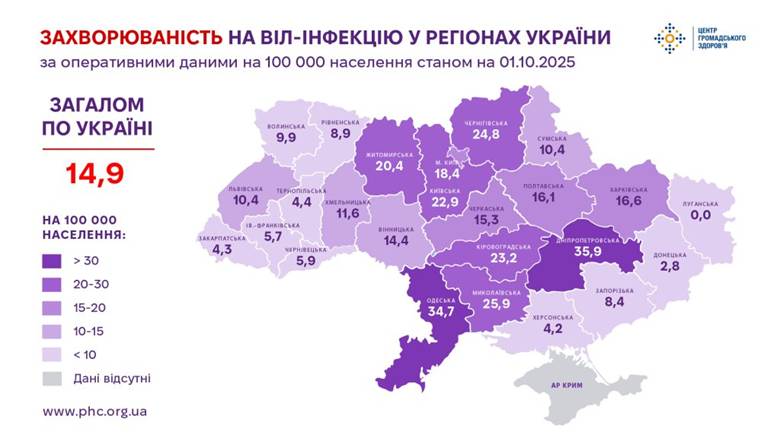
According to SEM data, during the current period of 2025, 6,106 cases of HIV infection (14.9 per 100,000 population) were detected and officially registered in the country, with the highest incidence rates of HIV infection in Dnipropetrovsk (35.9), Odesa (34.7), and Mykolaiv (25.9) regions.
The incidence rate for the first nine months of 2025 is 22.1% lower than the rate for the same period in 2024 (7,841 people). A decrease was observed in 23 regions, with the maximum decrease in rates recorded in Kherson (Tpr – 53.3%), Donetsk (Tpr – 48.7%), Ternopil (Tpr – 33.8%), and Dnipropetrovsk (Tpr – 33.7%) regions.
As before, the highest number of HIV infections was registered among people aged 30-49 (67.3%). In terms of gender, men predominate among newly diagnosed cases (63.6%). On average, 22.3 cases of HIV infection, 7.6 cases of AIDS, and 2.5 deaths from AIDS-related illnesses were registered daily in Ukraine.
In the structure of HIV infection routes, the vast majority of cases are sexually transmitted (83.4%), but parenteral transmission due to injecting drug use remains relevant (15.5%). Compared to the same period in 2024, there is a continuing upward trend in sexual transmission, which accounted for 80.3% of cases, while drug use accounted for 19.0%. The number of cases with an unknown route of infection for the first nine months of 2025 is 0.6%, of which 73.5% are men aged 25-50 and older.
HIV/AIDS remains a global problem for humanity, the dangerous nature of which is exacerbated by the realities of wartime.
The full-scale Russian military invasion of Ukraine has an extremely negative impact on ensuring the human right to receive HIV-related assistance, especially for key and most vulnerable populations.
However, the consolidation of efforts by the state and civil society organizations, with international support and donor funding, has become the main lever for mitigating the consequences of the Russian invasion.
Even now, during the war, antiretroviral therapy is available to everyone who needs treatment in healthcare facilities throughout the territory controlled by the Ukrainian government. HIV/AIDS testing, prevention for key populations, care, and support programs are also available.
HIV/AIDS hotline: 0 800 500 451 (free from all numbers within Ukraine)