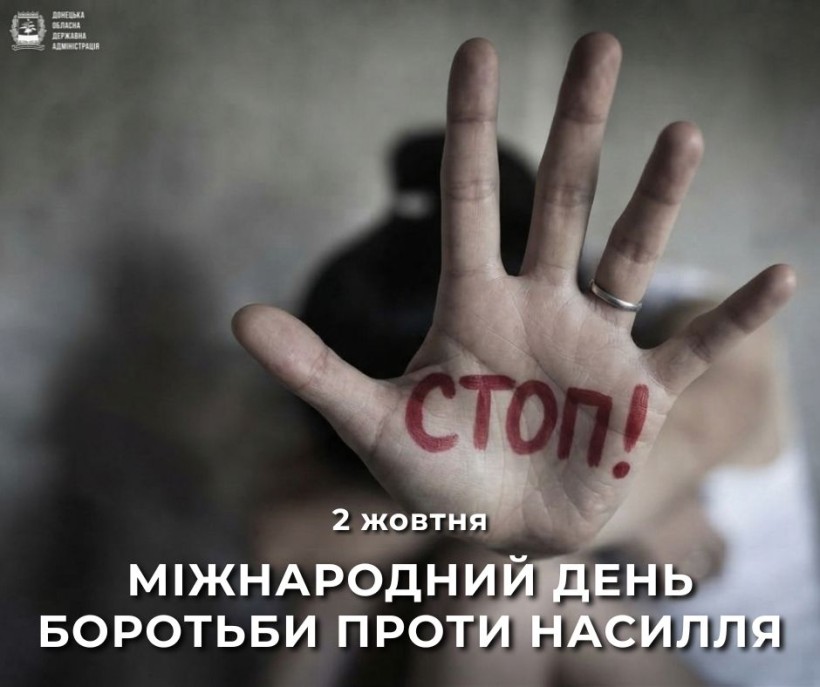
October 2 marks the International Day for the Elimination of Violence. It was proclaimed by the UN General Assembly in Resolution No. 61/271 of June 15, 2007. The date commemorates the birthday of Mahatma Gandhi—one of the most famous advocates of nonviolent methods of social change. The UN has designated this day as an opportunity to promote the ideas of nonviolence, particularly through education and raising public awareness.
The UN resolution emphasizes the universal significance of the principle of nonviolence and its connection to respect for human rights and fundamental freedoms, democracy, mutual understanding, tolerance, and respect for diversity. Nonviolence in this context means not only the rejection of physical aggression but also the search for ways to resolve conflicts without coercion, humiliation, or harm to others.
For Ukraine, the significance of this day cannot be viewed apart from the War for Independence. Russian armed aggression poses a daily threat to the lives and safety of the civilian population. According to the UN Human Rights Monitoring Mission, in July 2026 alone, at least 437 civilian deaths and 2,610 civilian injuries were verified in Ukraine—a 30 percent increase compared to June 2026 (298 killed; 2,041 wounded) and 70 percent more than in July 2025 (312 killed; 1,482 wounded). The number of civilian fatalities was the highest since May 2022. The number of child casualties (17 killed; 166 wounded) was the highest since April 2022.
At the same time, nonviolence begins not only with the cessation of hostilities. It concerns everyday interactions—the unacceptability of physical and psychological violence, humiliation, bullying, discrimination, and coercion. Fostering a culture of respect and responsible behavior toward one another helps create an environment in which conflicts are resolved through dialogue rather than aggression.