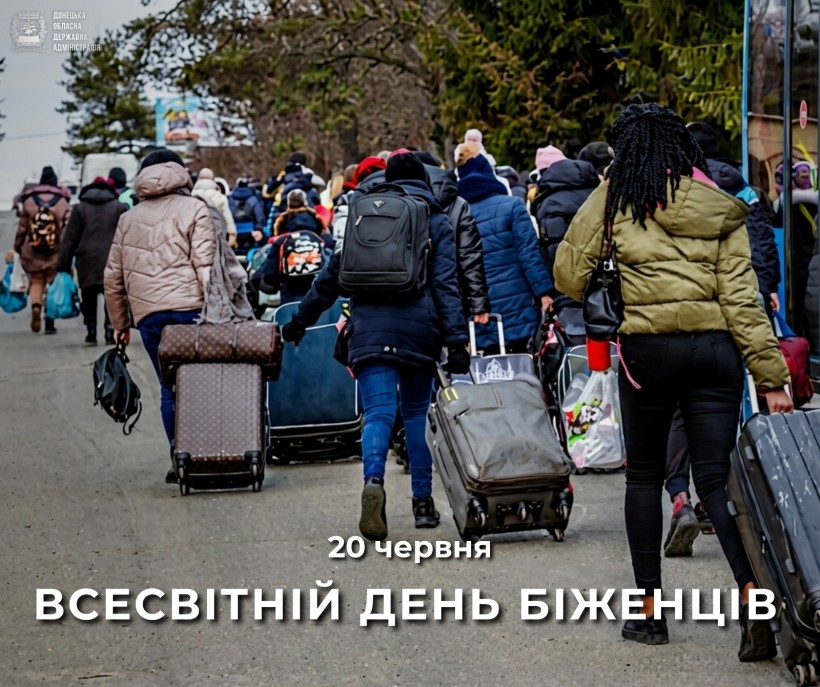
On June 20, the world observes World Refugee Day—a day intended to remind us that behind every legal status there is always a human story. This date was established by the United Nations General Assembly in December 2000. The observance marks the 50th anniversary of the adoption of the 1951 Convention Relating to the Status of Refugees—the primary international document defining the rights of refugees and the obligations of states to protect them.
The purpose of World Refugee Day is to draw attention to the plight of people who have been forced to leave their homes due to war, armed conflict, persecution, human rights violations, or natural disasters. This day also serves as an opportunity to honor the courage, resilience, and strength of people who, despite difficult circumstances, strive to start a new life in safety.
In 2001, Ukraine acceded to the 1951 UN Convention Relating to the Status of Refugees and the 1967 Protocol Relating to the Status of Refugees and brought its national legislation into line with these international instruments.
Globally, the number of people forced to flee their homes due to war, violence, and persecution stood at 117.8 million. This is 4% less than the previous year and marks the first decline in this figure over the past decade.
The Russian Federation’s full-scale invasion of Ukraine on February 24, 2022, triggered one of the world’s largest forced displacement crises. According to the UN Refugee Agency (UNHCR), in 2026, approximately 5.9 million Ukrainians are living abroad as refugees or under temporary protection. The main countries hosting Ukrainians remain Germany, home to 23% of all refugees from Ukraine, and Poland, which accounts for 19.5%.
At the same time, people continue to arrive in our country seeking asylum.
For people who have fled political persecution, discrimination, repression, or threats to their lives in their home countries, Ukraine has become a place where they seek international protection. The process of obtaining refugee status often takes years and is accompanied by numerous legal and bureaucratic challenges. Despite this, many of them choose to stay in Ukraine, working, studying, starting families, helping communities, and building a future here.
This, perhaps, is one of the greatest paradoxes of our time: a country from which millions of people were forced to flee the war remains, for others, a safer place than the one they left behind. And every refugee is more than just a statistic. It is a life divided into “before” and “after”; it is a fate that requires compassion, protection, and international solidarity.