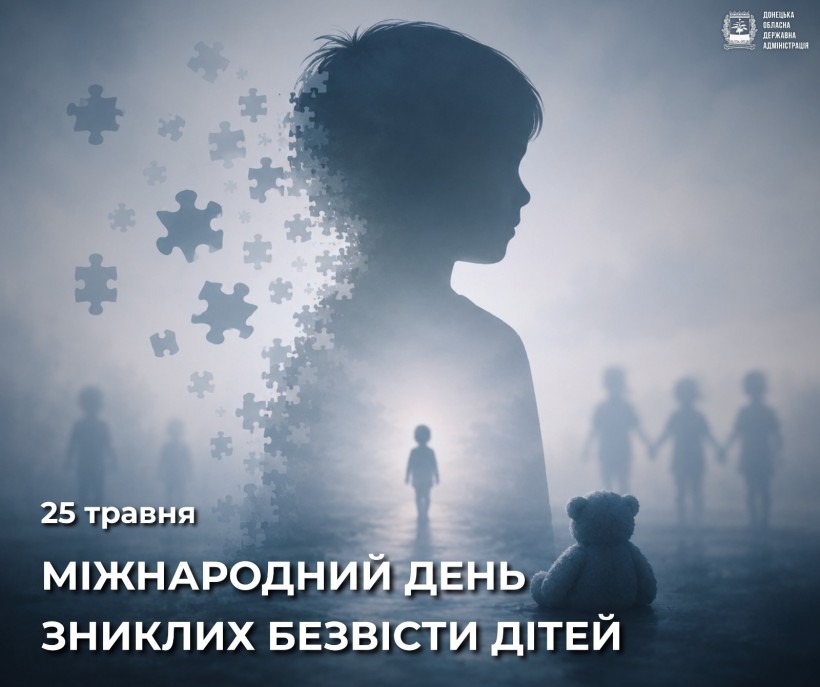
Since 2019, at the initiative of the All-Ukrainian public organization “Magnolia,” Ukraine has observed International Missing Children’s Day on May 25. This day is intended to draw public attention to the issue of missing children and to remind people of those whose fate remains unknown.
The symbol of this day is the forget-me-not flower, which is quite symbolic, as it is extremely important for a child in danger to be remembered and for the search for them to continue.
According to the National Police of Ukraine, the most common reason for children going missing is a strained relationship with their parents, as children try to prove their independence and self-reliance. As a rule, these are adolescents; they leave home without informing their families of their intentions.
However, we must not rule out cases where a child’s disappearance occurs against their will, through acts of violence. When a child ends up in an unfamiliar place and is cut off from their family, serious risks to their life and health arise, as well as the danger of falling into situations of violence, trafficking, and exploitation.
In wartime, the problem of missing children has become particularly acute. Constant shelling, forced evacuation, deportation, chaotic displacement, flight, and abduction—this is not an exhaustive list of the factors that contribute to this phenomenon.
According to official data from Ukrainian authorities, more than 20,000 children have been deported from Ukraine to Russia since February 24, 2022. These are only the cases that have been officially recorded.
Currently, the registry of persons missing under special circumstances contains data on 2,323 Ukrainian children.
The scale of the occupiers’ war crimes may be significantly greater, as we are currently unable to assess the situation in the temporarily occupied territories.
The state is taking all necessary and possible measures to locate and return to Ukraine children who were illegally taken abroad, including in connection with circumstances related to military operations and armed conflicts.