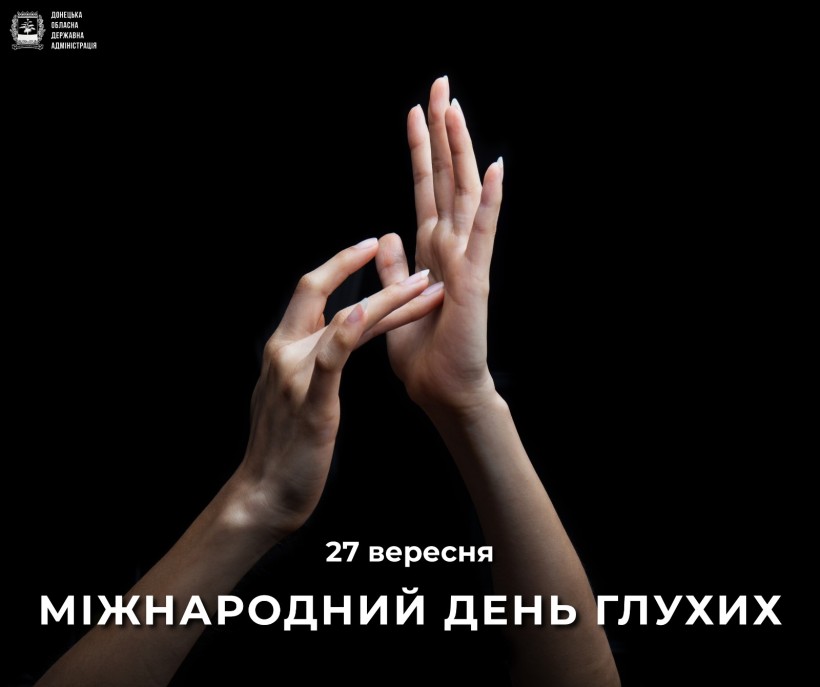
International Day of the Deaf is observed annually on the last Sunday of September. This year, the day falls on September 27. It is intended to draw public attention to the issues faced by people with hearing impairments, highlight their rights and opportunities, and promote their integration into society.
International Day of the Deaf was established in 1951 by the World Federation of the Deaf (WFD). The first observance of this day took place during the WFD’s first World Congress in Rome, Italy.
International Day of the Deaf is an opportunity to highlight the challenges faced by people with hearing impairments. In a world where sound plays a key role in communication, deaf people often feel isolated. This day calls for action: to create an accessible environment, combat discrimination, and support initiatives that help integrate the deaf into society.
Today, the World Federation of the Deaf unites approximately 70 million deaf people from 123 countries around the world and is one of the oldest international organizations for people with disabilities.
According to statistics, one in nine people suffers from hearing loss. A person may have congenital hearing impairments or lose their hearing as a result of an injury or illness.
Approximately 30 million people worldwide suffer from hearing impairments that have a significant social impact. In Ukraine, for example, there are about 40,000 people with hearing disabilities.
There are 2,500 languages on the planet. But there is another form of communication that has recently been attracting more and more interest from scientists: the language of eye contact and gestures. In the 1950s, the World Federation of the Deaf developed Gestuno—a system of gestures—to facilitate international events for the deaf, such as congresses, symposia, conferences, and sporting events.
In Ukraine, people with hearing impairments are united by the Ukrainian Society of the Deaf, a public organization with nationwide status. And in 2006, Ukrainian Sign Language was granted the status of a national minority language.