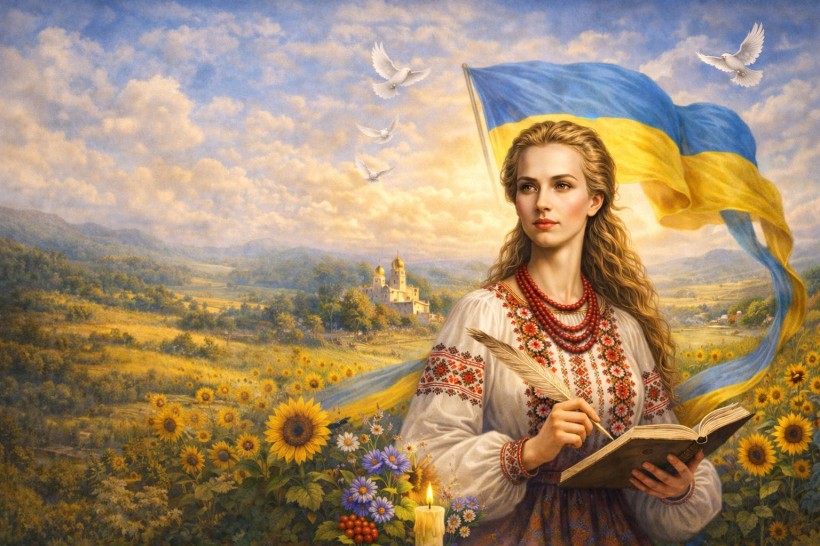
Ukrainian Women's Day is a new symbolic celebration dedicated to the true strength, intellect, and resilience of Ukrainian women. This day has special significance for the Donetsk region, because it is here, in frontline communities and communities of internally displaced persons, that women's resilience is demonstrated every day not in words but in deeds – in their ability to keep their families together, support their neighbors, organize aid, work, teach, heal, save, and rebuild lives in wartime conditions.
Ukrainian Women's Day is celebrated on February 25. The date was not chosen at random – it was on this day that Lesya Ukrainka, a writer and public figure whose image embodies dignity, inner freedom, responsibility, and strength of spirit, was born. The meaning of this day is to honor the wisdom, talent, and contribution of Ukrainian women to the development of the state, as well as to emphasize a different, modern view of the role of women in society—as agents of change, leaders, professionals, defenders, decision-makers, and bearers of human security.
Every year at the end of winter and with the approach of spring, discussions intensify in Ukrainian society about which symbols we choose for celebrations and what exactly we put into the meaning of "Women's Day." In this context, the Ukrainian Women's Day initiative is seen as an attempt to rethink things—moving from superficial stereotypes to real recognition of the role of women in the state and communities. For Donetsk Oblast, this rethinking is particularly noticeable, because Ukrainian women here have long performed critically important functions for survival and development – on the front lines and in the rear, in state administration and local self-government, in medicine and education, in the social sphere, business, culture, volunteering, and humanitarian support.
At the same time, there is often confusion among citizens about the official status of the holiday. As of February 2026, Ukrainian Women's Day has not been approved as an official public holiday. In 2023, a bill was submitted to the Verkhovna Rada, whose authors proposed to abolish International Women's Day on March 8 and establish a public holiday on February 25, but parliament did not pass this law. However, even without formal status, this day has already gained social significance as an opportunity to talk about women's contributions responsibly and genuinely.
For the Donetsk region, it is important that honoring Ukrainian women has not only a symbolic but also a practical dimension—through supporting women's leadership, visibility of their contributions, and public recognition of those who are changing the lives of communities. It is in this spirit that initiatives such as the regional competition "Woman of Donetsk Region" are being developed in the region, which aims to recognize active, professional, and caring women who make a significant contribution to the social, cultural, humanitarian, defense, and economic life of the region. It is important to note that this competition has been held in the Donetsk region for several years in a row since the start of the full-scale invasion, and every year more than a hundred inspiring stories are submitted to it – about serving people, about responsibility in a crisis, about leadership in communities, and about the ability to keep life going where it is most difficult.
This tradition is set to continue this year, so that women's stories of strength and contribution to the resilience of Donetsk region continue to be visible. In the current circumstances, this format takes on even deeper meaning: it records real stories of resilience, work, and service, sets positive examples for communities, and strengthens social cohesion, which is especially needed in times of trial.
For Donetsk Oblast, Ukrainian Women's Day is first and foremost about the people who hold communities together. It is about female military personnel and medics who save lives. It is about volunteers and aid coordinators who provide support where it is needed most urgently. It is about educators, psychologists, and social workers who work in crisis situations and support children and families. It is about administrators who ensure coordination, organization of services, and stability of systems at the regional and local levels. It is about mothers and grandmothers who keep the warmth of home even when "home" is forced to change its address, and love and endurance become the main resources. And it is about every woman who, in dangerous conditions, does not give up her dignity, responsibility, and hope.