Ukrainian Statehood Day is not only a national holiday but also an opportunity to reflect on the path the Ukrainian people have traveled through the centuries in their struggle for the right to be masters of their own land. From the times of Kievan Rus’ to the present day, Ukrainian statehood has been shaped by the courage, resilience, and dedication of many generations who have preserved our language, culture, traditions, and aspiration for freedom.
Today, as Ukraine continues to defend its independence and sovereignty, Ukrainian Statehood Day takes on special significance. This holiday symbolizes the historical continuity of the Ukrainian nation, the unity of society, and faith in the future. It reminds us that statehood is not merely about institutions and borders, but first and foremost about people—their responsibility, dignity, and readiness to defend their homeland.
On this day, we honor those who built the Ukrainian state in the past and express our gratitude to all those who are bringing us closer to Victory today, strengthening the country through their work, service, and unshakable faith in Ukraine.
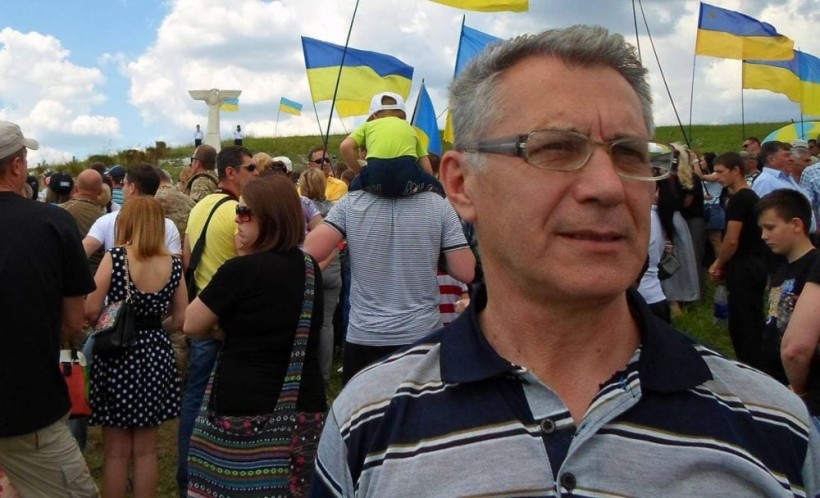
On the occasion of Ukrainian Statehood Day, we had the opportunity to speak with our contemporaries who have made a significant contribution to the restoration and strengthening of Ukrainian statehood in the Donetsk region.
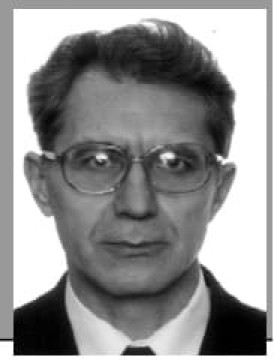
Our interviewee was Mykola Tyshchenko. He, like Ivan Birchak
He helped build the Ukrainian state and believed that Ukraine would be free, unbreakable, united, and independent. After all, he drew on the foundations of Ukrainian statehood from the era of the princes and the free Cossacks.
Mykola Tyshchenko was born in Kramatorsk; he is a 71-year-old public figure, journalist, and scholar, and one of the active fighters for Ukraine’s independence. Mr. Mykola is one of the initiators and founders of the Donetsk Regional Society of the Ukrainian Language named after T. H. Shevchenko and the People’s Movement of Ukraine for Perestroika in the Donbas. He was a co-organizer (representing the Donetsk region) of the Day of the Unification of the Ukrainian People’s Republic (UNR) and the Western Ukrainian People’s Republic (ZUNR), which took place in January 1990 in Kyiv. He was also a co-organizer of the celebration of the 500th anniversary of the Zaporizhzhia Cossacks in Kapulivka (Chortomlytska Sich).
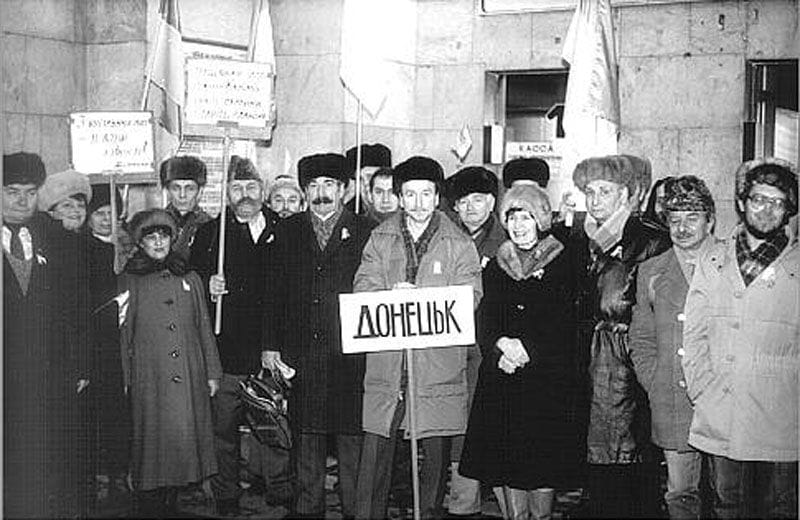
A delegation from Donetsk Oblast at the “Living Chain of Unity” rally on January 21, 1990. Mykola Tyshchenko is on the far right.
On July 15, Ukraine celebrates Ukrainian Statehood Day. This holiday is still new, but very significant. Please tell us, what does this date mean to you?
For me, it’s more than just a holiday. It’s a day that symbolizes the continuity of Ukrainian statehood. Ukraine has been a state since the time of Prince Volodymyr, and this day serves as a reminder that statehood is our history and our strength. And August 24 marks the restoration of Ukrainian statehood.
When we talk about Ukrainian statehood—and I may be mistaken here, but you can correct me—we, as people of today, immediately think of the 1980s. Because there are many among us who lived through those times. Please tell us about the beginnings of the national and patriotic movement in the Donetsk region in the 1980s. Why did the mid-1980s mark the beginning of major changes?
The 1980s were difficult. Many people didn’t believe in change, but among ordinary people, there was a growing realization that life couldn’t go on like this. Miners played a special role in this—they began fighting for decent working conditions and fair wages. The miners went on strike not for political reasons, but because they didn’t have enough money for food. There was terrible inflation in the country at the time. Money was being printed, but there were no goods. So, their movement also became political, because the authorities could not ignore these demands.”
Other people, not just miners, joined this movement. It was not only an economic protest but also a social one—people began to identify as Ukrainians; they wanted to hear their language and see their culture. At that time, we were very active in explaining to people the significance of the symbols—the trident and the flag. We explained that the Ukrainian language is not a dialect of Russian; it is our native language, and the blue-and-yellow flag is a symbol of freedom.
Later—somewhere in the late 1980s—our movement began as a natural process of the awakening of public consciousness. Thanks to Gorbachev’s perestroika—I should remind you that this was a time of political and economic reforms in the USSR, initiated by the then-General Secretary of the Central Committee of the Communist Party of the Soviet Union, Mikhail Gorbachev—people began to speak openly about problems, discussion clubs were formed, and people united around the idea of Ukraine’s revival.
Can we say that the events leading to Ukraine’s independence in 1991 have their roots in Ukrainian statehood dating back to the era of the princes and the Cossacks?
Yes, we can say this with absolute certainty. The proclamation of Ukraine’s independence in 1991 is an integral part of the unbroken, millennia-long tradition of our statehood. Its foundation, legal institutions, and national identity do indeed have their roots in the era of the princes and the Cossacks.
What was the atmosphere and mood like at the time the Declaration of State Sovereignty was adopted in 1990, particularly in your region?
It was a turning point. We climbed Mount Hoverla to mark the occasion, and it was deeply symbolic—conquering the country’s highest peak in the name of freedom. We felt as though we were awakening, and it was a step toward restoring peace and dignity. However, in the Donetsk region at that time, many people were reserved and cautious. They didn’t know what to expect from the future.
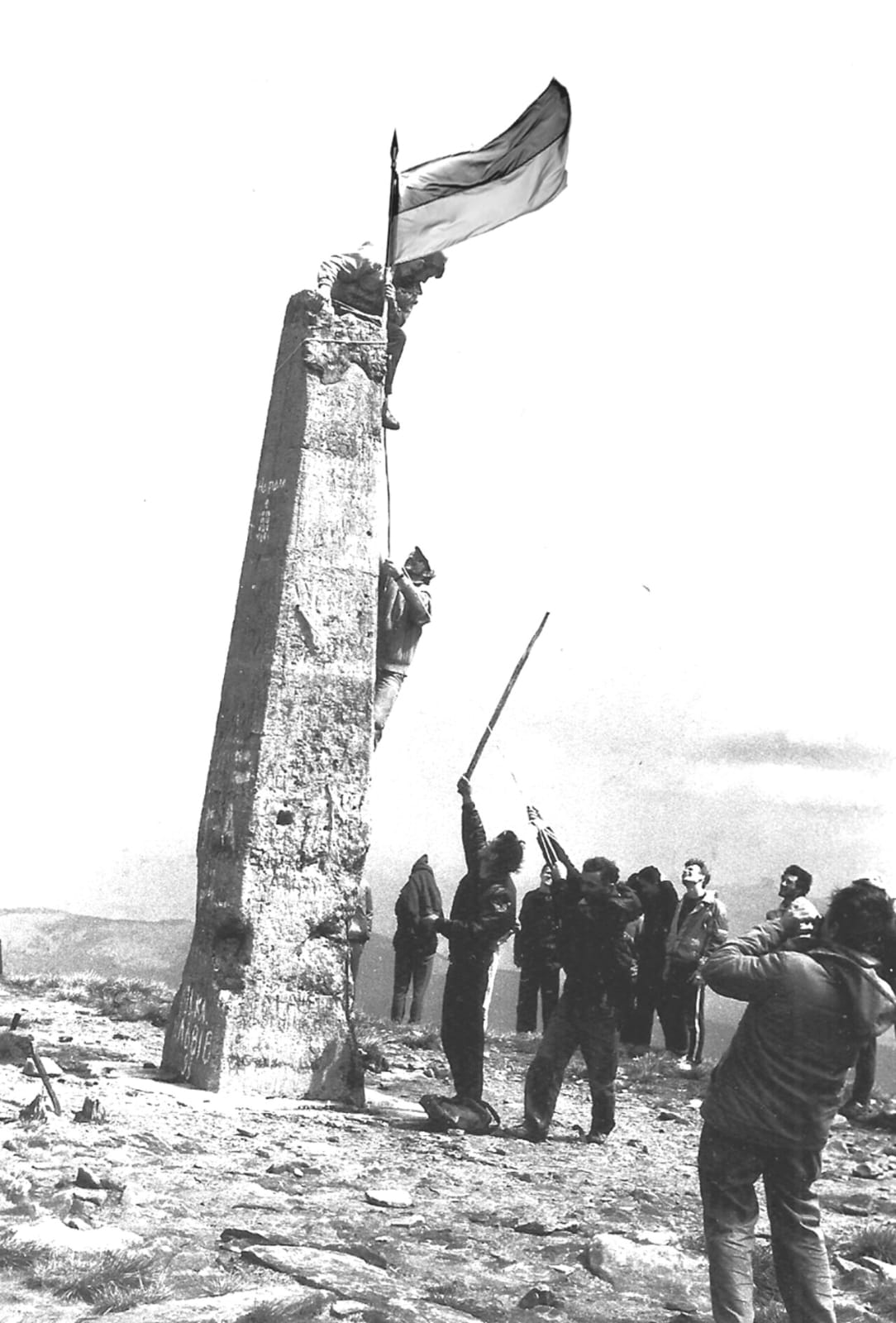
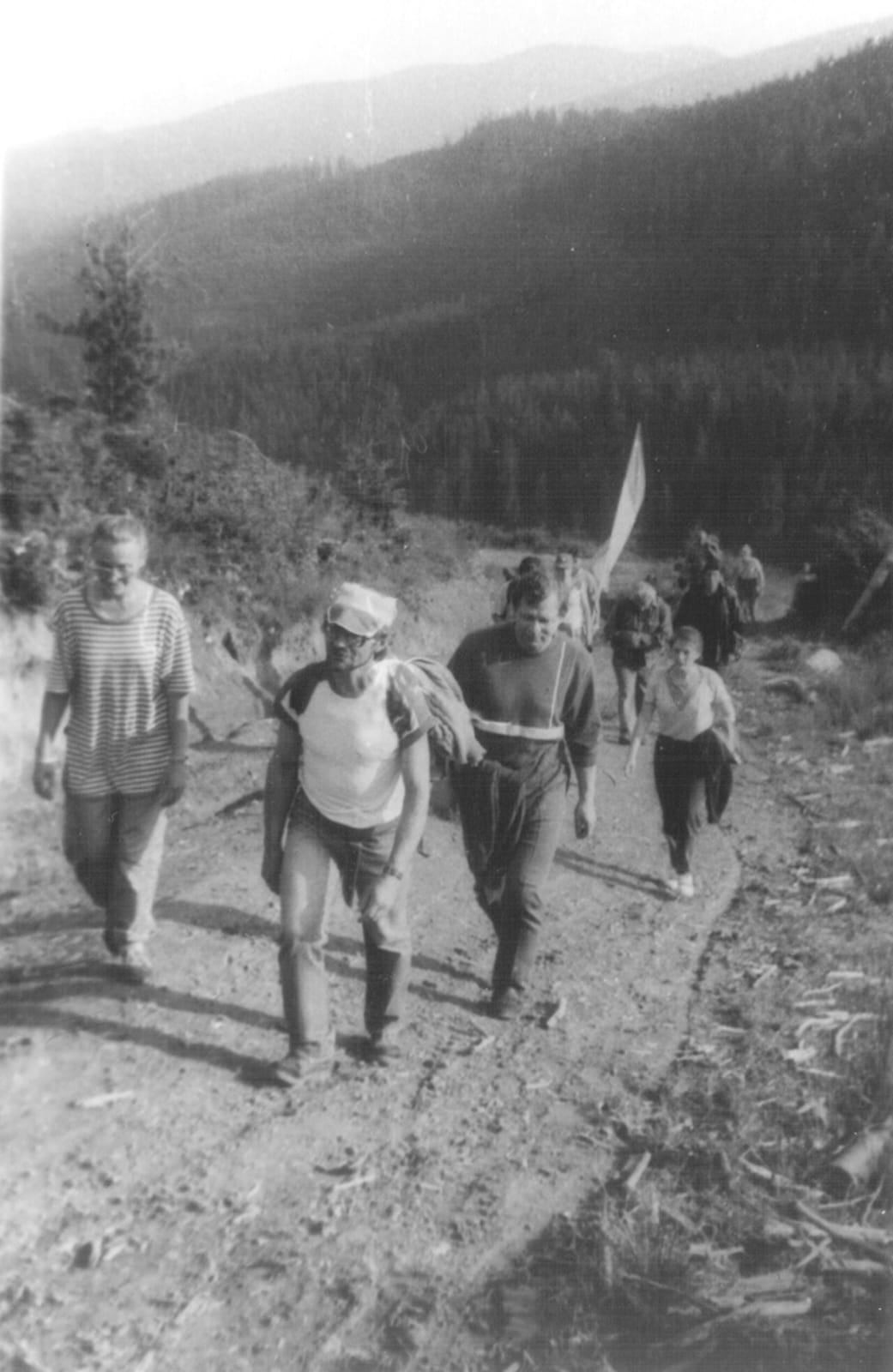
Climbing Hoverla. Among the participants is Mykola Tishchenko.
And finally, 1991 arrived, along with the declaration of independence. How was this received in the Donetsk region?
There wasn’t much euphoria, since many people still had doubts. But two weeks after the Act of Declaration of Independence of Ukraine was proclaimed, we were already organizing rallies with blue-and-yellow flags, even though they weren’t yet an official symbol. We did this with faith in the future. It was scary, but we knew—this was our chance.
And on December 1, 1991, during the nationwide referendum in Ukraine on the declaration of independence, the majority of citizens voted in favor of Ukraine, and that was a huge step forward. The Donetsk region, in my opinion, made a significant contribution to supporting independence; it changed the course of history.
Were there any difficulties in organizing the movement and campaigns at that time?
Of course. There was pressure, and there were even dissatisfied people among our acquaintances. But we understood that we were doing important work. We traveled around the districts, talked to people, organized small concerts and lectures, and engaged young people. This helped build hope and understanding.
Let’s return to Ukrainian Statehood Day—what does this day mean to you personally?
It’s a symbol of our nation’s resilience. These days, as the country defends its freedom, this holiday takes on special meaning. Ukraine must be independent. Many lives have been sacrificed for this, and we must protect this freedom.
Thank you for this conversation. Your words serve as a reminder of dignity and responsibility toward Ukraine’s future.