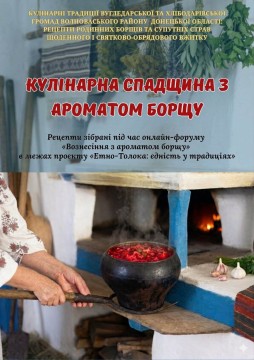
Cooking is a language through which history and traditions are passed down from generation to generation. This is precisely the idea embodied in a unique collection of recipes created following the online culinary forum “Ascension with the Aroma of Borscht.”
The forum was held at the Bogoyavlensky Rural House of Folk Art in the Vuhledar community as part of the “Ethno-Toloka: Unity in Traditions” series—a joint project of the Khlibodarivka and Vuhledar communities.
The collection “Culinary Heritage with the Aroma of Borscht,” compiled by folklorist Iryna Kryuchenko, has become a true embodiment of this spirit, bringing together 18 authentic family recipes from the two communities.
The publication is the result of a collaborative effort involving experts dedicated to preserving local traditions. The initiative was carried out through the joint efforts of the Vuhledar and Khlibodar communities with the support of the Volnovakha District State Administration, underscoring the regional significance of this work.
The main goal of the collection was to document, study, and promote the culinary heritage of southwestern Donetsk Oblast. The publication aims to preserve the unique nuances of recipes and culinary secrets passed down through local families.
The collection organizes the rich array of local traditions by dividing the recipes into three thematic sections:
1. Borscht as a ceremonial dish in the folk holiday calendar: explores the role of borscht during festive occasions according to the folk calendar. This section opens with a recipe for green borscht with tomatoes (from the village of Bohoyavlenka), which is recognized as part of the intangible cultural heritage of the Donetsk region, and also includes Lenten and festive variations of the dish.
2. Green borscht of the summer calendar cycle: showcases the variety of seasonal variations, where sorrel, nettles, and young beet greens are the main ingredients.
3. Red borscht: local cooking traditions and seasonal adaptations: presents the richness of traditional red borscht, including versions made with beet kvass, tomatoes, and roasted vegetable preparations for winter.
Thanks to the active involvement of community members who shared the secrets of their family recipes, this brochure has become an important tool for preserving the culinary traditions of the Volnovakha District. This cookbook is a significant part of the cultural chronicle that preserves the aroma and flavor of borscht for future generations.
The collection can be viewed at the following link: https://drive.google.com/file/d/19uNBL5XTQZjUOW1E5k-9J3exdC4fOW_k/view
Based on materials from the Khlibodarivka Village Military Administration