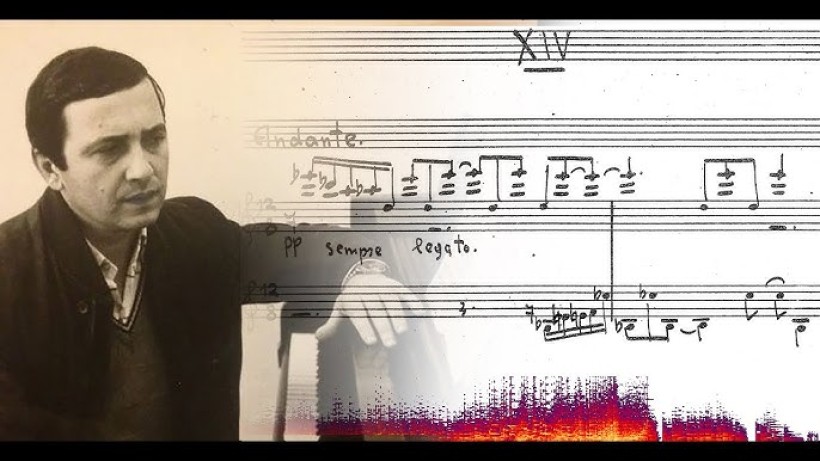
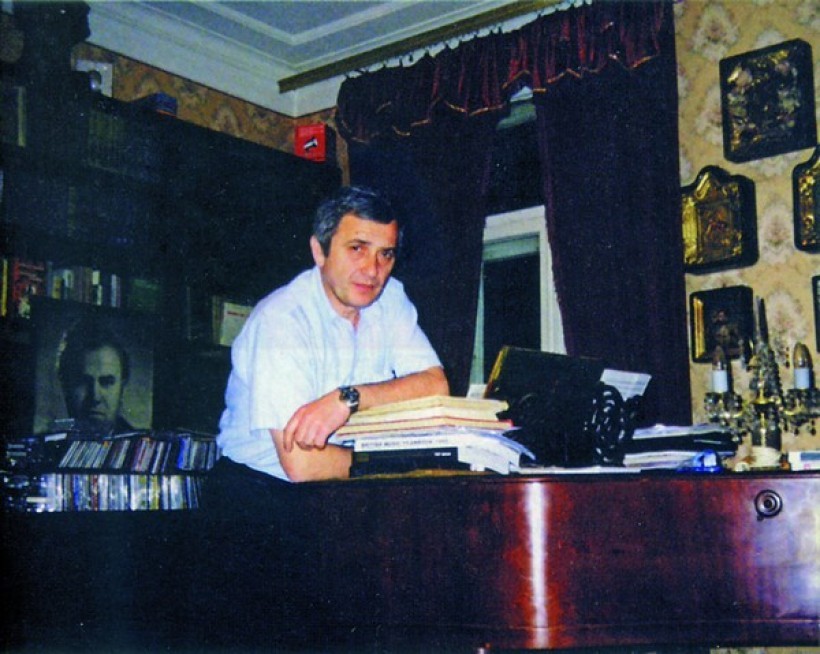

On 17 January 2026, we will mark the 81st anniversary of the birth of Ivan Karabits — a man of his era whose name has become synonymous with Ukraine's cultural breakthrough. A composer, conductor, public figure, and philosopher of sound, he did not just write music — he built cultural bridges between Ukraine and the world at a time when few people knew about our country.
His fate reflects the complex history of the 20th century. Few people knew that behind the familiar surname Karabits lay a Greek name — Karabitis. His true origins were a family secret that the maestro kept for decades. The shadow of Stalin's deportations, which took half of his family, taught him to remain silent. On his mother's side, he was Ukrainian from Bila Tserkva, and on his father's side, he was Greek. He often faced prejudice from the Soviet ‘fifth column,’ but he never complained. He transformed this inner pain into music, which eventually conquered even the legendary Carnegie Hall.
For modern Ukraine, Ivan Karabits is first and foremost the founding father of the Kyiv Music Fest. Since 1990, this festival has become a ‘window to Europe’ for Ukrainian composers. His energy was enough for everything: he revived the memory of Vladimir Horowitz by creating a piano competition of the same name, and at the same time nurtured a new generation of stars within the walls of the Music Academy.
Karabits' students — from Andriy Bondarenko to Nazariy Yaremchuk — are the living legacy of a teacher who taught them not only technique, but also the ability to be ‘citizens of art.’ His method was inherited from the great Boris Lyatoshynsky: not to impose authority, but to be a spiritual mentor and friend.
Ivan Karabits was a special patriot. As Boris Oliynyk aptly noted, his love for Ukraine was devoid of exaltation and theatricality. It was a deep, intellectual devotion.
The maestro's creative output is impressive in its scale: symphonic works and chamber masterpieces; ‘The Garden of Divine Songs’ based on poems by Skovoroda — a true gem of Ukrainian Baroque in a modern interpretation; over 50 popular songs and music for films, which continues to live on its own.
His heart belonged to Donetsk Oblast. For our region, Ivan Karabits is a symbol of perseverance, belief in the fulfilment of dreams and love for his native land. A native of the small village of Yalta in the Pershotravneve (now Volnovakha) district of Donetsk region, a graduate of the Artemivsk Music College (now the Ivan Karabits Bakhmut College of Culture and Arts), he declared to the whole world: Donbas is not only coal and factories, it is a land of high culture and refined spirituality. His oratorio ‘My Land is Called Donbas’ and symphonic ‘Kyiv Frescoes’ are the confession of a man who felt his roots keenly and was not afraid to be himself.
Today, the Karabits family maintains close ties with the composer's small homeland and the art education institutions that bear the name of the outstanding composer and conductor.
Now, as we fight for our identity, the figure of Ivan Karabits becomes even more significant. His music is not just the sounds of the past, it is ‘the intonations of the present and the rhythms of the future.’ A music school in Toretsk and a college of culture and arts in Bakhmut, cities that have become symbols of our resilience, bear his name. And there is a special symbolism in this: Karabits' music continues to be heard where the spirit of the nation is forged.
Karabits' artistic mission continues. He proved that a native of a small village can change the world if his heart beats in unison with his native land.