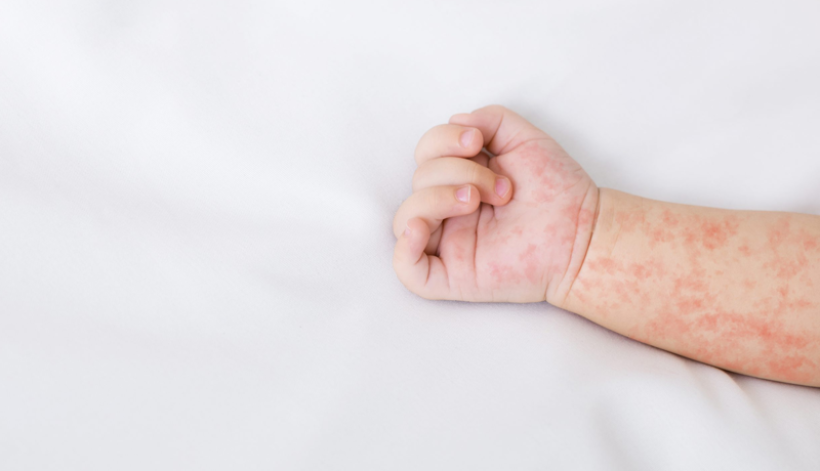
Measles is one of the most contagious infectious diseases in the world. It’s not just a few days of fever and a rash. Measles spreads very easily from person to person, and the virus can remain contagious in the air for up to two hours after an infected person has left the room. According to the CDC, up to 9 out of 10 susceptible people can become infected after close contact with an infected person if they are unprotected.
Today, measles is making its presence felt again, not just through isolated cases but through large-scale surges in cases. In Europe and Central Asia, 33,998 cases of measles were reported in 2025; the WHO and UNICEF emphasize that the risk of outbreaks persists due to gaps in vaccination coverage. And 2024 was the worst year for measles in the European region in over a quarter of a century: 127,350 cases were reported, the highest number since 1997.
Measles does not start immediately with a rash. Symptoms usually appear 10–14 days after infection. The first signs are a high fever, cough, runny nose, redness and watery eyes, as well as small white spots on the inside of the cheeks. Only then does the characteristic rash appear, which usually starts on the face and neck and gradually spreads to the entire body. A person is contagious from 4 days before the rash appears until 4 days after.
The most dangerous aspect of measles is not the rash itself, but the complications. Complications of measles include otitis, bronchitis, pneumonia, diarrhea, and encephalitis; this disease can even lead to death. The WHO also notes that there is no specific antiviral treatment for measles: treatment is primarily supportive, and severe consequences can include pneumonia, brain inflammation, blindness, and death.
After recovering from measles, there may be a prolonged weakening of the immune system, which is referred to in popular sources as “immune amnesia”: the body seems to partially “lose its memory” of previously acquired immunity to other infections. This is why measles is dangerous not only during the acute phase of the illness but also in the period following it.
The most reliable protection against measles is vaccination. According to the WHO and CDC, two doses of the measles vaccine provide up to 97% protection and confer long-lasting, often lifelong immunity. To prevent outbreaks, vaccination coverage with two doses in each community must be at least 95%. This level of coverage protects not only those who have been vaccinated but also infants, people with medical contraindications, and individuals with weakened immune systems.
The myth that measles is a “common childhood illness that is better to just get over” is dangerous. Getting over it does not mean “getting through it easily.” Unlike natural infection, vaccination provides protection without the risk of pneumonia, encephalitis, hospitalization, or severe health consequences.
An updated National Immunization Schedule has been in effect in Ukraine since January 1, 2026. The MMR vaccine is used to protect against measles, mumps, and rubella. The first dose is administered at 12 months of age, and the second at 4 years of age. Administering the second dose at an earlier age allows for reliable protection to be established as early as the preschool years.
It is also important to note that vaccination according to the National Schedule is free of charge. This means that a child is entitled to receive vaccinations free of charge at a healthcare facility participating in the routine immunization program.
If a child has missed a vaccination, this is not a reason to forego protection. Missed doses should be caught up on as soon as possible according to an individual schedule, which a pediatrician or family doctor can help create. This is especially important for children and adolescents, as unvaccinated groups become environments for the rapid spread of measles.
If a child develops a high fever, cough, runny nose, red eyes, and a rash, do not go to the clinic without prior notice. Due to measles’ high contagiousness, you must first contact a doctor and follow their recommendations to avoid putting other patients at risk, especially infants and people without immunity.
Measles doesn’t care if it’s a convenient time to get sick. It spreads quickly, easily leads to complications, and always takes advantage of gaps in the population’s immunity. That is why timely vaccination is not just a formality on the calendar, but real protection for a child’s life and health. And when parents follow the vaccination schedule, they protect not only their own family
Measles doesn't care if it's a good time to get sick. It spreads quickly, easily leads to complications, and always exploits gaps in the population’s immunity. That is why timely vaccination is not just a formality on the calendar, but real protection for a child’s life and health. And when parents follow the vaccination schedule, they protect not only their own family but the entire community.
Specialists at the State Institution “Donetsk Regional Center for Public Health of the Ministry of Health” conduct epidemiological surveillance of measles, analyze measles vaccination coverage among the population, and distribute the measles vaccine among healthcare facilities in the Donetsk region.
You can check vaccine availability at healthcare facilities in the Donetsk region on the official website of the State Institution “Donetsk Regional Center for Public Health of the Ministry of Health” at the link: State Institution “Donetsk Regional Center for Public Health of the Ministry of Health” https://dn.cdc.gov.ua/citizens/vaccination/
#Measles #ChildVaccination #PublicHealth DonetskRegionalCenterforPublicHealth#
State Institution “Donetsk Regional Center for Public Health of the Ministry of Health”