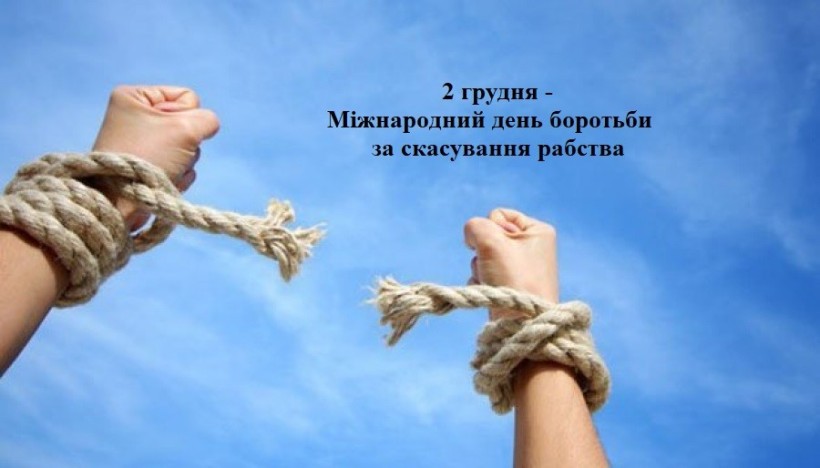
Every year on December 2, the world celebrates the International Day for the Abolition of Slavery, a date that draws attention to modern forms of human exploitation. Despite the fact that classic slavery has long been condemned by the world community, its new manifestations still exist and can affect anyone who finds themselves in difficult life circumstances.
Modern slavery is not shackles or dark basements. It is often hidden in situations where a person is deprived of the opportunity to make free decisions. Such manifestations include: forced labor, debt exploitation, psychological and physical pressure, threats, seizure of documents, restrictions on freedom of movement.
Those whose lives have been most affected by the war are especially vulnerable: internally displaced persons, refugees, people who have lost their jobs or housing, residents of temporarily occupied territories.
In temporarily occupied territories, Ukrainians often live in an environment where there is no freedom of choice. People are forced to work for the occupation structures, perform physically exhausting or humiliating tasks, sometimes under threat of detention or deprivation of basic resources.
For many, the only way to get money, food, or minimal living conditions is through work, which is actually a form of labor slavery. At the same time, information isolation makes it difficult to access legal or humanitarian assistance.
In conditions of population displacement, loss of documents, and economic instability, the likelihood of falling into situations of exploitation increases — both in Ukraine and abroad. Criminals take advantage of people’s vulnerability, promising quick earnings or secure employment, but in reality dragging them into a trap of dependence.
The main tool for combating modern slavery is awareness. Knowing your rights, checking employers, being cautious about promises of “easy work,” and seeking help in a timely manner can preserve your health, freedom, and life.
If you or someone you know finds themselves in a dangerous situation, it is important to act and seek support.
0 800 501 720 – Commissioner for Human Rights of the Verkhovna Rada of Ukraine
1547 – Government Hotline
102 – National Police of Ukraine
116 123 (from mobile) or 0 800 500 335 – National Hotline for the Prevention of Domestic Violence, Human Trafficking and Gender Discrimination
527 (from mobile) or 0 800 505 501 – National Hotline for Combating Human Trafficking and Counseling of Migrants
116 111 (from mobile) or 0 800 500 225 – National Hotline for Children and Youth