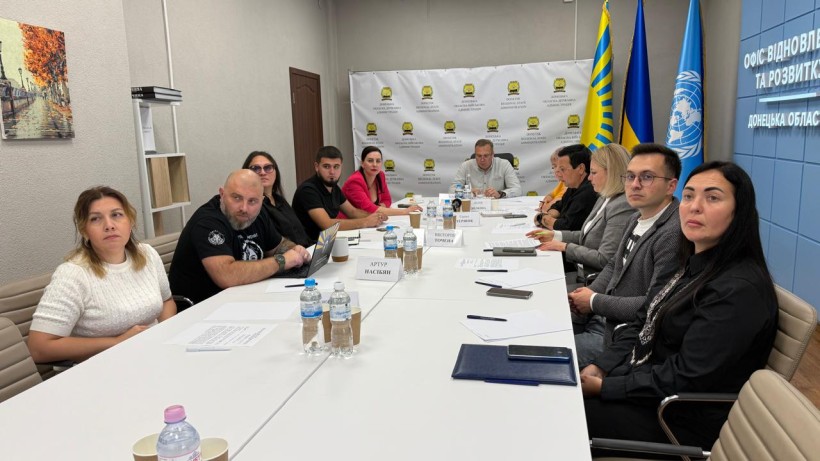
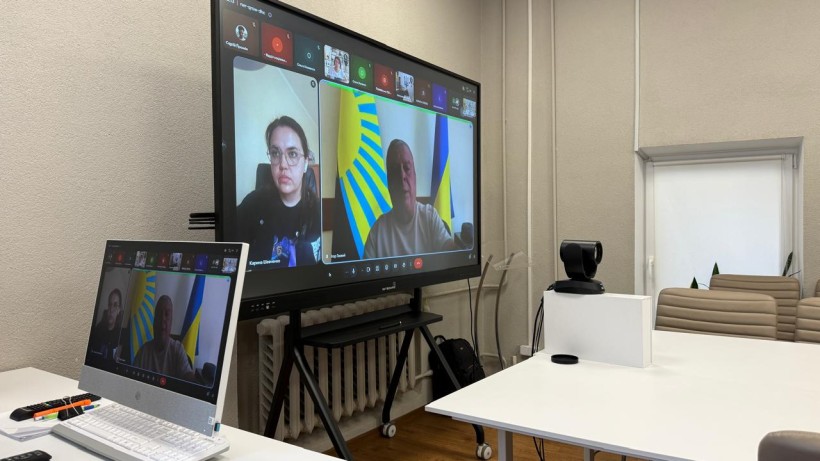
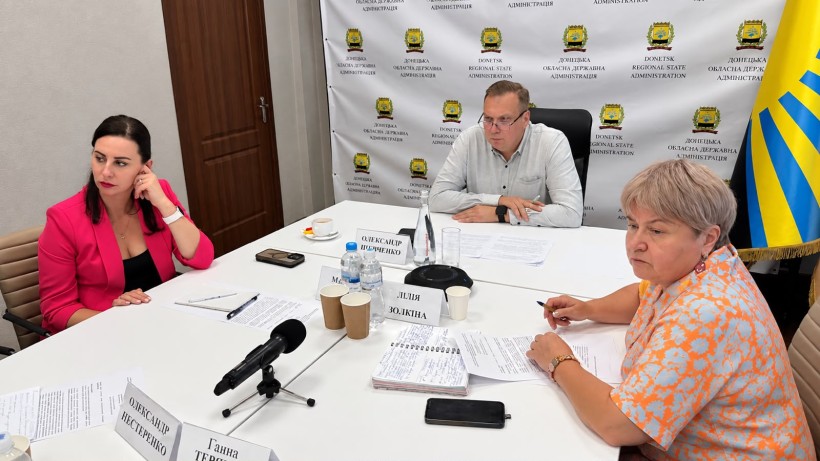
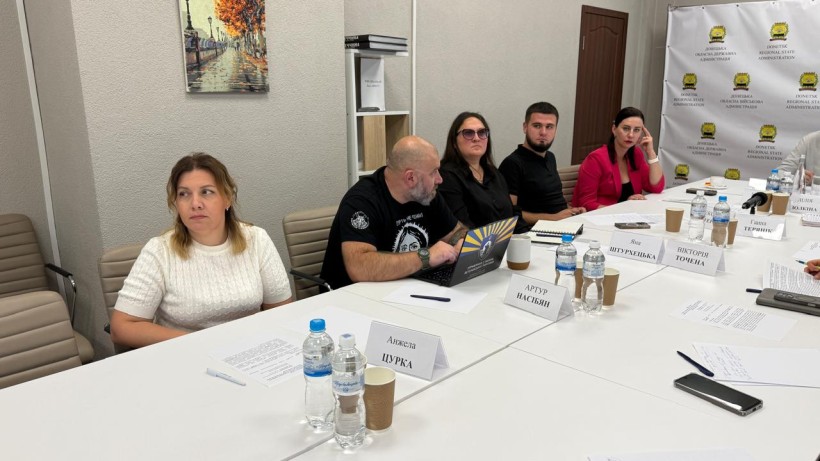
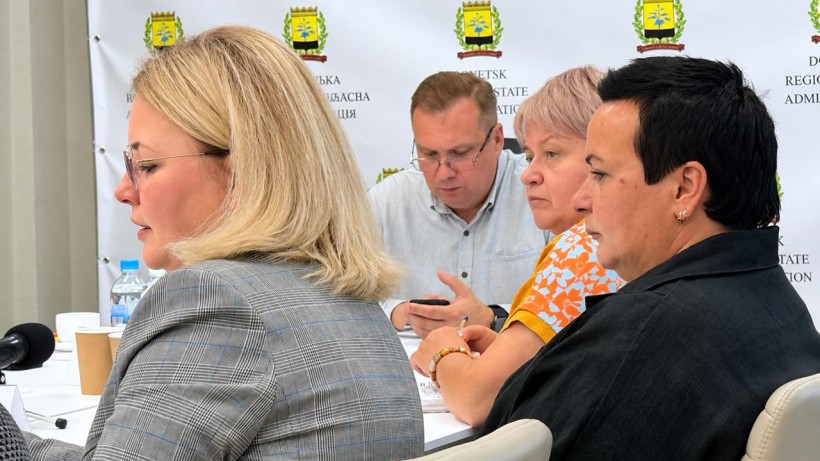
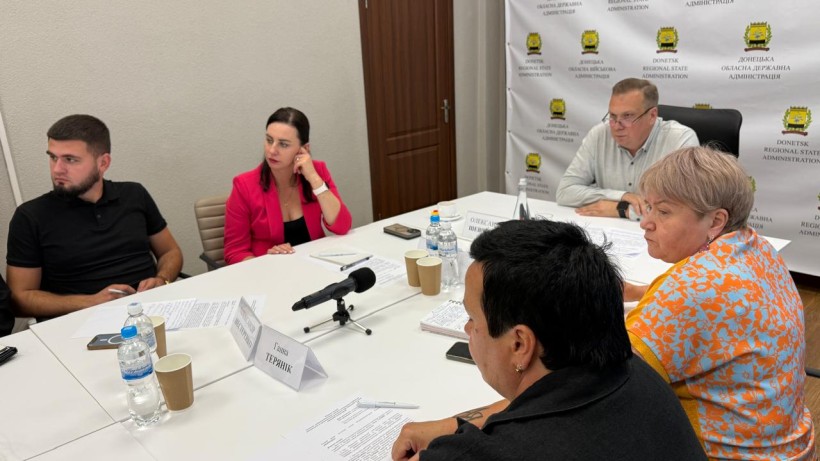
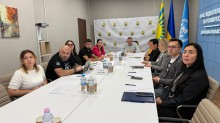
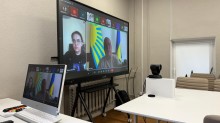
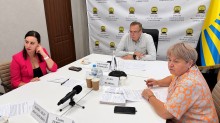



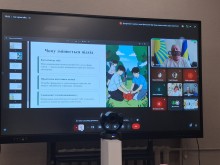
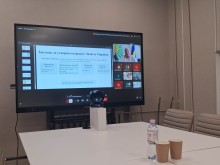
On September 15, a regular meeting of the Coordination Council on the Promotion of Ukrainian National and Civic Identity under the Donetsk Regional State Administration was held, chaired by Oleksandr Shevchenko, deputy head of the regional state administration.
The event brought together members of the Coordination Council, heads of district state and military administrations, as well as heads of departments responsible for national and patriotic education.
The main topic of the meeting was the integration of educational reforms, the protection of intangible heritage, and the development of modern museum spaces to counter hostile information and cultural operations.
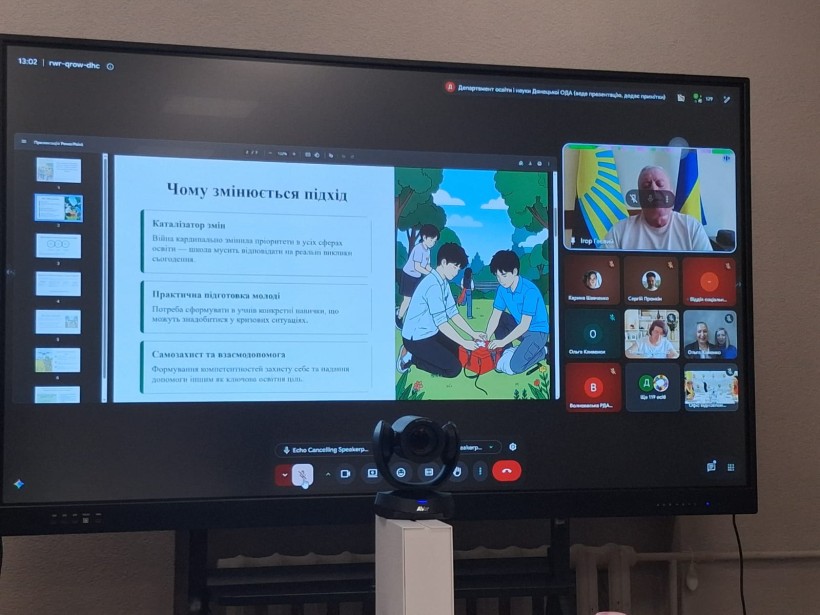
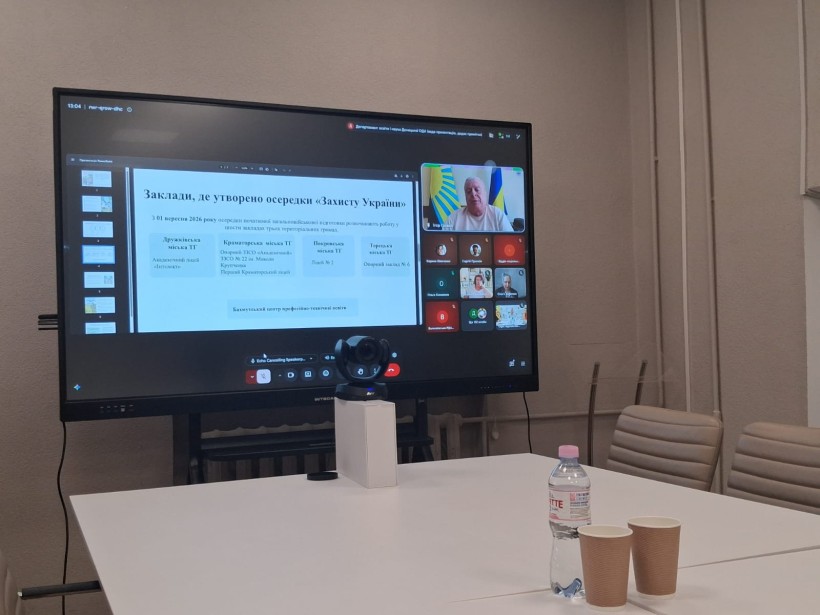
Ihor Haievyi, Director of the Department of Education and Science of the Regional State Administration, spoke about key changes in the teaching of the subject “Defense of Ukraine.” In accordance with new requirements and resolutions of the Cabinet of Ministers of Ukraine, a network of specialized centers for basic general military training of youth is being actively developed in the region.
As of today, seven such centers have been approved in the region; they operate within general secondary and vocational-technical educational institutions in the Druzhkivka, Kramatorsk, Pokrovsk, Toretsk, and Bakhmut communities.
The training course for high school students has undergone a radical transformation: instead of traditional lectures, practical intensive training sessions have been introduced, during which boys and girls work together to master first aid skills according to NATO standards, as well as the operation of unmanned aerial vehicles, the basics of radio communication, cybersecurity, and countering disinformation. In addition, educators in the region are already preparing to host the annual three-stage All-Ukrainian competition for local chapters, whose program will include marksmanship training, orienteering, and an obstacle course.
Viktoria Tochena, head of the Department of Culture and Tourism of the Regional State Administration, addressed the topic of preserving national memory and countering the enemy’s cultural and historical information and psychological operations. She emphasized that despite the war and the forced relocation of institutions, efforts to document the unique traditions of the Donetsk region have not stopped, and the regional inventory of intangible cultural heritage has grown from 15 to 32 elements since the start of the full-scale invasion. Five of these have already been included in the National List, including Avdiivka porridge, Kryvolutska zaterka, the “Chasing the Vipers” ritual, stuffed cabbage rolls with potatoes, and the ritual bread of the Nadaziv Greeks.
Projects by the Donetsk Academic Regional Drama Theater from Mariupol—which is currently operating in Uzhhorod—as well as traveling exhibitions by the Donetsk Regional Museum of Local History, the Art Museum, and the Regional Children’s Library have become important tools for cultural diplomacy and preserving the truth about the war.
The development of museum spaces dedicated to the current Russian-Ukrainian war as a tool for affirming identity was discussed during presentations by invited researchers and volunteers. Olena Ivanova, a junior research associate at the “In Memory of the Heroes of Kruty” Memorial Complex, and Hanna Terianik, director of the Museum of the Modern Russian-Ukrainian War in Dnipro, shared their experiences in turning recent historical events into museum exhibits. Oleksandr Nesterenko, founder of the Museum of the Modern War, located at the Pokrovsk Sports and Youth Center, presented the story of how exhibits were preserved and evacuated from Pokrovsk to Dnipro, where a unique museum exhibition is currently on display and is constantly being expanded with new artifacts.
Summing up the meeting, the participants emphasized that only systematic and coordinated work at all levels—from the school classroom to the museum exhibition—allows the Donetsk region to confidently hold the cultural and spiritual front. The combination of innovative approaches to educating young people with the careful preservation of historical memory remains a reliable shield against the enemy’s attempts to depersonalize the region or distort its Ukrainian essence.