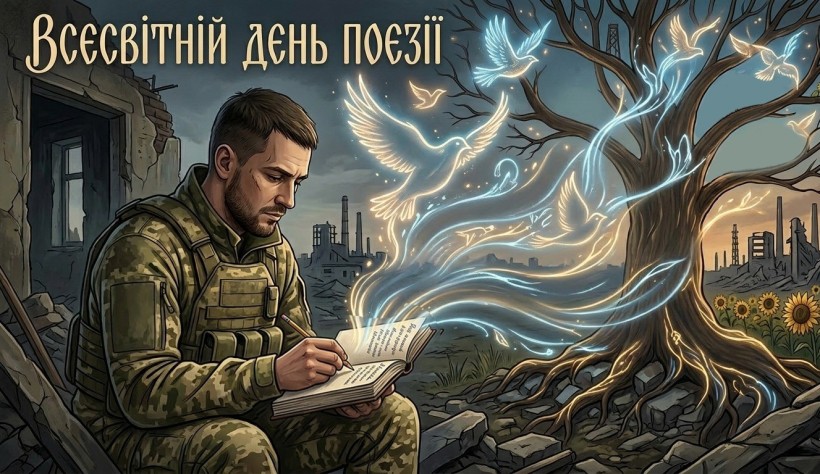
March 21 marks World Poetry Day—a day dedicated to the power of words, which can inspire, preserve memory, and sustain people even in the most difficult times. For Ukraine today, this day holds special significance, as poetry has become not only an art form but also the voice of war, pain, and struggle.
Donetsk Oblast is a region now associated primarily with the front lines, destruction, and the defense of Ukraine. Yet at the same time, it is a land that has given Ukrainian culture many poets. Among them are Volodymyr Sosyura, Ivan Dziuba, Oleksa Tykhyi, Oksana Stomina, Iren Rozdobudko, and others.
The current war is giving birth to a new wave of poetry—frontline poetry, honest and brutally candid. It is written by people who face the war head-on every day: soldiers, medics, volunteers, and journalists. They create poetic documents of the era, where every line is written amid battles and losses: Bohdan Nazarenko, Pavlo Vyshebaba, Serhiy Horbatenko, Valerii Puzik, Dmytro Lazutkin, Valeria Subotina (Nava), and many others.
At the same time, the war has claimed the lives of many Ukrainian artists. Each of these names represents lost opportunities for culture, unwritten works, and voices that could have continued to resonate in literature for a long time to come.
Among them:
- Maksym Kryvtsov (1990–2024) — poet and soldier, author of the collection “Poems from the Emplacement.”
- Ilya Chernilevsky (1991–2022) — poet and musician, serviceman of the Armed Forces of Ukraine.
- Artem Dovhopolyi (1994–2022) — poet.
- Boris Humenyuk — poet and prose writer, fighter in the “OUN” volunteer battalion, missing in action since 2022.
- Viktoria Amelina (1986–2023) – writer and social activist, killed in a Russian missile strike.
- Volodymyr Vakulenko (1972–2022) – children’s writer and poet, killed during the occupation of the Kharkiv region.
These are just some of those whom Ukrainian culture has lost. However, their works remain with us—in books, quotes, and the memories of readers. The poetic word continues to sustain Ukrainians, helping us make sense of what we have experienced and preserve the memory of the events of our time.
On Poetry Day, it is worth remembering those taken by the war and supporting those who continue to write. Read their works, share their words, and remember their names. May the memory of the fallen be bright, and may we hope that this sad list will never grow any longer.