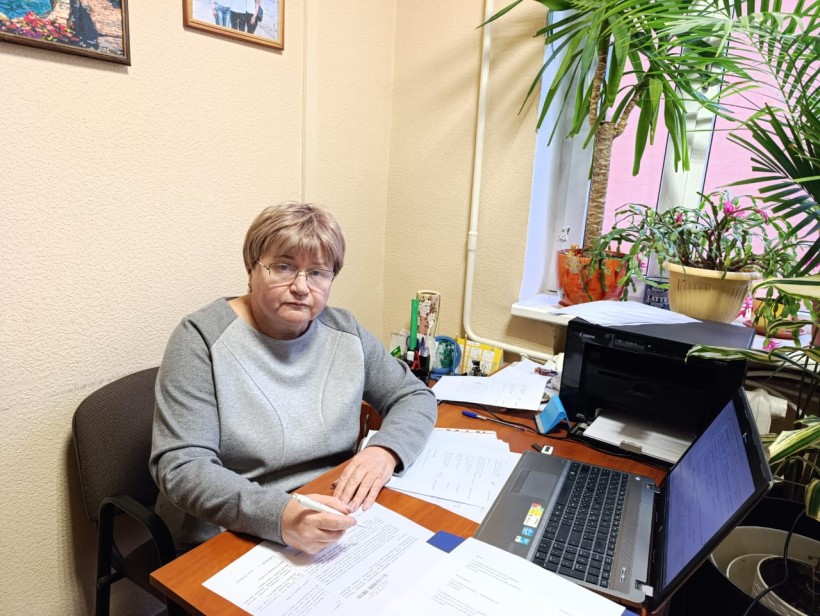
On March 27, 2026, the head of the Department of Family, Youth and Mass Events of National and Patriotic Education of the Donetsk Regional State Administration, Liliya Zolkina, participated and spoke at the roundtable “Prevention and Combating Gender-Based Violence in Ukraine: Identifying Key Gaps and Developing Specific Proposals to Eliminate Them”. The event was held in a hybrid format at the National University of Kyiv-Mohyla Academy and brought together representatives of ministries, judicial and law enforcement systems, experts and practitioners from the regions and public and international organizations.
The event was organized by NaUKMA together with the NGO “Center for Social and Labor Research” with the support of the Ministry of Social Policy, Family and Unity of Ukraine. The round table was moderated by Natalia Fedorovych, Vice President of NaUKMA, initiator of the reform in the field of preventing and combating domestic violence.
During the event, the participants analyzed the current national and regional statistics for 2025, discussed the impact of updating the regulatory framework in 2024–2025, as well as previously identified legislative and practical gaps that complicate responding to cases of violence. Special attention was paid to issues of interdepartmental coordination at all levels, regional inequality of access to services, the peculiarities of work in front-line regions, psychological rehabilitation of victims, organization of assistance and support, work with perpetrators and enforcement of court decisions, as well as strengthening mechanisms for protecting children from violence.
As part of the discussion block dedicated to problematic aspects of state policy implementation, Liliya Zolkina presented the situation in the Donetsk region and outlined the key challenges of implementing legislation in wartime. In particular, it was emphasized that the main and defining problem for the region is the conduct of hostilities and security risks, which objectively limit access to people, the stability of the services, the possibility of departures, the preservation of infrastructure and personnel potential. It was separately emphasized that for security reasons, shelters for victims cannot currently operate in the Donetsk region, which significantly complicates the provision of safe temporary accommodation and comprehensive support.
At the same time, even under such conditions, specialized support services for victims continue to operate in the region both on the territory of the region and in relocation and remote formats. Specialists are being trained, including on issues of working with perpetrators, and court decisions are being implemented within the framework of existing procedures and capabilities.
In the practical part of the event, participants worked in thematic groups, where they developed specific proposals to address gaps and strengthen policy implementation mechanisms - identifying necessary changes to regulatory acts, responsible bodies, indicative deadlines and expected effects. The recommendations developed will be summarized for further development and use in improving regulatory and practical tools for preventing and combating gender-based violence.