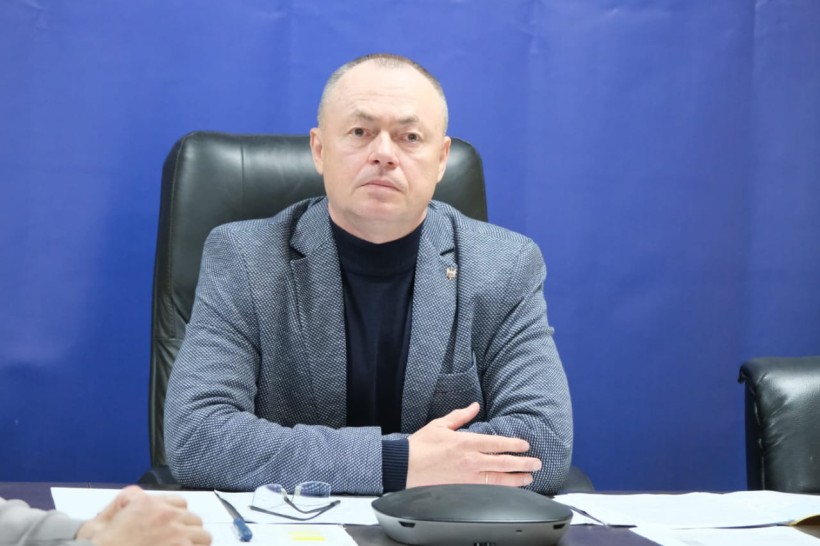

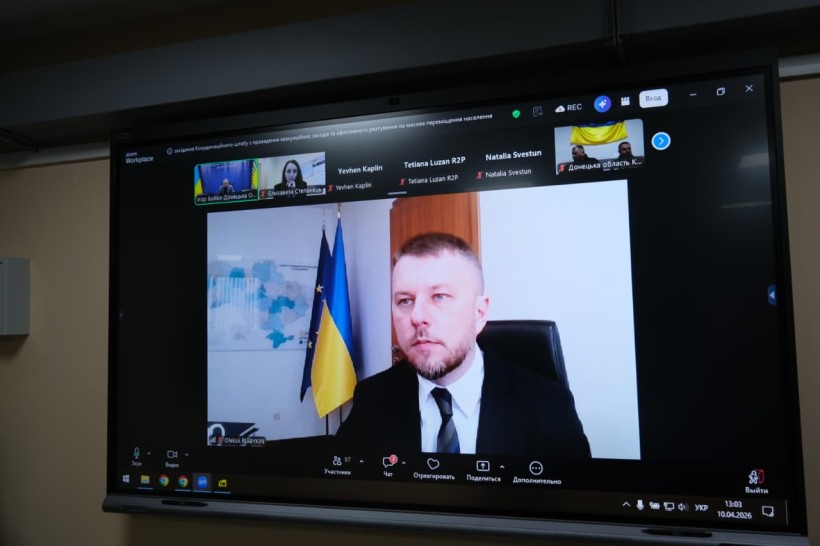


Ihor Boiko, Deputy Head of the Donetsk Regional State Administration, participated in an online meeting of the Coordination Headquarters for Evacuation Measures and Effective Response to Mass Population Displacement, chaired by Oleksii Kuleba, Deputy Prime Minister for the Reconstruction of Ukraine and Minister of Community and Territorial Development of Ukraine.
During the meeting, Ihor Boiko provided an update on the security situation in the Donetsk region and emphasized the need for further evacuation of the population from frontline areas.
“The security situation in the Donetsk region remains extremely difficult. Since the start of the full-scale invasion, 4,769 civilians have been killed, including 284 children, and 9,217 people have been wounded, including 524 children. 2,160 civilians are missing, including 536 children. In the first quarter of 2026 alone, 1,428 shelling incidents were recorded, 96 of which targeted populated areas. The enemy is actively using guided aerial bombs, unmanned aerial vehicles, FPV drones, artillery, and multiple launch rocket systems.
As a result of shelling in 2026, 225 civilians were killed, including 5 children, and 459 people were wounded, including 25 children. 242 people are missing, including 70 children. Under these conditions, evacuation remains the only effective way to save lives,” he said.
The deputy head of the region also emphasized that due to the complex security situation in the Kramatorsk district, the Donetsk Regional Defense Council decided at its meetings on March 19 and 26, 2026, to carry out a mandatory, compulsory evacuation of children along with their parents or legal guardians from certain areas of Sloviansk. This concerns 45 streets, 22 alleys, and 2 driveways, where, at the time the proposals were received from the “EAST” military group, there were 120 children in 87 families. As of April 9, 2026, 40 children remain in these territories.
Ihor Boiko also emphasized that evacuation processes in the region are systematically organized and ongoing.
“In cooperation with the Dnipropetrovsk and Kharkiv regional military administrations, two transit points are operating—in the cities of Pavlohrad and Lozova. The Pavlohrad point has a capacity of up to 117 people per day and has already received nearly 47,500 evacuees, including 8,500 children and 3,300 people with limited mobility. After relocating in August 2025, an additional 18,000 people received assistance there.
The transit point in Lozova can accommodate up to 184 people per day. In total, nearly 27,000 evacuees have passed through it, including 3,900 children and 1,400 residents with limited mobility.
Up to 20 joint teams are ready for evacuation operations every day—these are the National Police’s “White Angels” and the State Emergency Service’s “Phoenix” units, which are equipped with armored vehicles. “Paramedics are always involved in every operation to provide emergency care,” noted Ihor Boiko.
Following the meeting, the initiative regarding the mandatory evacuation of families with children from designated areas was approved by the Coordination Headquarters.