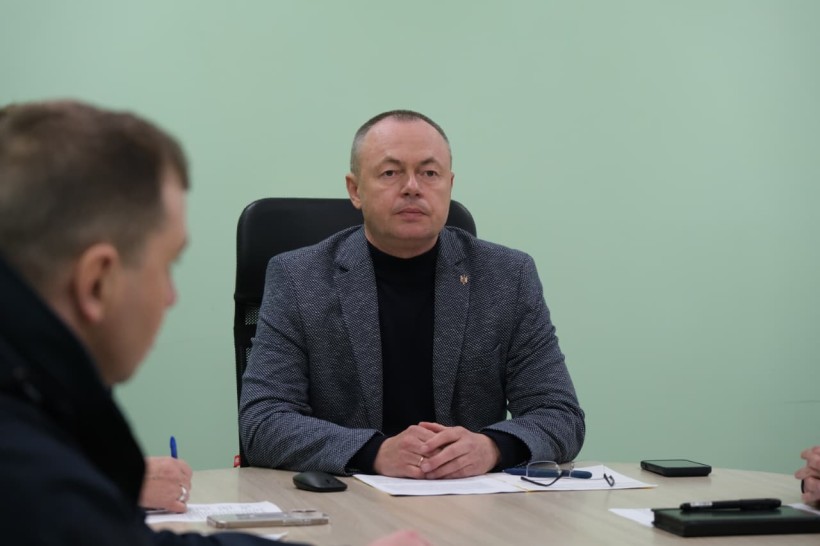
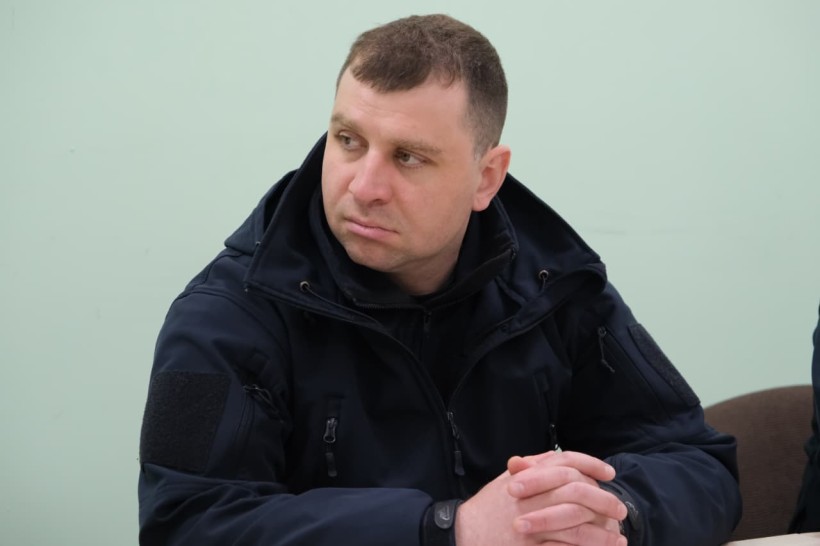
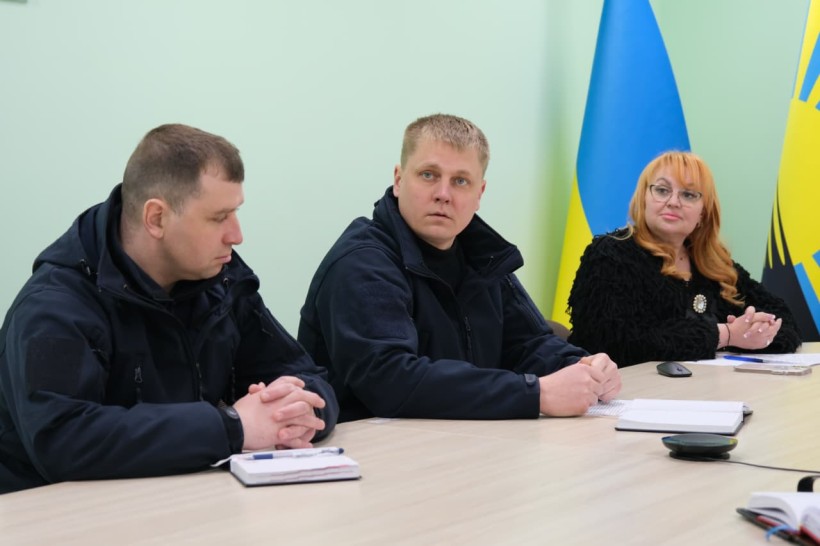


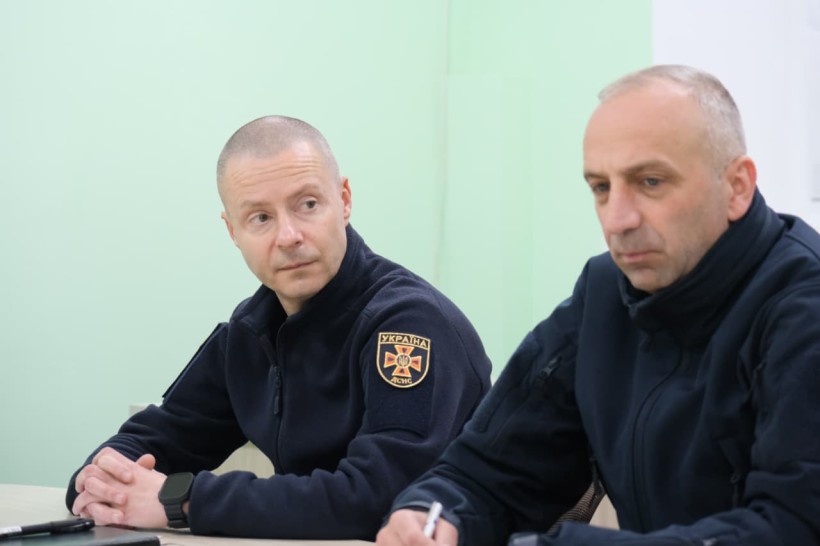


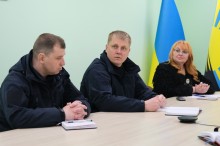


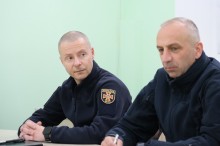
A working meeting was held in Donetsk Oblast, attended by Igor Boiko, Deputy Head of the Regional State Administration, as well as leaders of local communities, during which they discussed the development and implementation of the “Community Rescue Officer” security project under martial law.
The meeting reviewed the status of the initiative’s implementation in the local communities of the Kramatorsk district, specifically in the cities of Kramatorsk and Sloviansk, as well as in the settlements of Oleksandrivka and Novodonetsk. Particular attention was paid to the organization of preventive activities, civil protection measures, and the work of rescue officers directly in the field.
Andriy Vershylov, Acting Deputy Head of the Main Directorate – Head of the Civil Protection and Prevention Department of the Main Directorate of the State Emergency Service of Ukraine in Donetsk Oblast, reported on the project’s implementation results, current challenges, and priority tasks.
During the meeting, it was noted that the “Community Rescue Officer” project is a new initiative of the Ministry of Internal Affairs of Ukraine aimed at improving the effectiveness of the civil protection system at the local level. It is based on the positive experience of implementing the “Community Police Officer” project and aims to establish a sustainable security model in communities.
This project was presented by Ukrainian Minister of Internal Affairs Ihor Klymenko on June 26, 2025, in Dnipro during the “Safe Community 2025” forum. Its key objective is to ensure a rapid response to emergencies, develop systematic prevention measures, forecast risks, and prepare the public for potential threats.
During the discussion, it was also emphasized that local community leaders are actively involved in the project’s implementation, providing organizational support, on-site coordination, and facilitating effective cooperation among all participating services.
To ensure high-quality and safe performance of their duties, community rescue officers are equipped with appropriate gear, including combat uniforms, body armor, first-aid kits, and tablet computers.
In addition, the units are equipped with three vehicles: two SSANG YONG Musso Grand SUVs and one MITSUBISHI Pajero SUV. The vehicles are equipped with modern equipment, including unmanned aerial vehicles, vehicle-mounted and portable radios, fire extinguishers, radiation detection devices, medical kits, and charging stations.
Following the discussion, the meeting participants identified next steps for the project’s development, including expanding its geographic scope, strengthening logistical support, and improving the effectiveness of preventive work in communities. They also outlined the prospects for implementing the initiative in 2026, taking into account the security challenges posed by wartime conditions.