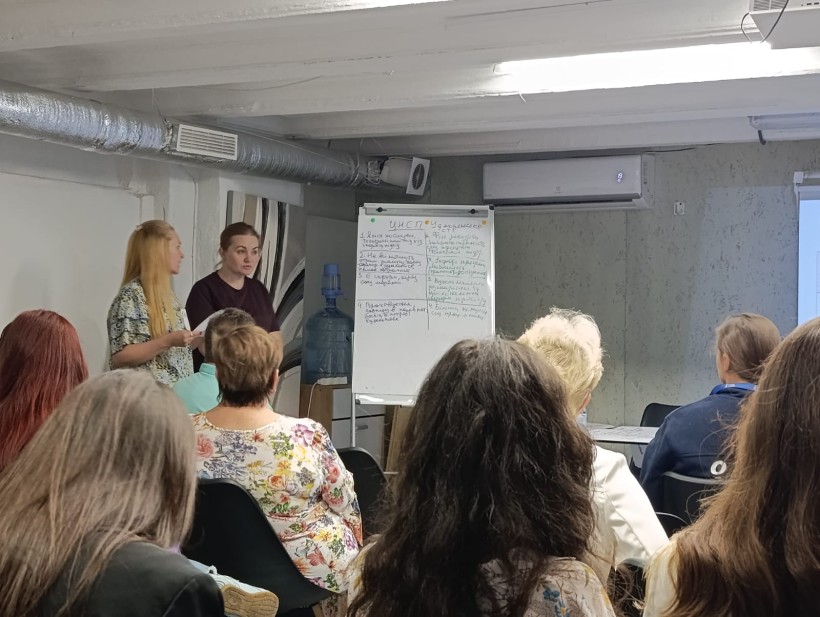
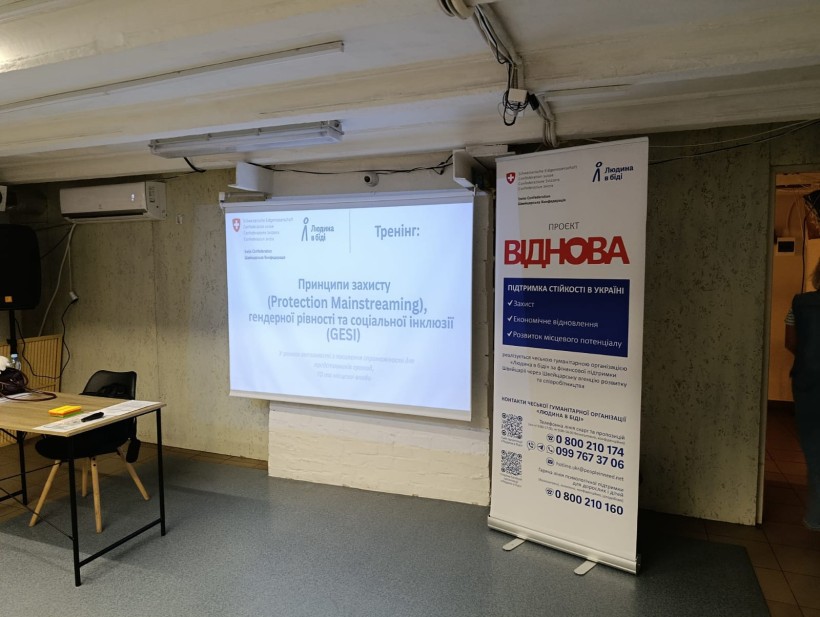
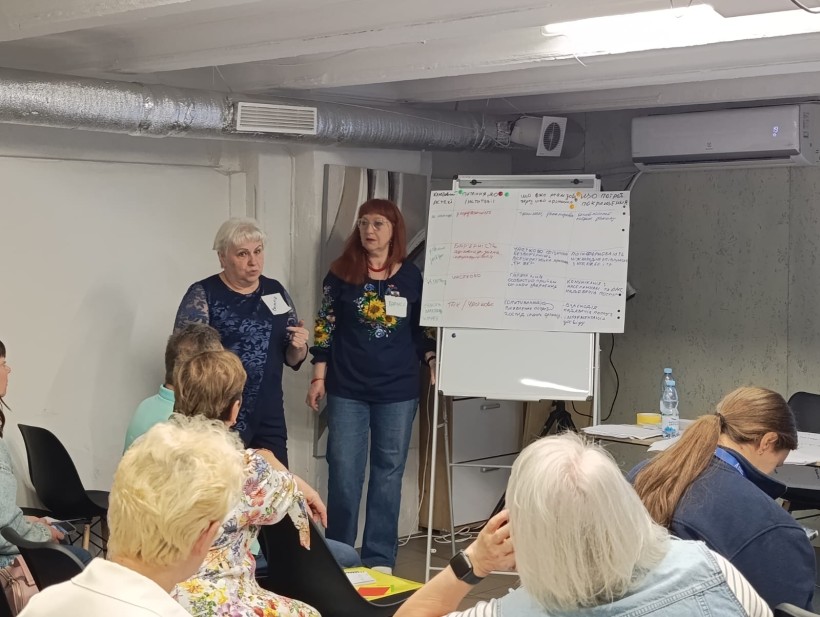
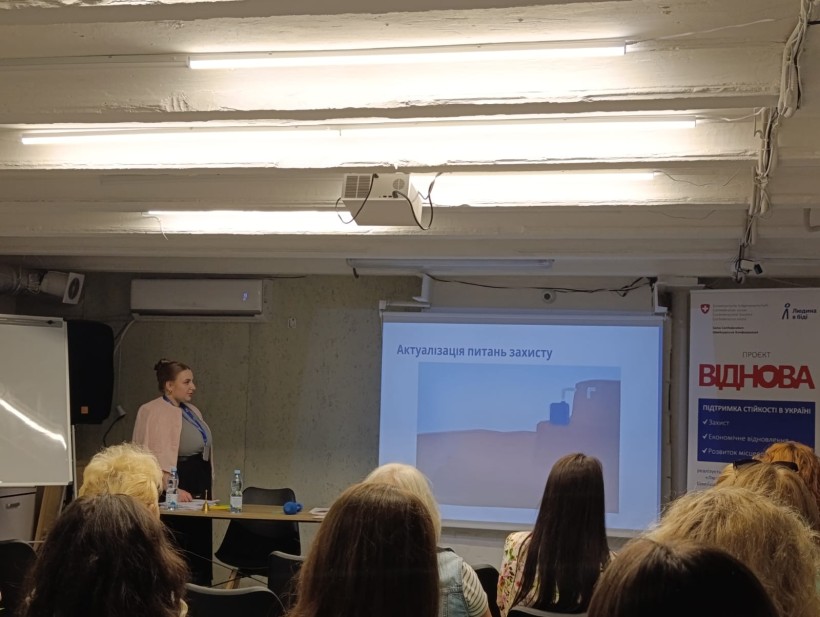
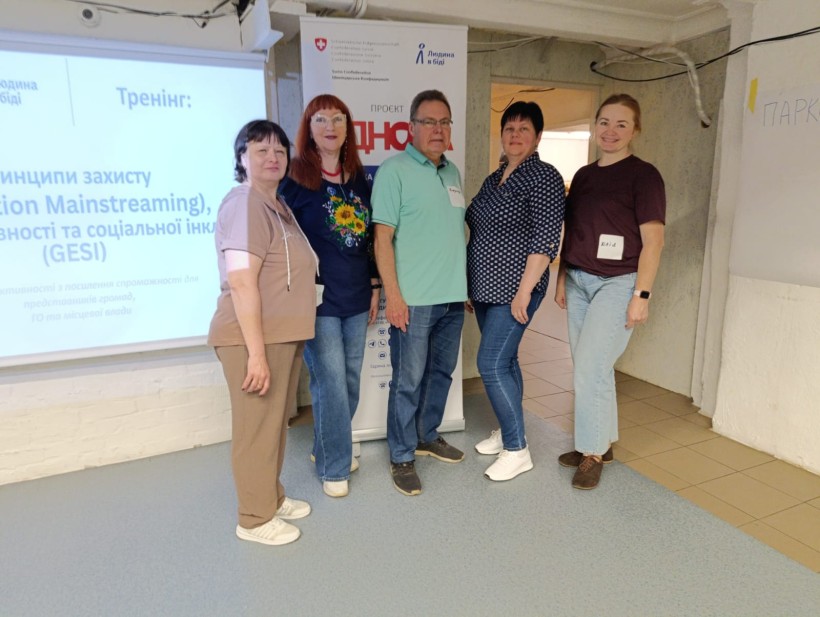
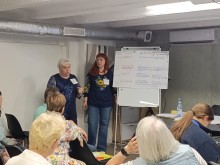
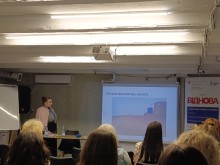
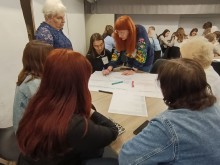
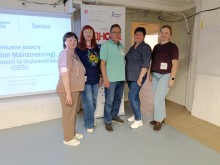
On May 19, 2026, a training on gender equality and social inclusion was held in the city of Dnipro, organized by the branch of the Czech humanitarian organization Clovek v tisni in Ukraine within the framework of the project
"VIDNOVA - Supporting Resilience in Ukraine" with financial support from the Government of Switzerland through the Swiss Agency for Development and Cooperation.
The event brought together representatives who are concerned with ensuring equal rights and opportunities for women and men, implementing family policy, supporting families with children, specialists working in the field of providing social services to the population, and other institutions and organizations interested in developing an inclusive and barrier-free environment in the communities of Donetsk and Dnipropetrovsk regions.
The training was also attended by representatives of the Department of Family, Youth and Mass Events of National and Patriotic Education of the Donetsk Regional State Administration, the Donetsk Regional Center of Social Services, and a representative of the relocated municipal institution “Donetsk Regional Social Center for Mother and Child”.
The aim of the event was to strengthen practical knowledge in the field of ensuring equal rights and opportunities, creating a barrier-free environment, and developing inclusive approaches in working with the population.
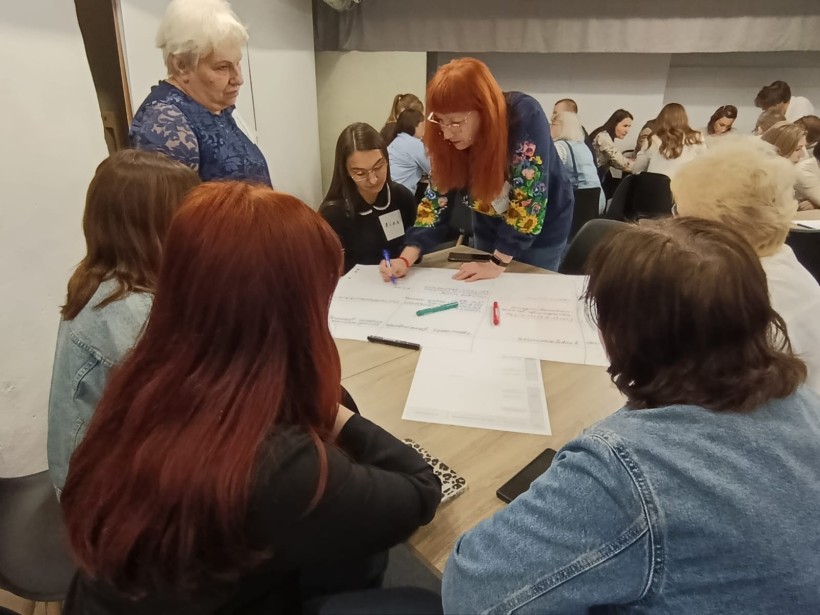
During the training, participants had the opportunity to update their knowledge of the principles of gender equality, non-discrimination, and social inclusion, and also participated in practical work with cases, interactive exercises, and discussions of current challenges in the field of access to social services for vulnerable categories of the population.
During the training, participants discussed key aspects of ensuring gender equality and social inclusion, including:
* challenges and barriers in accessing services for vulnerable categories of the population;
* modern approaches to creating a barrier-free and non-discriminatory environment;
* effective tools for inclusive communication;
* the role of local governments and the social protection system in ensuring equal access to services for all categories of the population.
Conducting such events contributes to strengthening interdepartmental interaction, exchanging practical experience, implementing modern inclusive approaches in communities, and strengthening partnerships between state institutions, public organizations, and international partners, which is especially important in today's conditions.