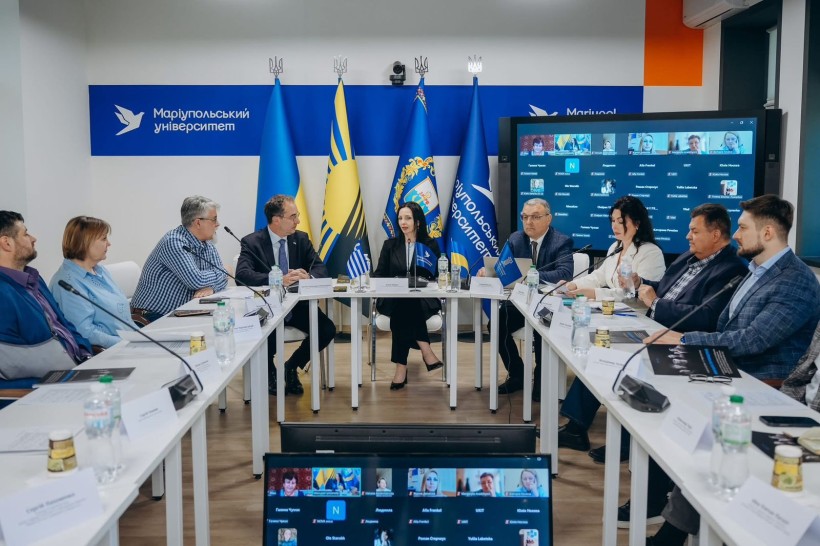
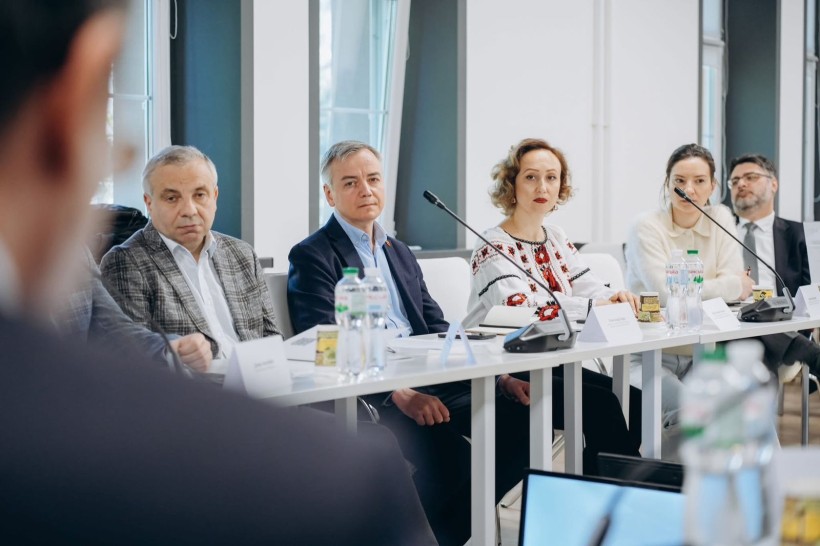
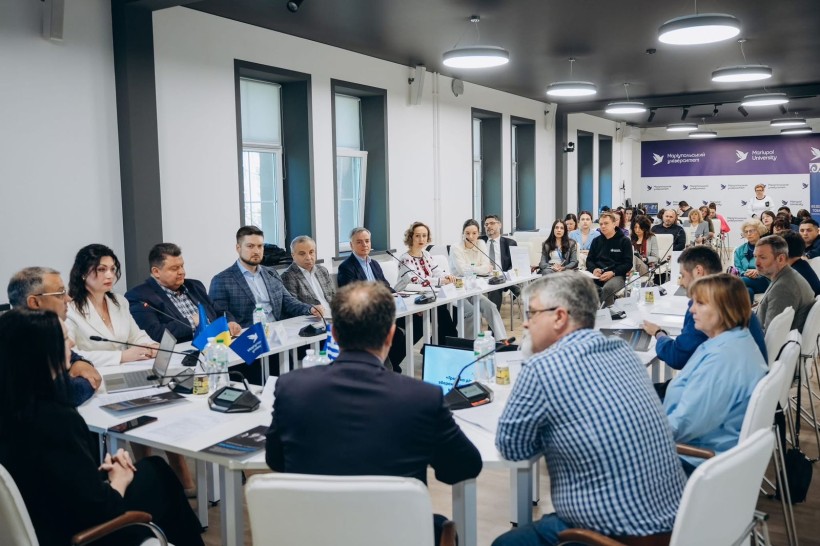
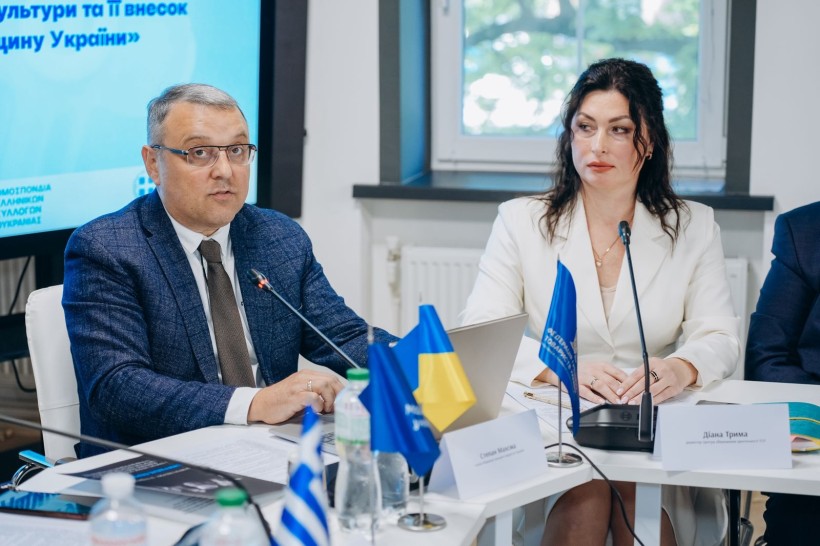
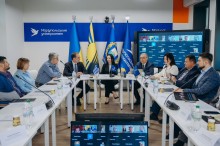
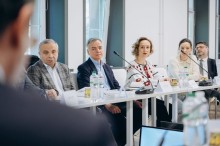
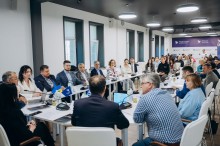
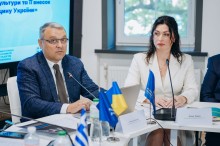
On May 11, 2026, Mariupol State University in Kyiv hosted a roundtable discussion titled “The Greek Community Amid the War: Preserving Greek Culture and Its Contribution to Ukraine’s Cultural Heritage.”
The event was organized by the Center for the Preservation of Identity in Temporarily Occupied Territories and the Center for Hellenistic Studies at Mariupol State University in cooperation with the Federation of Greek Societies of Ukraine.
Participants in the event included Pantelis Alexandros Dimitrakopoulos, Ambassador Extraordinary and Plenipotentiary of the Hellenic Republic to Ukraine; Tetiana Marena, Acting Rector of Mariupol State University; Ihor Lossovsky, Deputy Head of the State Service of Ukraine for Ethnic Policy and Freedom of Conscience; Volodymyr Tylishchak, Deputy Head of the Ukrainian Institute of National Memory Volodymyr Tylishchak, Deputy Mayor of Mariupol Denys Kochubei, Chairman of the Federation of Greek Communities of Ukraine Stepan Makhsm, as well as representatives of the Donetsk Regional State Administration, local government bodies, higher education institutions, cultural institutions, the scientific community, civil society organizations, researchers, and local historians.
During the roundtable, participants discussed the preservation of the cultural identity of Ukraine’s Greeks amid war and temporary occupation, state policy on the protection of national minority languages, support for internally displaced persons, the preservation of the historical memory of displaced peoples, and the role of civil society organizations in consolidating Ukraine’s Greek community.
Participants paid special attention to issues of documenting, preserving, and promoting the intangible cultural heritage of the Greeks of the Azov region, developing the Rumai language heritage, supporting traditional culture, integrating the cultures of displaced peoples into Ukraine’s cultural space, and fostering intercultural dialogue.
Thematic discussions also covered the interaction between Greek and Ukrainian cultures in the arts and education, the influence of Greek culture on Ukrainian art, the digital transformation of cultural heritage, and the implementation of cultural, artistic, and educational projects under martial law.
Significant attention was paid to the “Panayir” Greek culture festival as a component of Ukraine’s national cultural heritage and to further efforts to preserve elements of the intangible cultural heritage of the Greeks of the Donets region.
Separately, participants noted the significant contribution of the Greeks of the Donets region to the formation of the cultural heritage of the Donetsk region. Today, among the 32 elements of intangible cultural heritage officially recorded in the Donetsk region, 8 are specifically linked to Greek cultural traditions, including the celebration of Panayir, traditional cuisine, Easter egg ornamentation, and the Rumei linguistic heritage.
The event also featured a presentation of the report by the UN Human Rights Monitoring Mission in Ukraine on the human rights situation in the temporarily occupied territories of Ukraine, particularly regarding the forced displacement of the population.
The roundtable served as a platform for coordinating further cooperation in the preservation of intangible cultural heritage, support for national communities, and the development of intercultural dialogue under martial law.