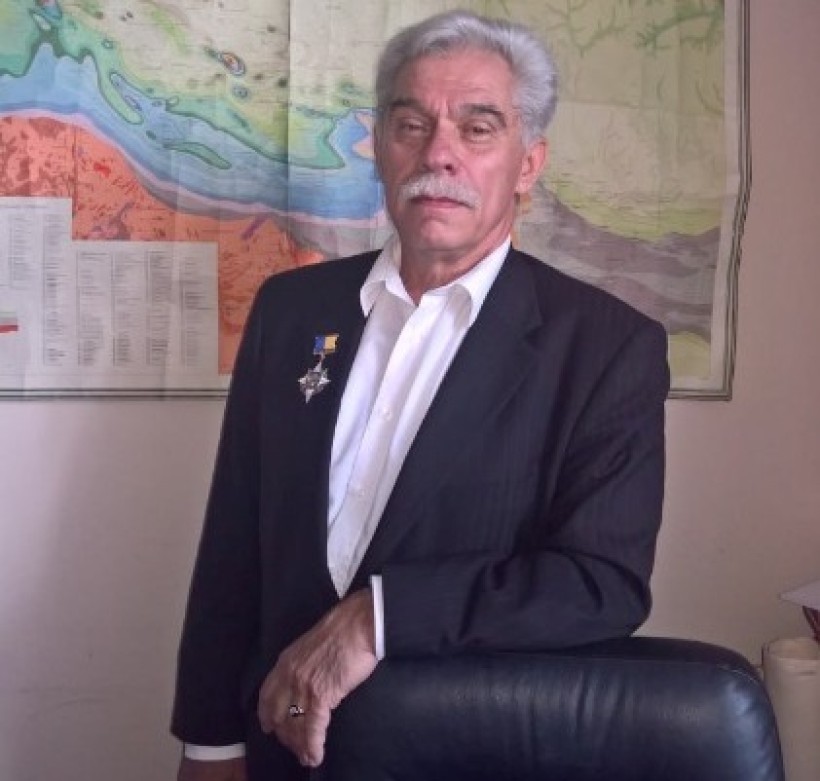
The Donetsk region has never stood aside from the struggle for the Ukrainian state: from the events of the Ukrainian Revolution of 1917–1921 and the OUN underground to the powerful miners’ strikes of the late 1980s, the mass expression of will in the 1991 All-Ukrainian referendum, and the heroic resistance to Russian aggression since 2014.
On the eve of Ukraine’s Independence Day, we discuss how an independent Ukraine was born in the Donetsk region, who carried the blue-and-yellow flag when it took courage to do so, and why the struggle for Ukrainian statehood continues to this day. Our guest is Vasyl Suyarko, one of the activists of the Ukrainian national-democratic movement in the Donetsk region, a civic and political figure, one of the signatories of the “Manifesto of the Democratic Party of Ukraine,” and a participant in the Revolution on Granite. Vasyl Hryhorovych was born in the city of Kostiantynivka. He is a geologist by training, a Doctor of Geological and Mineralogical Sciences, a professor, and an academician of the Academy of Sciences of Higher Education of Ukraine. He is a laureate of the V. N. Karazin Award.
— Mr. Vasyl, August 24 is a special date for every conscious Ukrainian. How did the path to independence unfold in the Donetsk region?
— In the Donetsk region, this process unfolded just as it did throughout Ukraine. In some places, especially in the western regions and Kyiv, it moved faster. In the East, it was slower. But gradually, people who championed Ukrainian ideals began to emerge.
Such groups emerged in Donetsk, Bakhmut, Sloviansk, and other cities. Even before independence was declared, samizdat newspapers were being published in the Donetsk region. A protest movement was taking shape—initially a social one, particularly among miners—but it gradually took on an increasingly national-democratic character.
Even among workers in the 1980s, there were already voices calling for Ukraine’s independence. At first, people envisioned this in different ways, but gradually the understanding of full independence took shape. Along with the protest movement, Ukrainian national consciousness was also taking shape.
— And what role did activists from the Donetsk region play in this process? What was your personal involvement?
— For me, this wasn’t just a passing interest. My family preserved the memory of the struggle for Ukrainian independence. One of my grandfathers was an officer in the Ukrainian People’s Republic (UNR) army. The other, my biological grandfather Vasyl, was arrested along with my grandmother in 1932. He was later arrested again and executed in 1937.
So there was a spirit of protest in our family, and I was raised in that spirit, despite Soviet ideology.
Then people like that began to come together. Some, like my colleague Ivan Birchak, came to the Donetsk region from Western Ukraine. Here they worked and engaged in civic and political activities. At first, there were only a few of them, but gradually the movement grew into a mass phenomenon. It was a kind of awakening for all of Ukraine.
— The blue-and-yellow flag became one of the symbols of that time. When did it first appear in your life?
— I had my first blue-and-yellow flag as early as 1989. It was consecrated in my village, Zvanivka. I carried that flag with me, and I still have photographs from that time.
For me, it wasn’t just a piece of blue-and-yellow fabric. Those were the colors of the symbol of Ukraine, which we wanted to see free.
Back then, Zvanivka was home to a special Ukrainian spirit. Ukrainian holidays were celebrated there; families would gather to perform carols and nativity plays. This was happening even during the Soviet era—essentially underground. Later, after the Greek Catholic Church resumed its activities, these traditions began to reemerge in the open.
— Where did such a patriotic movement come from in the Donetsk region, which was often perceived at the time as a purely industrial and Soviet region?
— The people of Donetsk wanted to be Ukrainians, not just a region that mines coal and produces metal.
Before World War II, many cities in the Donetsk region were Ukrainian, and Ukrainian schools operated there. After the war, processes of assimilation and denationalization began. The linguistic and cultural environment changed, and the number of Ukrainian schools declined.
Therefore, in the late 1980s, Ukrainian identity began to revive in response to decades of pressure. People recalled their family histories and Ukrainian traditions, read books, and joined civic organizations.
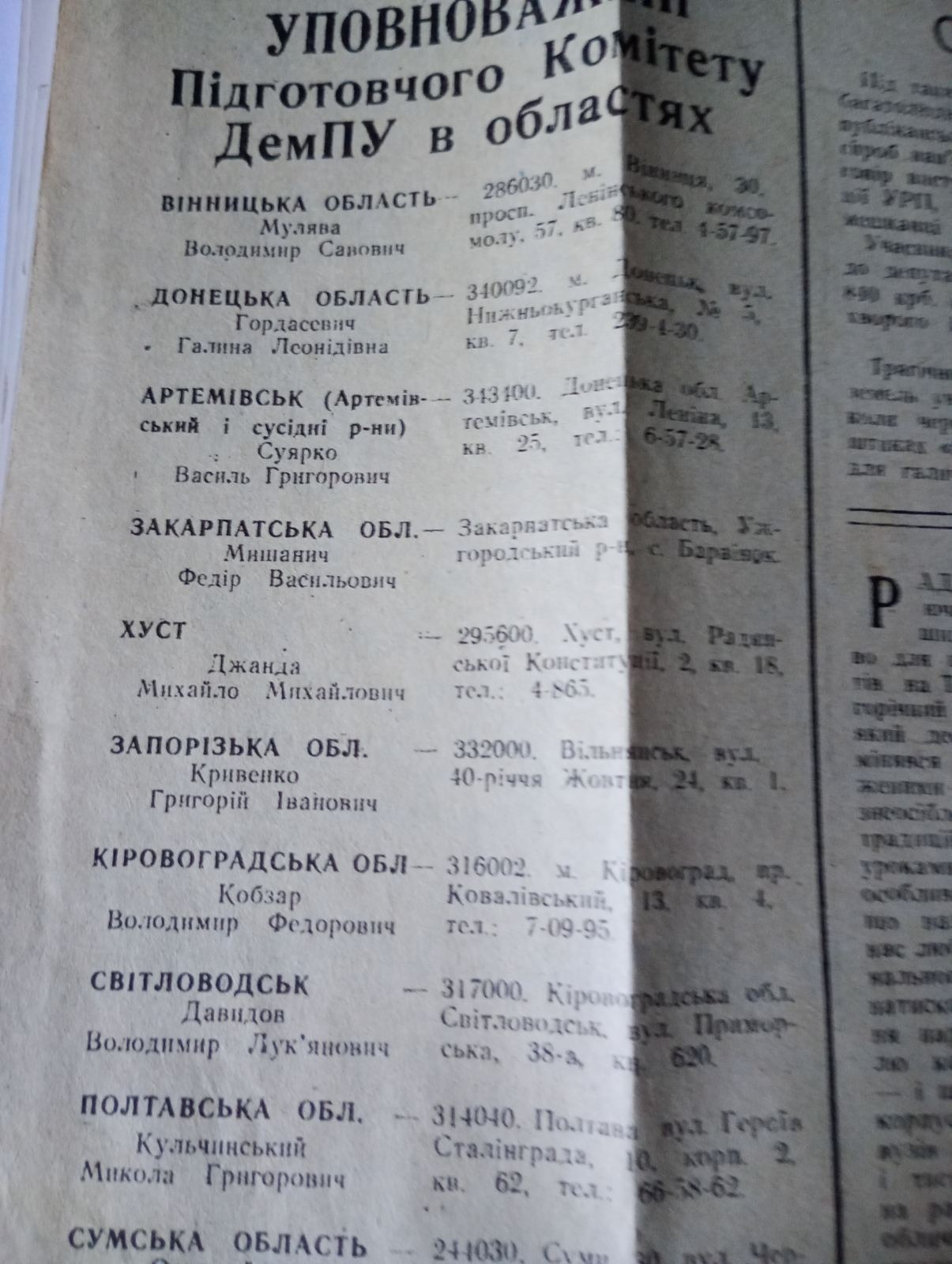
List of Representatives of the Preparatory Committee of the Democratic Party of Ukraine in the Regions, 1990s. Photo from V. Suyark’s archive.
— What role did the People’s Movement of Ukraine play in this?
— A huge one. In the late 1980s, against the backdrop of perestroika and the weakening of the Soviet regime, what had been simmering within society for many years finally came to the surface.
The People’s Movement of Ukraine began operating in the Donetsk region. There were chapters in Donetsk, Bakhmut, and other cities in the region. Prior to this, the “Memorial” society existed, and Ukrainian language societies, “Prosvita,” and other informal organizations were emerging.
The movement took many forms: miners’ protests, social demonstrations, and humanitarian and memorial initiatives. But gradually, all of this evolved into a political movement and a quest for Ukrainian independence.
People sought independence for Ukrainian culture, the Ukrainian language, and self-identification—both politically and culturally.
— What does Independence Day mean to you personally?
— For me, Independence Day is the affirmation of the state that many generations of Ukrainians have dreamed of.
It’s an opportunity to be proud of my country and to say openly: I am Ukrainian, I live in Ukraine, Ukraine is my homeland.
For every conscious person, the sense of belonging to one’s own state and nation is one of the foundations of their existence.
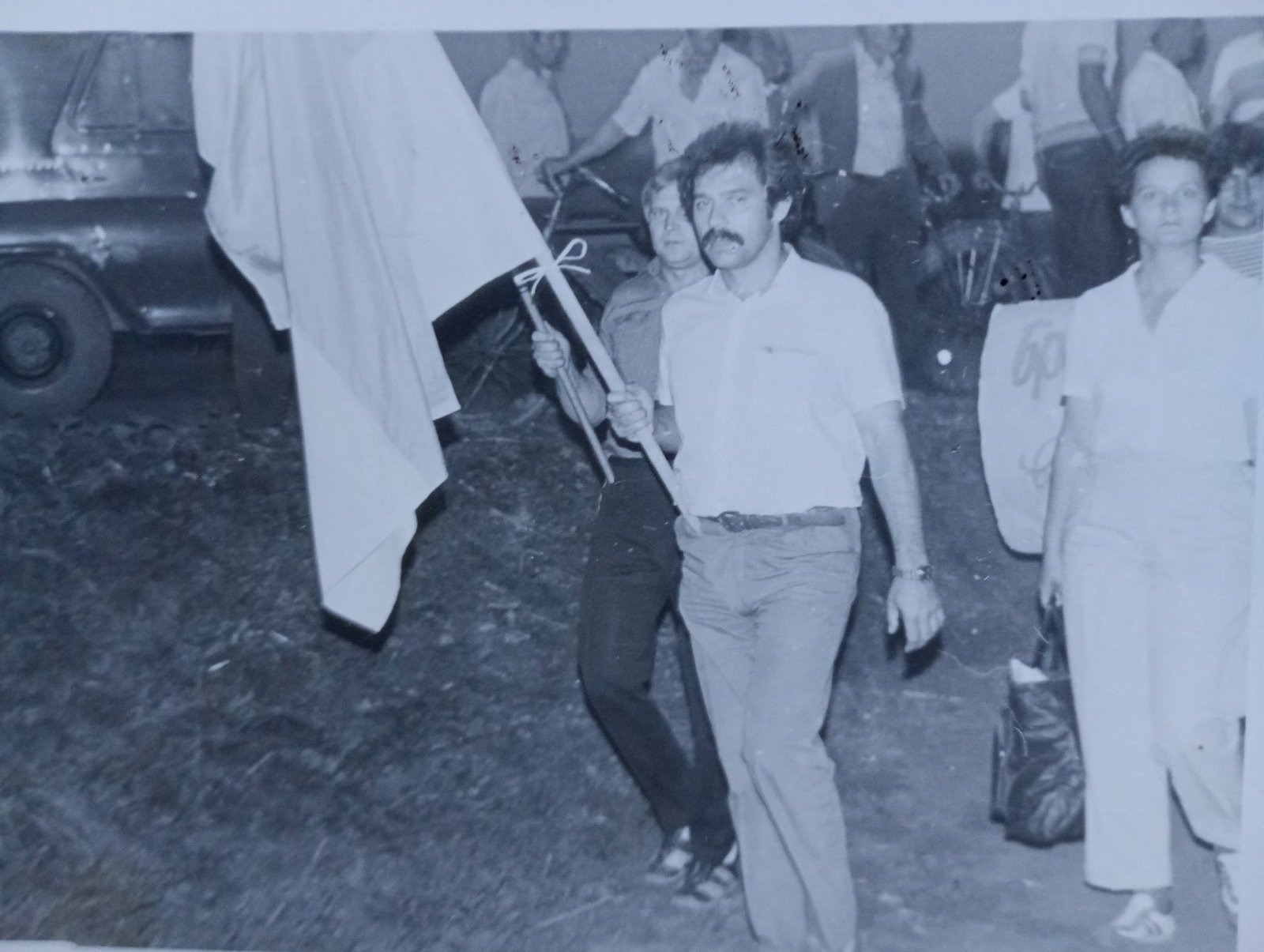
Vasyl Suyarko, 1990s. Photo from V. Suyarko’s archive
— You were directly involved in the events leading up to the declaration of independence. How did you react on August 24, 1991?
— At the time of the declaration of independence, I was in Kyiv, near the Verkhovna Rada. At the time, I headed the Bakhmut branch of the Democratic Party of Ukraine and was acquainted with many members of parliament.
It was a tremendous surge of national sentiment. It’s hard to overstate the elation people felt back then.
After independence was declared, the actual building of the state began. Ukrainian institutions gradually came under the Ukrainian flag, and the formation of our own state began.
— You traveled extensively throughout the Donetsk region and worked directly with people. What was the mood like on the eve of the referendum?
— We were building the Ukrainian movement, traveling through towns and villages, and telling people about independence.
In 1991, I drove my car through virtually the entire Donetsk region. I had leaflets about independence in the trunk. I drove from Kramatorsk to Toretsk and Yenakiieve, from Sloviansk to Mariupol. I did everything I could.
It was a huge undertaking—convincing people, talking to them, explaining what an independent Ukraine could be like.
— What, in your opinion, was the most important aspect of that movement?
— The realization that Ukraine must be an independent state. That Ukrainians have the right to their own language, culture, history, and their own state.
Language is the identity of a nation, the identity of a state. That is why, after independence was declared, people in the Donetsk region began asking: where can we learn the Ukrainian language, where can we learn more about Ukrainian history?
Unfortunately, in my opinion, the state did not take proper advantage of that moment at the time. It was necessary to more actively introduce the people of the Donbas to the Ukrainian language and culture precisely when they themselves wanted it.
— What do you think an independent Ukraine should be like today?
— Ukraine must be strong and have a very strong army. It must be economically developed.
And most importantly—Ukraine must be ideologically cohesive. People must feel like Ukrainians. This requires a lot of work from journalists, psychologists, sociologists, educators, and teachers.
Ukrainian identity must be shaped and sustained constantly.
— Today, Ukraine is paying an extremely high price for the right to be independent. How do you assess this?
— Ukraine is paying a huge price.
History shows that cowardice and excessive caution are not always justified. It is very difficult to defend a state without strength.
Today we see this with our own eyes. Thank God that our soldiers are defending Ukraine and that the Ukrainian people continue to fight.
In 1991, we fought to create an independent state. Today, the task is different—to defend Ukraine.
— Today, Ukraine’s independence is being defended by the military. What would you like to wish them on the eve of August 24?
— I want to congratulate our military, who are defending us on the front lines, on Independence Day.
I wish them success in battle, good health, and long life. And most importantly—may they defeat the enemy that attacked us as quickly as possible.
It is thanks to our military that we live today under the blue-and-yellow flag and can call Ukraine our country.
— Are there people today who continue the work of those who stood at the dawn of independence?
— Yes. I have followers—politically active citizens, mostly young people—who first made their mark during the Revolution on Granite and two others: the 2004 “Orange Revolution” and the Revolution of Dignity in 2013–2014.
That phase, when Ukraine was fighting for independence, has passed. Now we’re in the phase of defending it.
I have followers in academia and other fields. Personally, I’m less politically active today. I want to be remembered first and foremost as a scientist, as a geologist.
But it’s important to me that this cause doesn’t end with a single generation.
— What would you like to say to Ukrainians on Independence Day?
— Independence isn’t just a date on the calendar. It’s the result of the struggle of many generations.
For the Donetsk region, this struggle also has its own history. There were people here who preserved Ukrainian traditions, published samizdat, created civic organizations, took to the streets with Ukrainian flags, traveled through towns and villages, and convinced people that Ukraine must be independent.
Today, our military is defending that independence.
Therefore, our task is to preserve Ukraine, make it strong, and pass on to future generations the memory of the price it paid to win its freedom.
Ukraine was, is, and must remain independent.