
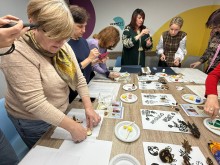


In Donetsk Oblast, ancient traditions come to life in the run-up to Easter—in the form of modern workshops that blend knowledge, creativity, and shared memory. On March 20, 2026, in Kyiv, at the “Vcentri Hub” open public space in the Obolon district, as part of the “Traditional Workshop” series of events, a master class titled “Easter Napkins Using the Traditional Vybiyka Technique” was held, marking another step toward preserving the region’s intangible cultural heritage. The event was initiated by the Donetsk Regional Educational and Methodological Center for Culture with the support of the Donetsk Regional State Administration.
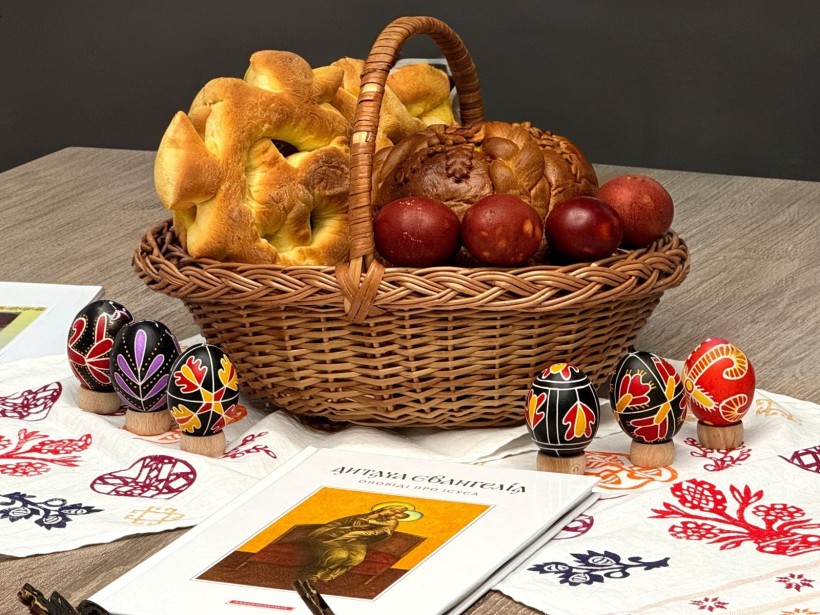
The workshop brought together representatives of local communities in the Donetsk region: internally displaced persons, employees of cultural institutions, specialists in the field of intangible cultural heritage, and everyone who seeks to preserve and revive Ukrainian traditions. The event began symbolically with the creation of an Easter basket filled with elements of local ritual traditions: a traditional braided Easter cake, the ritual bread “Psatyr,” “Ikanicha” pysanky, and decorated eggs. This immersion in ritual symbolism served as a natural transition to a deeper exploration of another vital component of Donetsk region’s traditional culture: the art of vibyika.
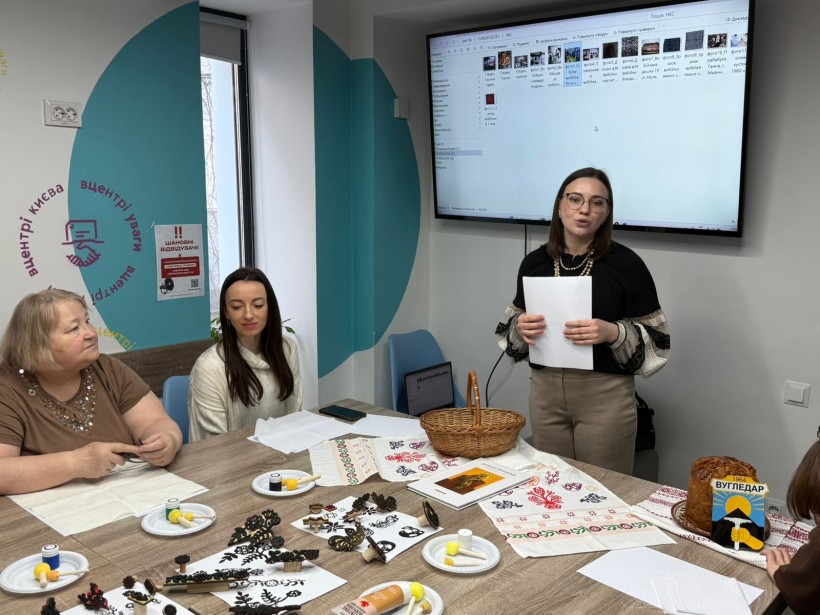
During the event, participants had the opportunity to learn about the history and characteristics of vibyika—one of the ancient fabric decoration techniques that has preserved a wealth of ornaments and symbols—as well as the various techniques, their regional characteristics, and contemporary reinterpretations.
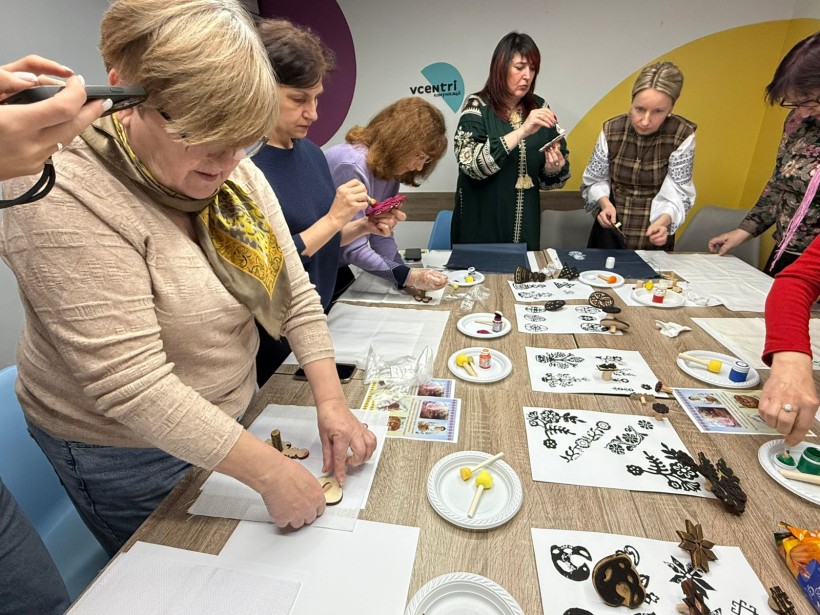
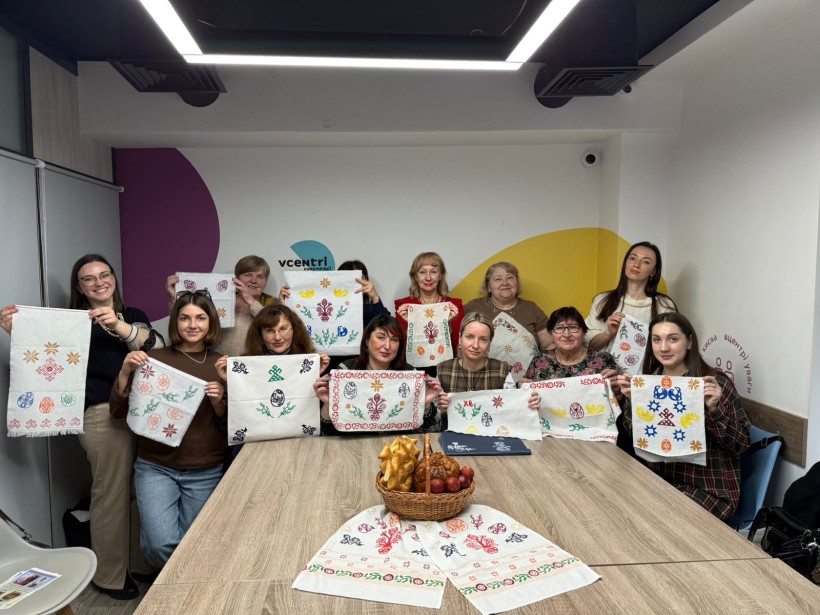
The practical part of the workshop transformed knowledge into a creative process: participants created Easter napkins themselves using the surface block-printing technique. They mastered the main stages of the work—from preparing the fabric to applying paint and creating ornamental prints using traditional block-printing boards.
The master class served as a space for learning, where a sense of continuity and cultural resilience is fostered through engagement with tradition. Such initiatives contribute to the preservation and promotion of the intangible cultural heritage of the Donetsk region, opening new possibilities for its interpretation within the contemporary cultural landscape.