Today, Ukrainian communities are working in extremely difficult conditions, where it is necessary not only to quickly rebuild what has been destroyed, but also to ensure stable development for years to come. Success in this endeavor depends on how quickly and effectively the community can translate its strategy into concrete results.
According to the Law of Ukraine "On the Principles of State Regional Policy," two main mechanisms are provided for the implementation of development strategy goals: local development programs and projects.
At the same time, in many Ukrainian communities, project activities remain unsystematic:
- responsibilities in the field of project management are not officially defined;
- work on attracting resources is carried out on an ad hoc basis, and initiatives are implemented without coordination with the community development strategy and a clear plan;
- there is a low level of proficiency in project management skills and key tools;
- there is no established mechanism for coordination between different structural units of local self-government bodies (LSGBs) during project development and implementation;
- for LSGB employees, project activities are often an additional burden without proper motivation.
In such conditions, it is very difficult to compete effectively for both state and international funding. Therefore, support in setting up project offices, especially in small communities, is critically needed to access external resources, implement strategic tasks, and accelerate recovery.
That is why the Recovery for All (RFA) project supports the institutionalization of project activities as a tool for implementing the Community Development Strategy in partner communities and uses the approaches and tools described in this article to achieve this.
What is a project office (PO)?
A PO is a center (body) for managing community project activities, which coordinates project development and resource allocation for their implementation in accordance with the community's strategic priorities.
Very often, project work is equated with the preparation of grant applications. However, preparing an application is only one stage of project activity. Every project in the community has its own life cycle: from the inception of an idea to the evaluation of results and impact. For these processes to be consistent and effective, first and foremost, a team is needed to accompany all these stages. This team is the foundation of the software that builds the community's systematic work at all stages of the project life cycle:
- Initiation — analyzes the needs of residents, sets priorities, constantly monitors funding opportunities, develops partnerships around common goals, and prepares concepts for priority projects.
- Planning — prepares high-quality applications for state/international programs, monitors the success of submissions, and develops informational materials about the community for donors and partners.
- Implementation — coordinates project implementation, organizes interaction between local government departments to ensure consistency of actions, communicates with donors and partners, and publicly informs the community.
- Monitoring and control — tracks task completion, analyzes results achieved, and prepares recommendations for improving efficiency.
Completion and sustainability of results — evaluates the impact of projects on the community, uses experience for new initiatives, and maintains partnerships for further development.
What are the existing models of a project office and how can a community choose the option that suits it best?
A model is a way of organizing a project office that determines its place in the structure of the local self-government body, its organizational and legal format, the distribution of powers, and mechanisms for interaction with internal and external stakeholders.
In practice, communities most often use the following PO formats:
- Ongoing cooperation with non-profit organizations or regional development agencies that take on the main role in project management, from project development to implementation management and reporting. This model does not require the development of regulatory documents or the creation of separate structures in the local government, but it does require the community to have a project manager who will coordinate interaction with the partner. The choice of a partner organization is critically important, as the success of the project largely depends on its professionalism and capacity. Ongoing cooperation expands opportunities for attracting funding and helps ensure the sustainability of projects even in the event of changes in the composition of the local self-government. This model is suitable for communities with limited resources and requires institutional support for project implementation.
- A project manager is when there is one employee in the LGA structure who performs the functions of a project office. For example, in the Kholmynska community, which is a partner of the RFA project, the position of chief specialist in project activities has been introduced. The advantage of this model is its quick implementation: all that is needed is a job description. At the same time, there are limitations: one manager can only work on a few projects at a time, and there is a high dependence on their competencies. This model is best suited as a starting point, and for communities with a small number of projects, it can also be a permanent solution.
- A subdivision within the local self-government body is a specialized department or sector within the council structure that deals with project activities. For example, the Project Office of the Mozolevska Village Council of the Oleksandrivska community and the PO in the Velykodymerska community operate in this format. In large local self-government bodies, this function can be concentrated in one unit or distributed among several, in particular, separately in sectoral areas (education, health care, social protection, etc.). At the same time, it is important to understand that project activities are not the exclusive competence of one department: each structural unit can and should initiate and implement projects within its area of responsibility, while a specialized unit provides methodological support, coordination, and alignment with the overall community strategy. The advantage of this model is the ability to form a team of different specialists — project managers, communications specialists, financial specialists, etc. — which makes the work more stable and systematic and minimizes the risk of stopping activities due to the loss of a single employee. At the same time, creating a department requires more community resources, as it involves additional costs for staff maintenance and workplace equipment. This model is suitable for communities that are simultaneously implementing a significant number of projects in different areas.
- A separate legal entity is a municipal institution or other organizational and legal form defined by law with a high level of independence, flexibility, and efficiency in decision-making. An example is the Baranivska Community Local Organic Development Agency. This format requires a significant amount of time to implement, as it requires the registration of a legal entity, the preparation of statutory documents, the resolution of other organizational issues, and funding from the local budget. At the same time, this model provides greater flexibility in attracting a wide range of experts for both short-term and long-term cooperation, minimizes the risk of work stoppages due to the loss of a single employee, ensures independence from internal LGA processes, and opens up access to financial opportunities for non-governmental organizations. This model is appropriate for communities that implement a significant portfolio of grant-funded projects.
- A separate legal entity established by several communities — for example, an association of local governments or a development agency established by several communities. Maintaining a separate legal entity for a single community can be difficult and costly, but by joining forces with other communities — based on geography, industry, or other criteria — the burden can be shared. The advantages of this model are similar to the previous one. In addition, an important factor is the exchange of best practices and experience between the founding communities, which contributes to the development of the region as a whole. At the same time, this model requires the creation of effective management and interaction mechanisms, as only high-quality coordination between communities can ensure sustainable results. It is appropriate for solving complex problems or implementing large-scale initiatives that go beyond the boundaries of a single community.
The decision on which model to choose is always individual and depends on the capacity and experience of the community, as well as its willingness to finance the work of the software in the early stages. Regardless of the format chosen, each model can work successfully. Moreover, one local government body can apply different models for different projects. It is worth remembering that the project office model may change over time, which is perfectly normal, as it is a living ecosystem that develops alongside the community. Even the arrival of a single motivated specialist can be a starting point for building systematic work.
Along with the choice of model comes the question of its institutional consolidation. The official definition of roles and responsibilities (through regulations, job descriptions, budget decisions) is not the only condition for success, but institutionalization significantly enhances sustainability: project work ceases to depend on the enthusiasm of individuals, as there are now designated managers for whom project management is their main function (rather than an additional burden) and clear mechanisms for coordination with other departments.
How to launch a project office in a community and ensure its stable operation?
After defining the model and establishing its institutional framework, the key task is to integrate the project office into the community management system and ensure its stable operation. This is what distinguishes an institution from a temporary initiative. In practice, this is achieved through the following interrelated steps.
Project prioritization is the determination of the sequence of project implementation from the Development Strategy action plan. Prioritization is necessary to ensure that the community does not scatter its resources and react to every funding opportunity on a case-by-case basis. It allows the community to focus on initiatives that are strategically important, capable of delivering measurable results for community residents, and can realistically be prepared for implementation in the short or medium term. In practice, this means creating a register of projects to attract extrabudgetary funding for the current year. During the selection process, it is also important to assess whether the community has the minimum readiness base for further project development: the availability of the necessary technical documentation, a responsible team, premises or land (if necessary), the ability to provide its own contribution, potential partners, etc. It is this assessment that allows you to move from a list of ideas to a realistic action plan and ensures high-quality preparation of projects for submission for funding.
Formation of a project portfolio. A project portfolio is a list of priority community projects that already have a basic description (problem analysis, theory of change, expected results and indicators) and a budget, and can be submitted for funding.
The formed portfolio allows the community to act proactively: to be ready for negotiations with partners, to present projects at international events, and to quickly respond to open funding opportunities.
Planning resource mobilization. If the community has identified a project as a priority, it means that such a project is not "waiting" for a competition — the PO proactively seeks resources for its implementation. Regional authorities, international partners, and sister cities are aware of this project. It is presented at meetings, conferences, and international events. It is used in negotiations with donors, foundations, embassies, partners, or investors who declare their support for the restoration of the community, region, or Ukraine. It is entered into the DREAM system and is part of the community's public investment portfolio.
A practical tool is a resource mobilization plan developed separately for each priority project. Such a plan identifies potential donors, partners, methods of resource mobilization, specific steps that the project office team will take to mobilize resources (preparation of applications, meetings with partners, presentations to potential donors, etc.), as well as deadlines and responsible persons. This work requires joint efforts and is not only the responsibility of the project office. It involves the active participation of community leaders, as they are the ones who present priority projects at high-level meetings and conferences, build partnerships, and open up additional opportunities for their support.
To this end, the project office must keep abreast of developments and know which donors, international organizations, and financial institutions are working in Ukraine, compile and regularly update their catalog, particularly in terms of key community development sectors (education, health care, social protection, local economic development, etc.). It is important to keep a calendar of grant competitions and international events, as some programs are announced on a regular basis and are predictable.
To this end, the interactive Development Resources Map and opportunity catalogs developed in collaboration with the Ministry of Community and Territorial Development of Ukraine will be useful.
As a result, the community does not adapt its needs to random opportunities, but consistently promotes its own strategic priorities and increases the likelihood of their implementation. This is how the project portfolio becomes a real tool for achieving the community's strategic goals.
Monitoring and improving the work of the project office. After planning and attracting resources, the question arises: is the project office really fulfilling its functions? How many project applications have been submitted this year? How many of them have been supported? Which priority projects have actually begun to be implemented? These questions are answered by monitoring — regularly tracking the achievement of planned results. But it is important not only to count the numbers, but also to analyze them. This is where performance evaluation begins — assessing quality and learning from experience: why did one project receive support and another did not? What worked better this year than last year? Where are we wasting time or resources? What approaches should be changed?
In practice, this means defining a system of clear and measurable indicators for the annual work plan of the PO, collecting data on specific indicators and analyzing them, and preparing a management report with conclusions and recommendations. This work allows us to optimize processes in a timely manner, concentrate resources where they have the greatest effect, and ensure the sustainability of project activities.
A practical tool for monitoring and evaluation is keeping records of submitted applications (where they were submitted; for what amount; what was the result; reasons for rejection) and implemented projects (sources of funding, partners, links to communication materials, project products, reporting status, etc.). Such registers allow you to track statuses, avoid duplication, not lose accumulated materials, and not start from scratch every time. At the same time, such systematization preserves the history and experience of project implementation, which is later used to prepare new applications and confirm the changes already achieved. This is the institutional memory of the community.
A project office is one of the tools for community development. Its value is measured by whether it has been possible to attract resources for the key needs of residents and whether the quality of services for people has improved. This means that the community does not just get a new facility or event, but real change:
- services become more accessible to people with disabilities thanks to the launch of social transport;
- children are given the opportunity for psychological recovery and adaptation through the creation of an inclusive space in the community school;
- veterans can receive support quickly, clearly, and without unnecessary bureaucracy through the introduction of a "single window" principle for service delivery;
- medical services are expanding and improving in quality thanks to the modernization and energy-efficient renovation of the outpatient clinic, which allows the savings to be directed towards the development of new services.
Where the work of the PO is systematically structured, the community does not simply implement projects — it achieves the planned results of the Development Strategy and improves the quality of life of every resident.
The experience of the Kholmynska community, a partner in the RFA project
The Kholmynska community (Chernihiv region) is one of the partner communities where the RFA project is helping to create and develop a project office.
Despite the many challenges that require quick and effective solutions from the community — proximity to the border with Belarus, daily humanitarian challenges, and staff shortages — the Kholmynska community sought to develop and improve the lives of its residents. Therefore, the community actively sought opportunities to better implement the project office and not overload the internal system with additional challenges, but rather attract more funding for its recovery and development.
After analyzing possible models, the community decided to start with a more flexible one — introducing a separate position of project management specialist. Due to a shortage of personnel, it was difficult for the community to find a specialist "on site," so it expanded its search. This made it possible to attract a specialist with the necessary experience from the regional center and organize cooperation in a hybrid format — combining remote work with constant interaction with the community team.
"Before the chief project specialist joined, all the work in this area was an additional burden on other team members. After all, writing high-quality grant applications, searching for suitable opportunities, and implementing projects takes a lot of time. Therefore, having a separate person on the village council staff who has taken on this large but important area of work is the best solution," said Oleg Vasilenko, first deputy head of the Kholmyn village council.
The community has an updated Development Strategy for the period up to 2027. Social protection has been identified as one of its priorities, so relevant projects have been given priority for implementation.
Thanks to the arrival of a project manager and the focus on priority projects, the community managed to implement two important social projects in the first months of work — in the field of civil protection and support for the provision of social services to vulnerable groups.
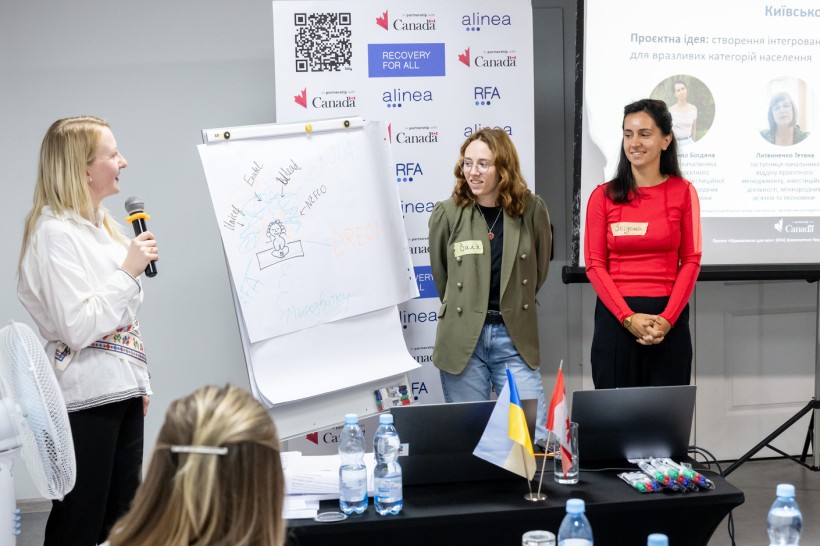
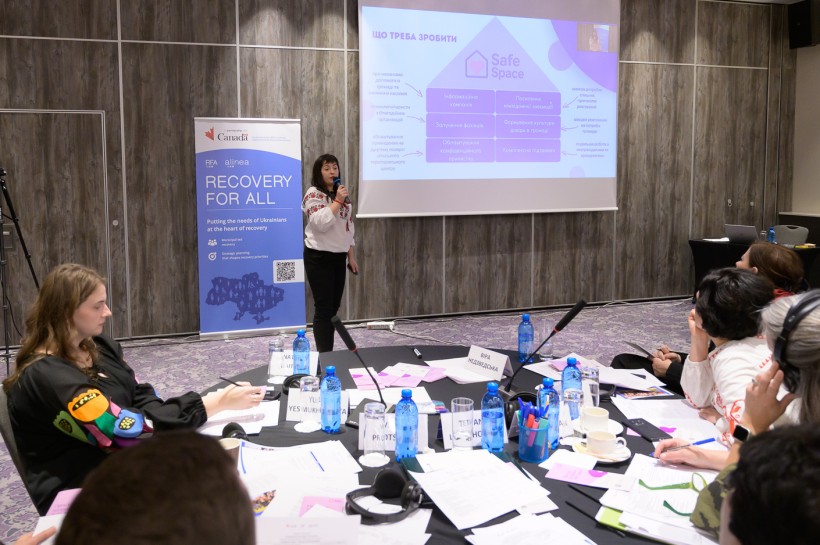
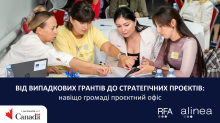
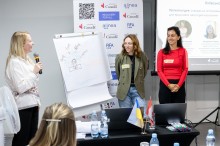
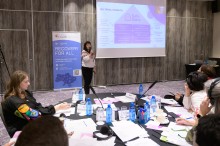
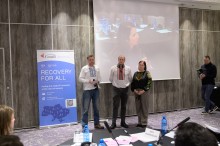
When such a specialist appeared in the community, it became possible to strengthen his professional skills and allocate time for training. In particular, this was made possible by project management training organized by the RFA team for its partner communities, including Kholmynska. The community participated in the training with a team of three specialists. It was the team format that made it possible to develop high-quality technical and financial concepts for the creation of a new service — the "Social Taxi." Today, the community project office team, together with RFA experts, is already working on a plan to attract resources for the implementation of this important project. In this way, the community is implementing the Strategy Action Plan not in a piecemeal manner, but through a portfolio of priority projects, where each prepared project concept works towards achieving the strategic goals of community development.
"During the training, these modules gave impetus to our idea to turn it into a risk-resistant, competitive, and manageable social project that will significantly help our community," said Yulia Komach, director of the Social Services Center of the Kholmynska Village Council.
It is worth noting that even if there is only one project manager in the community, it is important to develop such skills in other LSG specialists and involve them in project work. In the future, this will not only strengthen the team, but also achieve better results in developing the necessary projects and attracting funds for their implementation. After all, the better the community understands what needs to be done and how, the easier and faster it is to achieve the desired results.
For more details about the community's experience in project management, see the video at: https://youtu.be/NLPr6idq-2U
A strong community does not start with large budgets, but with clear organization of work and people who are ready to take responsibility. That is why strengthening project capacity is an investment not in an individual or a department, but in the sustainable recovery and development of the community.