Bright displays, neon lighting, and small jars of nicotine snus (pouches) with berry or dessert flavors placed at a child’s eye level are not a matter of aesthetics, but a tool for attracting minors. This is particularly evident in tobacco kiosks and stores located near educational institutions.
How window display marketing works, according to international research (https://lnk.ua/QFUgD42OM):
- Frequency factor: the more often a child sees products on display, the higher the likelihood that they will want to try them;
- Creation of a false norm: Placing tobacco products near cash registers creates the impression that nicotine use is a normal part of daily life;
- The proximity effect: Being placed next to candy and gum normalizes nicotine products as safe items for everyday consumption.
According to statistics, in Ukraine, 66% of young people aged 18–29 are constantly exposed to advertisements for tobacco and nicotine products (compared to 35% of the total adult population). Most often, such advertisements reach consumers in retail settings—in 26% of cases.
Studies confirm that teenagers who constantly see these products openly displayed in stores are 64% more likely to start using nicotine.
The situation is exacerbated by the complete lack of control over the distribution of snus. Today, children of any age can freely purchase nicotine pouches due to a loophole in the law: the classification of these products as food exempts them from age restrictions and ID checks at the register.
Measures to close these loopholes:
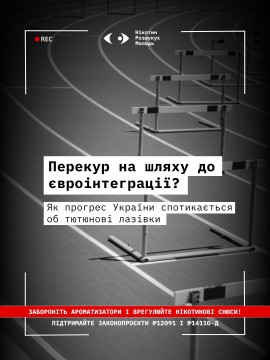
- Bill No. 14110-d—will regulate the distribution of nicotine snus in Ukraine and impose a complete ban on its sale to minors;
- Bill No. 12091 — provides for a ban on flavored tobacco sticks, as well as a ban on the visible display of tobacco and nicotine products in retail establishments.
- The adoption of these bills will put an end to harmful marketing and protect Ukrainian children’s right to a healthy future.
More facts about the tobacco industry’s manipulations: https://center-life.org/novyny/nova-obhortka-nikotynovoi-zalezhnosti/