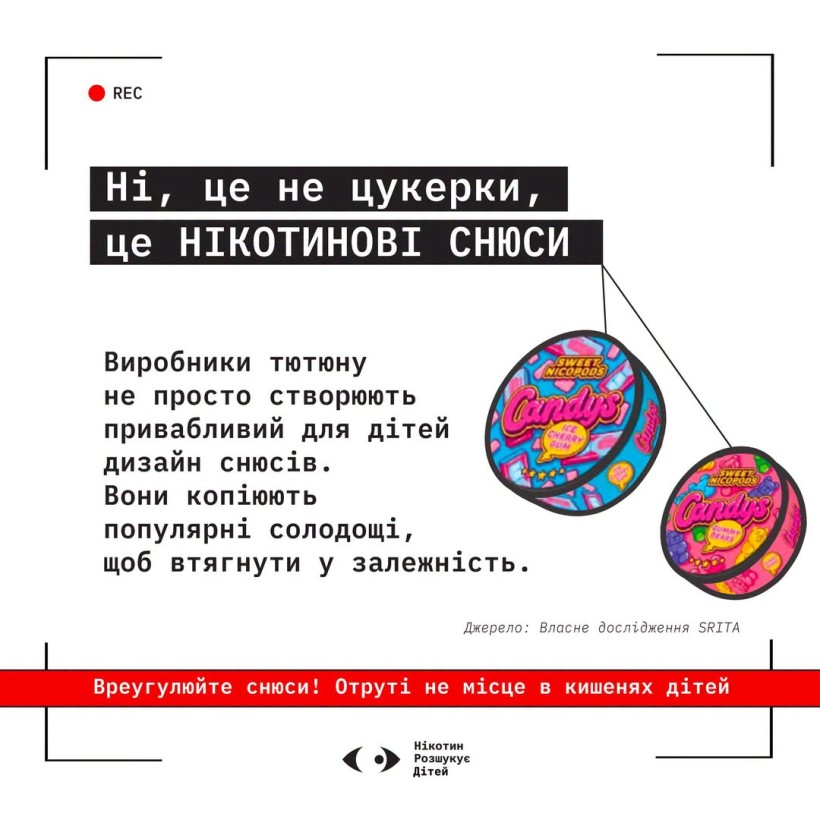
Tobacco companies realize that it is difficult to get an adult with established habits to start using nicotine. That is why their main target is teenagers aged 13–15. To attract a young audience, the industry has created a convenient product—nicotine snus (pouches)—which marketers have associated with trends, bold flavors, and the trappings of adult life.
The World Health Organization (WHO), in collaboration with Stanford University, published a study analyzing the most cynical tactics used to promote these products:
- Eye-catching packaging design. The shape and design of the pouches often mimic well-known candy brands. As a result, in the U.S., 72% of snus poisoning cases have been reported among children under 5 years of age, who mistook them for regular candy.
- Flavors inspired by confectionery and bar menus. “Iced Watermelon,” “Gummy Bears,” “Cherry Punch”—manufacturers exploit teenagers’ desire to appear older by offering flavors reminiscent of desserts and alcoholic cocktails.
- Hidden influencer marketing. Bloggers with audiences in the millions showcase the use of nicotine snus without mandatory advertising labels, using trending sports and lifestyle hashtags.
- “Discreet” consumption. Pouches are positioned as a product that can be used anywhere without smoke or a distinctive odor—in class, on public transportation, or at home—circumventing adult restrictions and supervision.
- Sponsorship of large-scale events. Integration into Formula 1, music festivals, and mass free distribution of samples create a misleading image of pouches as a fashionable accessory for active leisure.
In Ukraine, 3% of adolescents aged 13–15 already use nicotine snus regularly. At the same time, a legal vacuum persists in our legislation: there are no age restrictions on sales, no ban on direct advertising, and no requirements for health warnings.
The adoption of Bill No. 14110-d could put a stop to unregulated sales. The bill provides for a direct ban on the sale of snus to minors, limits on maximum nicotine content, and the introduction of mandatory health warnings covering 65% of the package’s surface area.
Our children and youth are the future of the country, not a market for the addiction industry.