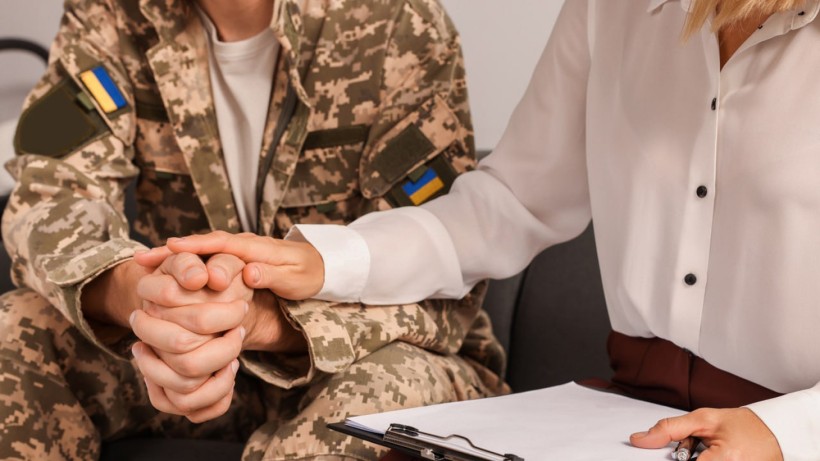
After returning from war, one of the most important issues for defenders is access to quality and timely medical care necessary for physical recovery and rehabilitation.
The state provides veterans, female veterans, and family members of deceased defenders with a package of free medical services, ranging from emergency medical care and basic tests to prosthetics and surgery.
In 2025, the government expanded the scope of free medical care for veterans. This includes additional examinations, rehabilitation after injuries, and psychological support.
To receive these services, it is important to know the procedure and contact medical institutions that have a contract with the National Health Service of Ukraine (NHSU).
Olena Kolodenko, director of Primary Health Care Center No. 3 in Odesa, explains what free services are available to veterans and how to use them.
Who is eligible for free treatment?
Several categories of Ukrainians whose injuries or illnesses are related to the war are eligible for a full range of free medical services under the Medical Guarantees Program.
The Law of Ukraine "On the Status of War Veterans and Guarantees of Their Social Protection" stipulates that the following persons are eligible for free medical care:
- Combatants – those who directly defended Ukraine as part of the Armed Forces, other military formations, or volunteer units;
- Persons with disabilities resulting from war – people who became disabled due to wounds, concussions, injuries, or illnesses related to participation in combat operations;
- Persons discharged from military service due to health reasons – those who were discharged due to deterioration of health that occurred during service;
- Family members of deceased Defenders of Ukraine – parents, husband or wife, children who have the relevant rights under the law.
The program applies to all citizens of Ukraine, but war veterans have priority access to medical services and enjoy additional benefits, including free dental prosthetics, rehabilitation, limb prosthetics, and mental health services.
Every year, the National Health Service of Ukraine (NHSU) publishes a list of medical services that are paid for by the state, i.e., free of charge for patients.
The current list of services can be found on the official website of the NHSU.
How can veterans receive free medical services?
The first step to accessing the healthcare system is to contact your family doctor. Veterans need to sign a declaration with a primary care physician.
This specialist accompanies the patient, conducts examinations, prescribes basic tests, and, if necessary, refers them to narrow-profile specialists or for additional examinations.
"Contact your nearest primary health care center — the receptionist will tell you which doctors are accepting new patients. You can also make an appointment through the Helsi platform," advises Olena Kolodenko.
To find out if a facility has a contract with the National Health Service of Ukraine and provides free services, you can:
- Call the NSZU contact center: 16-77 (free from a mobile phone);
- Check the medical facility on the interactive map;
- Ask directly at the facility's reception desk.
In total, almost 1,000 primary care medical facilities in the country already provide free services to veterans under the Medical Guarantees Program.
To sign the declaration, you will need:
- passport;
- identification code;
- mobile phone (it will be used to confirm electronic actions in the healthcare system);
- UBD certificate, certificate of a person with a war-related disability.
After signing the declaration, the patient receives full access to state-guaranteed primary healthcare services.
These include general blood and urine tests, rapid tests for HIV and hepatitis, and, if necessary, glucose and cholesterol tests. All of this is supervised by a family doctor, who develops an individual treatment plan for each patient. If necessary, the doctor also issues an electronic referral for additional examinations or consultations with specialists," notes Olena Kolodenko.
Veterans are entitled to priority appointments. In addition, many centers have coordinators who accompany patients: they help them make appointments with doctors, obtain prescriptions, and navigate the algorithms of action.
Olena Kolodenko also emphasizes that defenders must independently inform their family doctor about their status as combatants.
"We are often approached by patients with chronic pain who ask us to prescribe painkillers. But during a deeper conversation, the doctor learns that the person is a combatant. In such cases, we involve a psychologist to ensure that the assistance is comprehensive and effective," says the doctor.
What medical services are free for veterans?
Emergency care
In cases of heart attack, stroke, severe injury, bleeding, or sudden deterioration of health, call 103 or go to the emergency room.
Help will be provided without referrals or documents, regardless of whether the patient has a doctor's referral. If necessary, free hospitalization and cardiopulmonary resuscitation are available, as well as the provision of medicines, consumables, and oxygen.
Specialized medical care
This is free assistance provided by specialized doctors. Veterans can receive it on an outpatient or inpatient basis, with an electronic referral from their family doctor.
Specialized care includes:
- Consultations with specialists (neurologist, cardiologist, traumatologist, rheumatologist, endocrinologist, dermatologist, oncologist, urologist, ophthalmologist, etc.);
- Surgical interventions (planned and urgent: traumatology, urology, proctology, general surgery, etc.);
- Instrumental and laboratory tests (ultrasound, X-ray, endoscopy, CT, MRI);
- Medical assistance during childbirth (female veterans, as well as wives or partners of veterans, are entitled to completely free childbirth in hospitals that work with the National Health Service of Ukraine, as well as pregnancy care, pain relief, caesarean section, hospital stay, and postpartum observation);
- Oncological and cardiological care.
You can see a gynecologist, psychiatrist, dentist, or phthisiatrician without a referral. If you are already under the supervision of a specialist, no repeat referrals are required.
Veterans can also receive the following services free of charge:
- Individual treatment plan;
- In-depth screening (arthritis, neurology, chronic pain);
- Psychotherapy, cognitive-behavioral therapy, stress support;
- Treatment of combat trauma consequences;
- Vision and hearing tests and rehabilitation.
As part of the pilot project, more than 660 medical institutions have already signed contracts with the National Health Service of Ukraine (NSZU) to provide such extended services. You can check whether your institution has a contract on the NSZU dashboard or by calling the contact center at 16-77.
Inpatient services and surgeries
Veterans are entitled to receive a full range of inpatient treatment and surgical procedures free of charge. This package includes:
- Hospitalization and surgery;
- Anesthesia;
- Medications, tests, dressings, meals;
- Postoperative observation and rehabilitation.
No referral for tests is required during the inpatient stage—the hospital provides everything necessary. If the hospital asks you to pay for anesthesia, tests, or consumables, this is a violation. All expenses are already covered by the state.
Dentistry
Covers caries treatment, tooth extraction, X-rays, splinting, anesthesia, prosthetics up to UAH 35,000, and comprehensive treatment up to UAH 25,000 in institutions with a contract with the National Health Service of Ukraine.
Vaccination and prevention
Vaccinations and preventive examinations are free for all patients, but veterans receive them without waiting in line and can receive extended screening related to the consequences of combat operations.
The package includes:
- Vaccination according to the vaccination schedule;
- Screenings (preventive examinations) – checking blood pressure, glucose and cholesterol levels;
- Tests for tuberculosis, HIV, and hepatitis, as well as infection monitoring;
- Additional tests for arthritis, neurological disorders, and chronic pain (for veterans).
Psychological support
Veterans can receive a full range of psychological support by contacting their family doctor, mental health centers, or through mobile multidisciplinary teams—outreach groups of specialists in various fields (psychologists, psychotherapists, psychiatrists, social workers) who provide assistance directly at the patient's place of residence.
Before the consultation, you can also take short online tests on the MARTA platform to assess your condition. The Base can be an additional tool. It is a free and anonymous Ukrainian application that contains materials on post-service adaptation, exercises for overcoming insomnia, and a mood tracker. It also allows you to ask a psychotherapist questions anonymously.
Defenders have the right to:
- Consultations with a psychiatrist, psychologist, psychotherapist;
- Individual and group therapy;
- Treatment programs for anxiety, depression, PTSD;
- Psychological support from mobile teams;
- Visits to state and non-state rehabilitation centers for veterans.
Defenders can also take advantage of additional psychological support initiatives:
Crisis Support Hotline from the Ukrainian Veterans Fund – a 24/7 hotline for veterans and their families, as well as the organization of group meetings: 0 800 33 20 29
Help24 – free online consultations with a narcologist or psychologist.
Rehabilitation
Olena Kolodenko notes that veterans with injuries require comprehensive rehabilitation:
"To undergo inpatient rehabilitation, a patient needs a referral from a physical and rehabilitation medicine doctor or a transfer from another hospital department.
For outpatient rehabilitation, a referral can be issued by a family doctor or any treating specialist. They can also recommend the nearest facility for treatment and, if necessary, help prepare the documents for establishing disability status," explains Kolodenko.
Rehabilitation includes physical and occupational therapy, speech therapy, neuro-, cardio-, and orthopedic rehabilitation therapy, preparation for prosthetics, and training in the use of prosthetics.
Prosthetics after amputation are fully funded by the state. Documents can be submitted through a hospital (with the assistance of a social worker), a public service center, social protection authorities, or the online office for persons with disabilities.
Patients with multiple amputations can undergo up to 26 rehabilitation cycles per year, while others can undergo between 2 and 8 cycles. One cycle lasts at least 14 days.
How to find a rehabilitation facility?
Online on the NSZU website – in the "Service Group" filter, select packages #53 (inpatient) or #54 (outpatient rehabilitation);
Through the Legal Navigator mobile app – to view facilities in your city;
By calling the NSZU contact center at 16-77
How can veterans get free medication?
The state can also provide veterans with the necessary medication free of charge or with a minimal co-payment.
Medications for the treatment of chronic diseases, oncology, mental disorders, cardiovascular and other serious diagnoses are available.
Medicines can be obtained both during inpatient treatment and on an outpatient basis during an appointment with a family doctor at a polyclinic.
"To take advantage of the "Affordable Medicines" program, simply contact your family doctor or therapist. The doctor will write an electronic prescription indicating which program the patient is covered by, and with this prescription, the person can obtain the necessary medications at a pharmacy. In case of hospitalization, the state provides veterans with medications from the National List of Essential Medicines free of charge," notes Olena Kolodenko.
In addition to state guarantees, many regions also have local support programs, particularly for seriously ill patients or those who need rare and expensive medications. You can find out about these opportunities from your local authorities or health departments.
What to do if a veteran is asked to pay for free services?
If a healthcare facility asks for payment for something that should be provided free of charge, it is important to follow a specific procedure:
- Ask for a written list of paid services and the basis for payment;
- Record the incident (audio/video/witnesses);
- File a complaint with the National Health Service of Ukraine via their website or by calling 16-77;
- Contact the Ministry of Veterans Affairs.
The "Opportunities for Veterans" information campaign is being implemented as part of a partnership between the Ministry of Veterans Affairs and the Veterans Reintegration Program, which is being implemented by IREX with the support of the U.S. Department of State.