The Ukrainian military has a long history. It is a thousand-year journey of evolution, from the princes’ retinues and Cossack regiments to the state-of-the-art Ukrainian Defense Forces, where the uncompromising struggle for freedom has remained the central, unifying theme throughout the centuries. Today’s defenders of Ukraine have inherited the finest military traditions of their ancestors: from the Rus’ warriors—the double-pronged and trident symbols; from the Zaporozhian Cossacks—the Cossack crimson cross and the culture of military democracy; and from the armies of the Ukrainian People’s Republic (UNR) and the Ukrainian Insurgent Army (UPA)—tactical flexibility, self-sacrifice, and an unbreakable bond with the volunteer movement. Today, the Ukrainian army is a unique digital defense force that is constantly evolving thanks to the initiative of junior commanders and the successful implementation of advanced technologies. On Defenders of Ukraine Day, we not only pay tribute to the modern military but also speak of the continuity across generations, for today our military is the direct successor and guardian of centuries-old military traditions—a shield that today protects not only Ukrainian soil but also the security architecture of the entire free world.
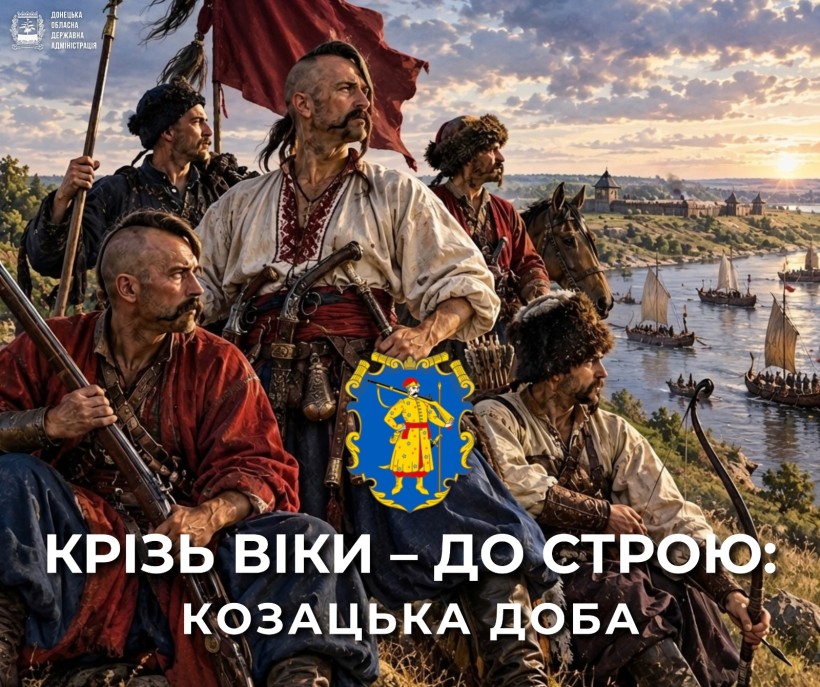
The main reason for the emergence of the Cossacks in what is now Ukraine was the threat posed by hordes of nomads who plundered, ravaged, and took the Ukrainian people captive. During this time, the nation’s national consciousness matured, and its desire to achieve freedom and independence grew stronger. Those who became Cossacks were natives of border castles and towns who ventured into the steppes to hunt game and fight the Tatars. At first, they had no military organization; instead, they gathered in bands of several dozen men and elected atamans from among those with military experience. Their weapons were simple: bows, spears, axes, sabers, and primitive muskets. Such Cossack bands operated independently of one another in the steppes, occasionally uniting for a common struggle; their tactic was localized warfare, and their goal was plunder. It was only in the first half of the 16th century that the Cossacks settled the lands below the Dnieper Rapids—the so-called Niz, or Zaporizhzhia—and began building Cossack fortifications known as “siches.”
The Cossacks’ fierce struggle against the Tatars brought glory to Ukraine. In 1568, Polish King Sigismund Augustus enlisted the Cossacks into organized military service to defend Polish lands against nomadic tribes. A registered Cossack army was formed: the Cossacks received a salary, wore uniform clothing, carried standard weapons, and trained in military skills. The registered Cossacks retained their rights to freedom. The Cossack army had a democratic structure. All important political and organizational matters—such as the election of officers and hetmans, approval of military campaigns, legal cases, the division of land, and the conclusion of treaties with other states—were decided by the council.
In the first half of the 17th century, the Zaporizhian Cossacks rose to the level of the best European armies. The infantry, in particular, was renowned for its military prowess; it was the main branch of the Cossack army and was considered the most sophisticated in Europe. The Cossack infantry fought heroically against the enemy, employing a unique tactic: they formed three ranks (the first fired, the second passed the muskets, and the third reloaded them). The Cossack infantry skillfully stormed enemy fortresses and also fought bravely at sea in wooden sail-and-oar boats.
The Cossacks were the first to use the method of digging in, which proved to be a more reliable means of protection during firefights in the steppe than heavy armor and chain mail. There was strict military discipline in the Cossack army. What a Cossack feared most was condemnation by his comrades. Crimes such as murder, fights among Cossacks, theft of private and public property, and dereliction of duty were severely punished; immoral acts—such as failing to return borrowed money or items and desertion—were condemned. Drunkenness during a campaign was punishable by death. Betrayal of the Cossacks or the Motherland was considered the gravest crime. During the era of the Cossack state in the 16th–17th centuries, Ukraine did not have its own official medals or decorations. Instead, items of military equipment—edged weapons, firearms, armor, clothing, and horse tack—served as awards, given to Cossacks for demonstrating personal bravery, skill, and courage.
Few people know that the Cossack army had one of the best systems for training young people in Europe at that time. Before becoming a full-fledged Cossack, a recruit went through the stage of being a “dzhura”—an apprentice and assistant to an experienced warrior. It was a true school of survival. Dzhury learned not only to shoot, handle bladed weapons, and ride horses, but also to clean and sharpen weapons, care for horses, set up camp and prepare food in the field, and even administer first aid. On campaigns, the “dzhury” were not merely squires but fought on equal footing with the Cossacks. Typically, the “dzhury” were young boys—in fact, children. They might have been distant relatives of more distinguished Cossacks, whom their families sent to the Sich, knowing they would be well looked after. But there were exceptions, as men of any age could join the Sich.
The Cossack era is one of the most remarkable chapters in Ukrainian history. It was this era that shaped the national identity and gave rise to a constellation of outstanding national heroes who became symbols of freedom, courage, and indomitable spirit. This period produced leaders who combined the talents of military strategists, diplomats, and statesmen—and who continue to inspire millions of Ukrainians to fight today. Among them were Bohdan Khmelnytsky, who united Ukrainians around the idea of an independent state; Ivan Mazepa, who sought to liberate Ukraine from Moscow’s protectorate and became one of the greatest cultural patrons; Pylyp Orlyk, the author of one of the first democratic constitutions in Europe; Petro Konashevych-Sahaidachny, who reformed the Cossack army, transforming it into a regular army; Dmytro Vyshnevetskyi, the founder of the first Zaporizhian Sich on the island of Mala Khortytsia; Ivan Sirko, the legendary koshovo ataman of the Zaporizhian Sich, who led dozens of victorious campaigns against the Ottomans and Crimean Tatars and, according to legend, never lost a single battle; Petro Kalnyshevsky, the last koshovo ataman, who became the embodiment of indomitable spirit: after Catherine II destroyed the Zaporizhian Sich, he was imprisoned and spent 25 years in the horrific conditions of a solitary confinement cell, yet he never renounced his faith or his love for Ukraine.
The Cossacks have become one of the main historical symbols of the current war. Many units use Cossack symbols, draw inspiration from historical figures, and uphold the continuity of generations. The crimson equilateral cross with flared ends is the main official symbol of the Armed Forces of Ukraine, as well as the emblem of the Ministry of Defense of Ukraine, the State Border Guard Service of Ukraine, and the Security Service of Ukraine. Stylized depictions of traditional Cossack military regalia—the mace and the pernach—are used in the symbols of the branches of the military and also appear on shoulder straps. In addition, traditional Cossack weapons—sabers, cannons, swords, and pistols—are actively used in the sleeve insignia of various brigades. For example, the sword of Archangel Michael represents the Airborne Assault Forces, while the sword of Hetman Petro Konashevych-Sahaidachny represents the Marine Corps.
But this continuity is evident not only in the symbols. Centuries later, the core values remain unchanged: service to the Motherland, brotherhood, personal responsibility, readiness for self-sacrifice, and military honor. This is part of the nation’s genetic code, which helps individuals understand their place in the struggle for the state.