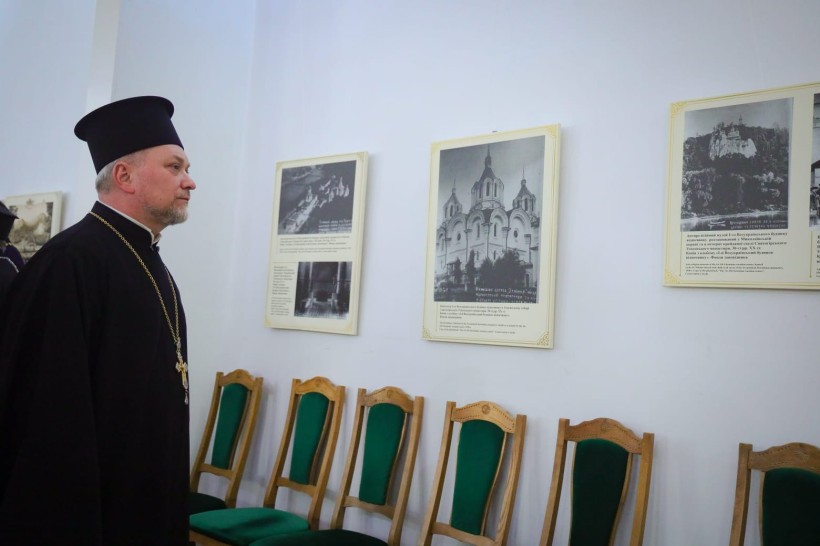
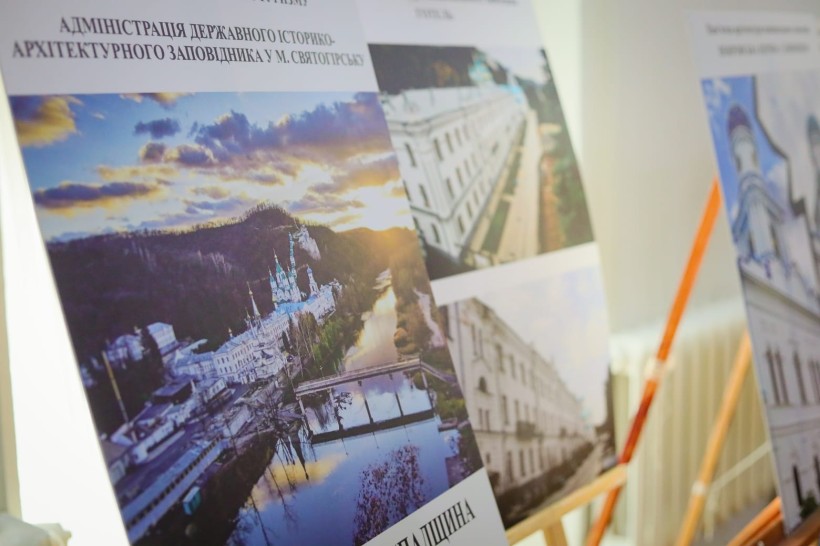

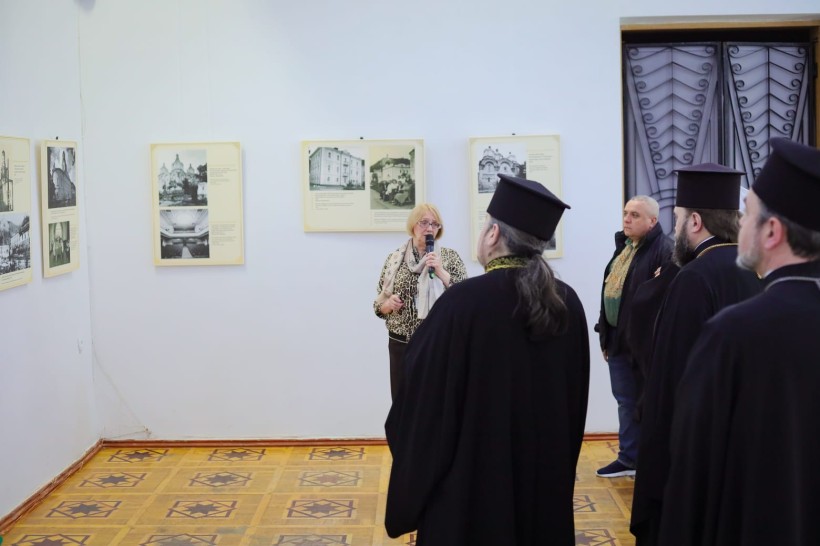
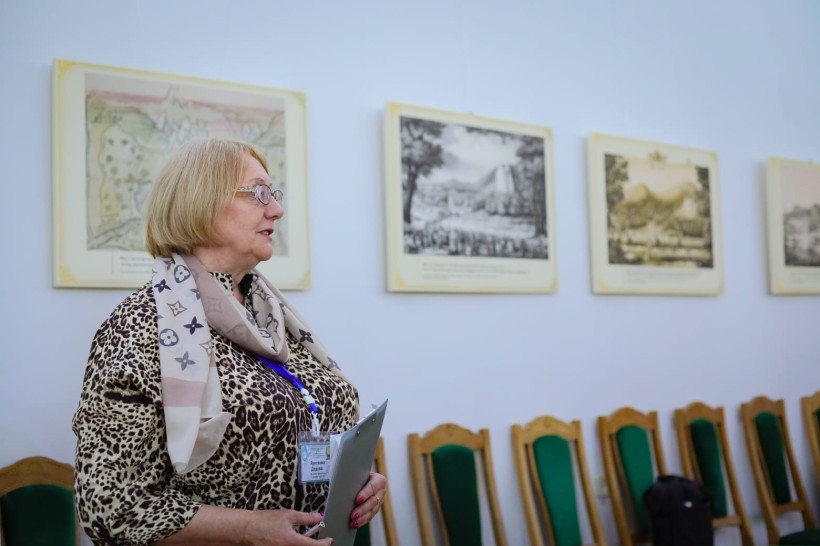
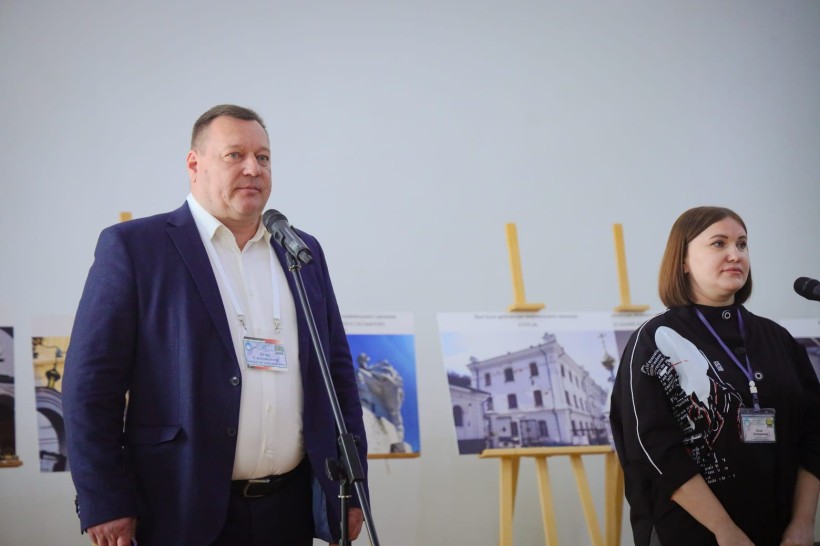
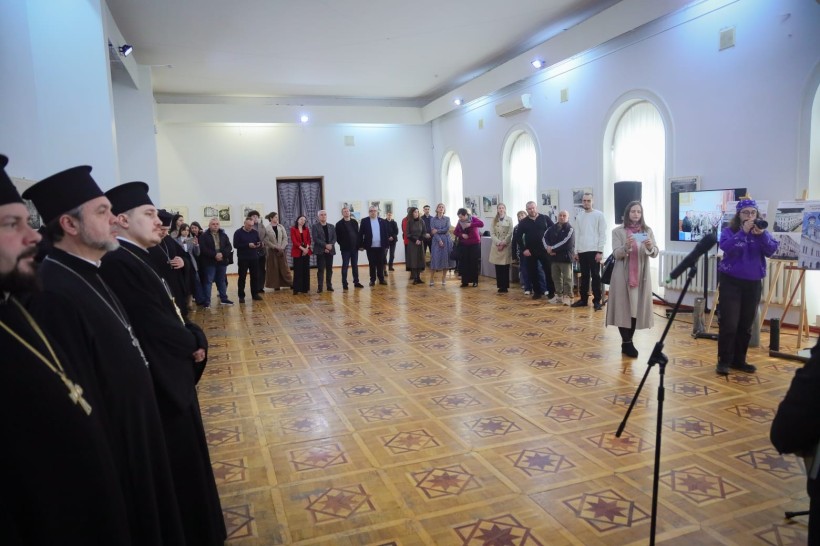
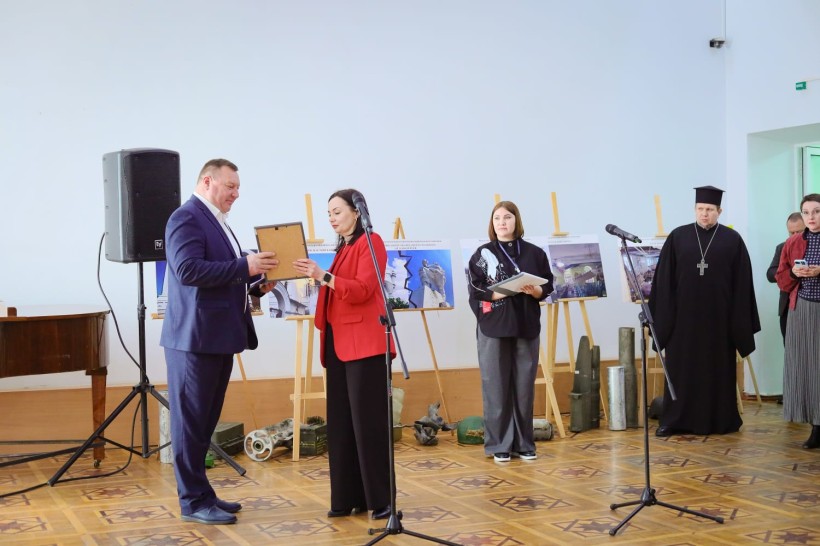
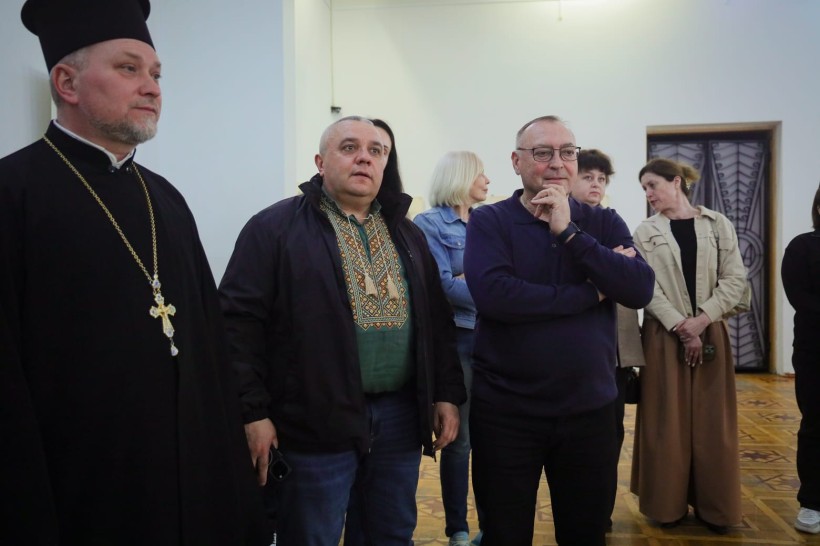
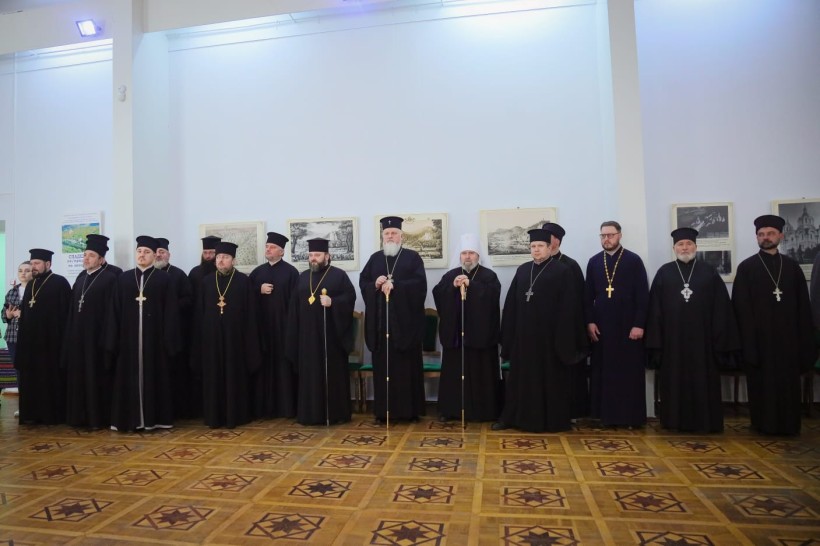







On the eve of International Day for Monuments and Sites and Ukraine’s Day of Historical and Cultural Monuments, the Vinnytsia Regional Local History Museum hosted a cultural and artistic event titled “Silent Witnesses of History,” centered around the presentation of the exhibition project “Heritage Not Doomed to Destruction.” This event became a symbolic space for remembrance and reflection, where the voice of the State Historical and Architectural Reserve in Sviatohirsk is heard. The event brought together those for whom the words “home” and “memory” hold special significance: internally displaced persons, military personnel, veterans and their families, as well as concerned residents of Vinnytsia.
The main goal of the event was to bring the issue of cultural heritage preservation out of the realm of purely museum-based discussions and into the broader public sphere. In the face of modern challenges, the sites of the Svyatogorsk Reserve have become symbols of fragility and, at the same time, incredible strength.
The organizers placed special emphasis on the tragic transformation of sites in the Donetsk region. Visitors had the opportunity to trace the history of these monuments: from their creation and heyday to their current state, ravaged by war. The exhibition vividly demonstrates how architectural masterpieces are transformed into “silent witnesses” bearing the scars of history.
The exhibition “Heritage Not Doomed to Destruction” served as a platform for an important cultural and educational dialogue. During the event, the sentiment was repeatedly expressed that cultural heritage is not merely stones or old tomes; it is the foundation of our national identity.
Heritage remains a factor in intergenerational continuity. When the enemy attempts to destroy our history, its preservation becomes a form of our resistance.
The event in Vinnytsia confirmed once again: the cultural front holds firm. The event demonstrated that even in the most trying times, Ukrainian society retains the capacity for a deep awareness of its roots.
Svyatogorsk today is not just a geographical point; it is a symbol of our shared responsibility for what we pass on to future generations. The exhibition has once again proven: as long as we remember, explore, and preserve—our heritage is not doomed. It is alive, it is fighting, and it will surely be reborn.