
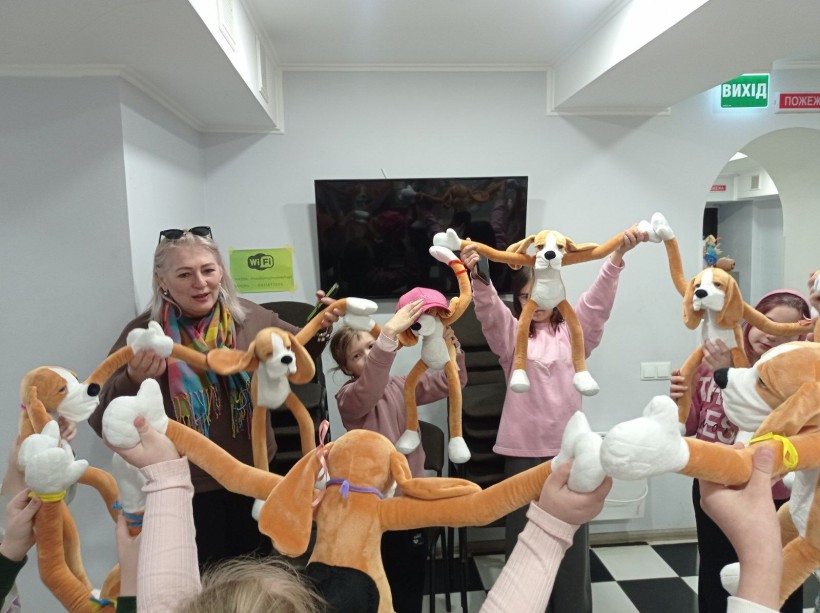







Clinical psychologists from the Donetsk region are conducting a series of training sessions on Hibuki therapy in the Kyiv region. As part of mental health support initiatives, therapeutic sessions have begun in Fastiv, focusing on the emotional well-being of children and their parents among internally displaced persons from the Donetsk region.
Today, children, just like adults, are experiencing complex emotions—anxiety, fear, tension, and insecurity. It is often difficult for them to express their feelings in words, but they need understanding, support, and a safe space. This is exactly what Hibuki therapy is for—a gentle yet effective method of providing psychological support to children through play and interaction.
Hibuki is not just a soft toy, but a “hugging dog” that becomes a friend to whom a child can confide their feelings. During a therapy session, the young participants get to know Hibuki, engage in psychological exercises in a playful format, practice calming and stabilizing techniques, and receive support from the therapist in expressing their emotions through safe practices.
The sessions are led by specialists who work with children’s mental health with care, taking into account the age-specific characteristics and individual needs of each child.
And for parents, this is an opportunity to better understand their child’s emotional state, receive guidance, and see how simple tools can be used to support their child every day.
Using special Hibuki therapy techniques, psychologists create a space where every child can feel that their emotions matter, that they are heard and supported.
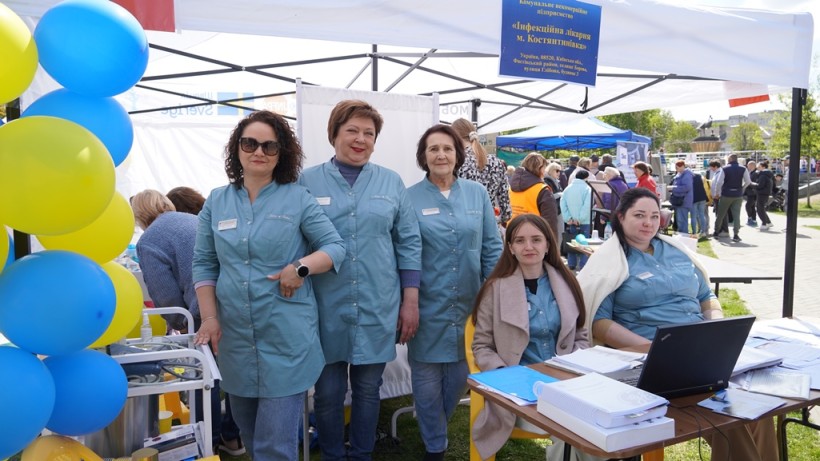
At the same time, the Kostyantynivka Infectious Diseases Hospital, which was relocated to Fastiv, is conducting outreach work with displaced persons from Donetsk Oblast. At an outdoor location in the city center, medical staff drew residents’ attention to common infections during wartime, distributed leaflets about the first signs of illness, and explained when to seek medical attention.
They also provided information about the relocated hospital’s capabilities for diagnosis and treatment. During the informational session, people could take rapid tests for viral hepatitis or HIV, have their blood pressure or oxygen saturation measured, and get an electrocardiogram. In total, over the course of the day, medical staff from the Kostiantynivka hospital provided 176 services to those who sought them.
The informational event was also beneficial for doctors from the Donetsk region, as it provided an opportunity to communicate with colleagues and learn about new diagnostic and treatment methods used in various hospitals across the Kyiv region.