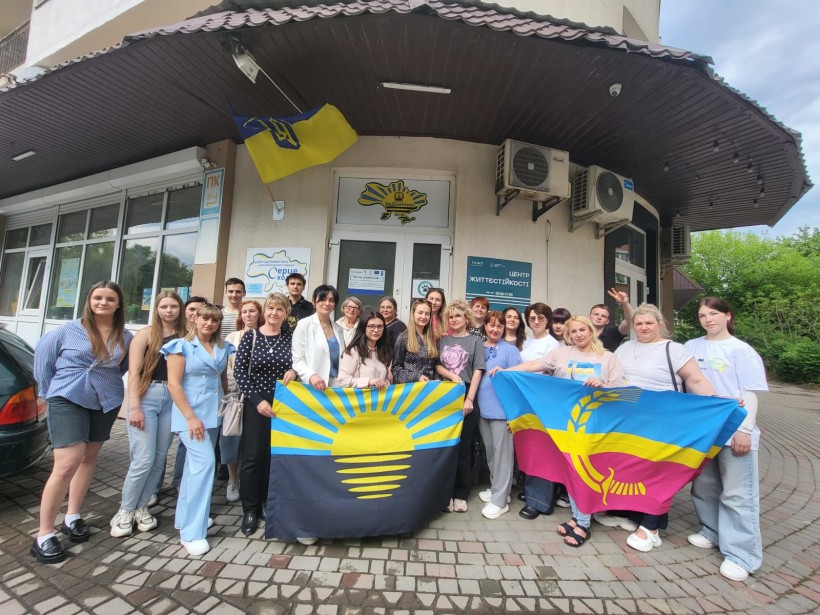
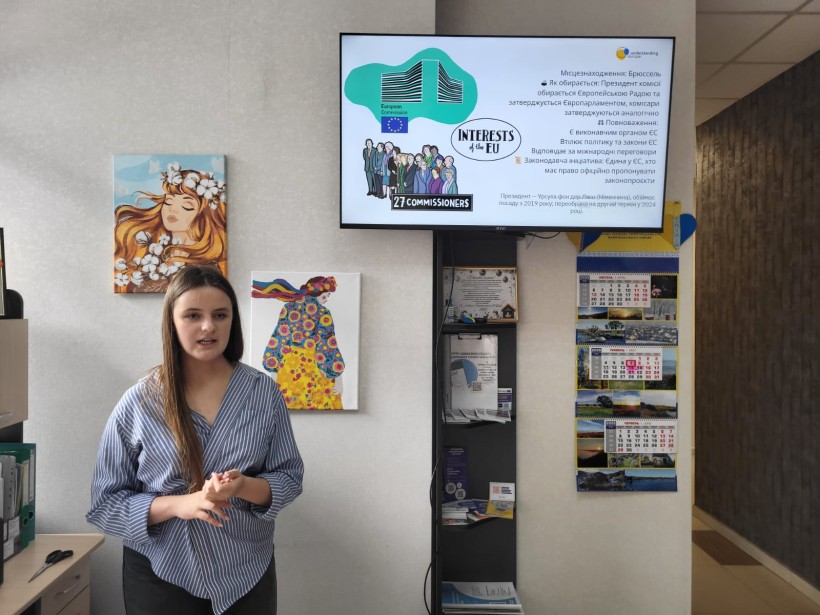
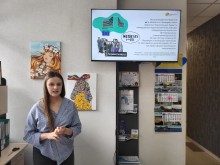
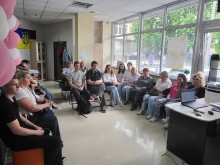
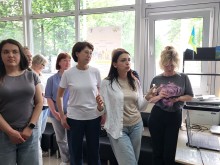
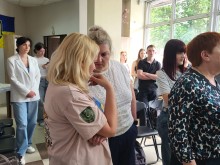
On May 7, 2026, a themed event titled “The European Union: What is it?” was held to mark Europe Day. The event was organized by the Department of Family, Youth, and Public Events for National and Patriotic Education of the Regional State Administration, in collaboration with the Sartana Community and the international network “Understanding Europe.”
The event took place in Lviv at the “Heart of the East” Multifunctional Support Center for IDPs from the Mariupol District. This is not just an administrative space, but a true hub of unity, where every corner is filled with an atmosphere of comfort and safety.
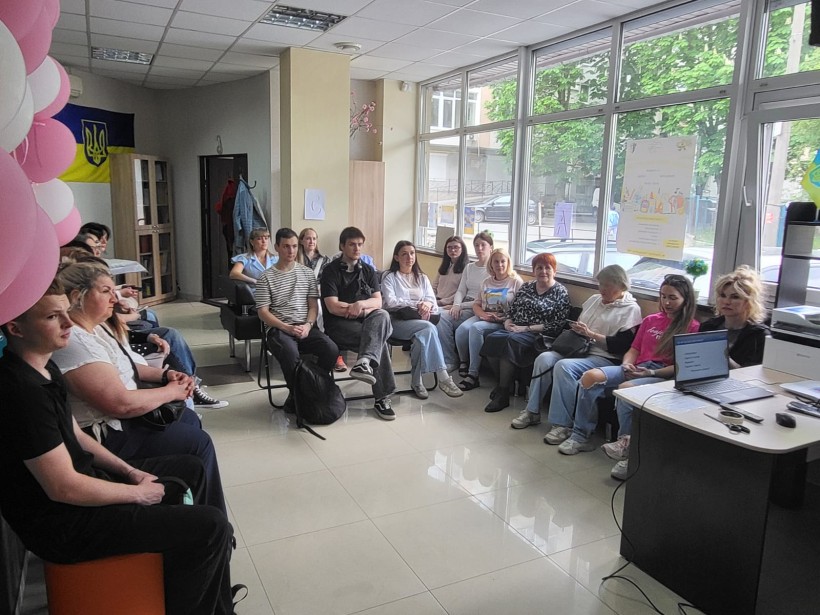
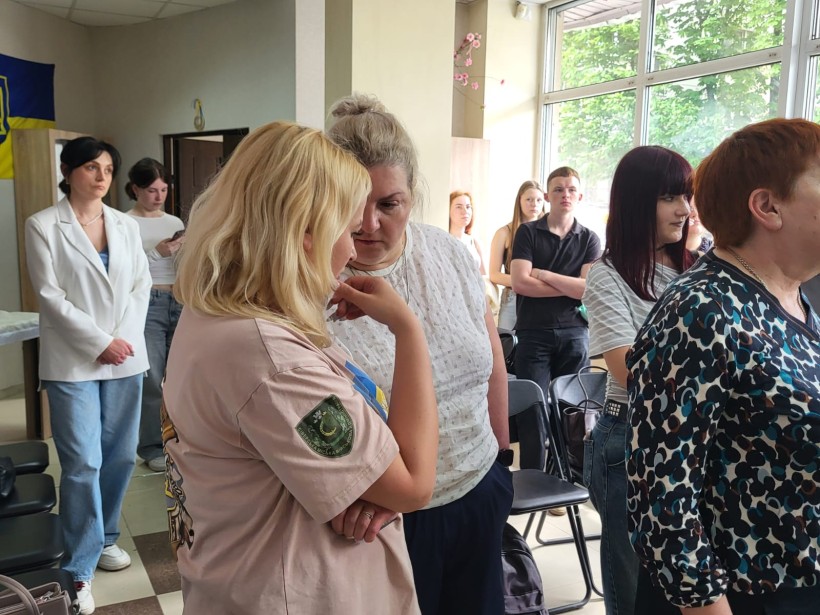
For many participants who were forced to leave their homes due to the war, the Center has become a place that feels like home. A special spirit of “belonging” prevails here: instead of formal offices—open spaces for interaction; instead of distance—sincerity and support. It was precisely this “homey” atmosphere that allowed the educational training session “The European Union: What is it?” to take the form of a lively, friendly conversation rather than a dry lecture.
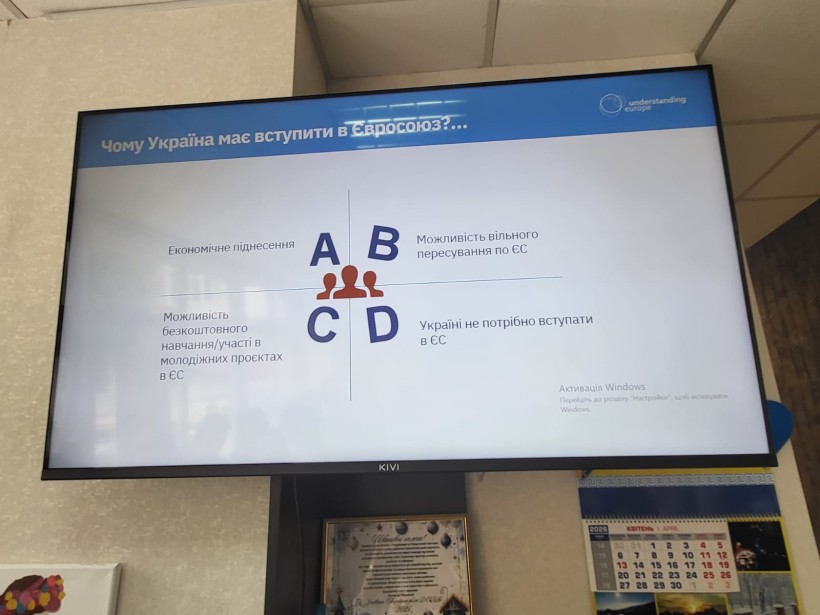
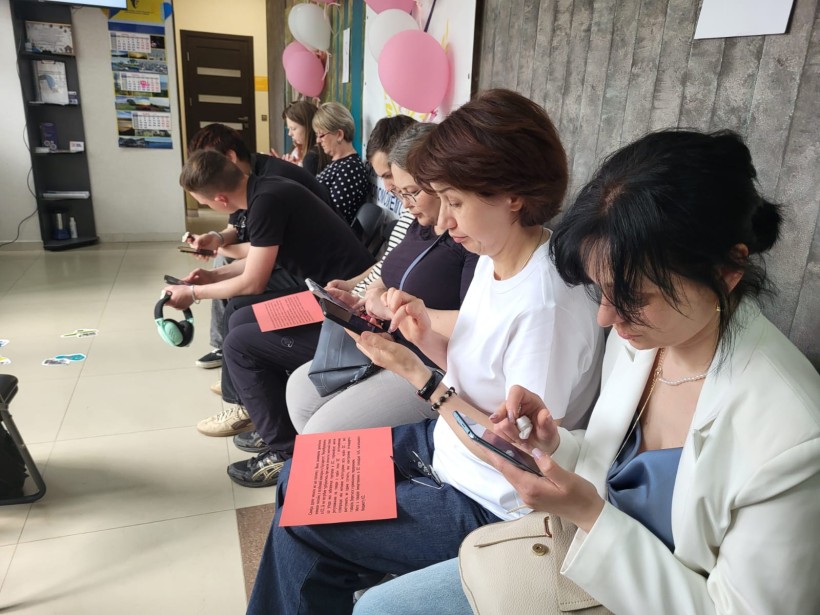
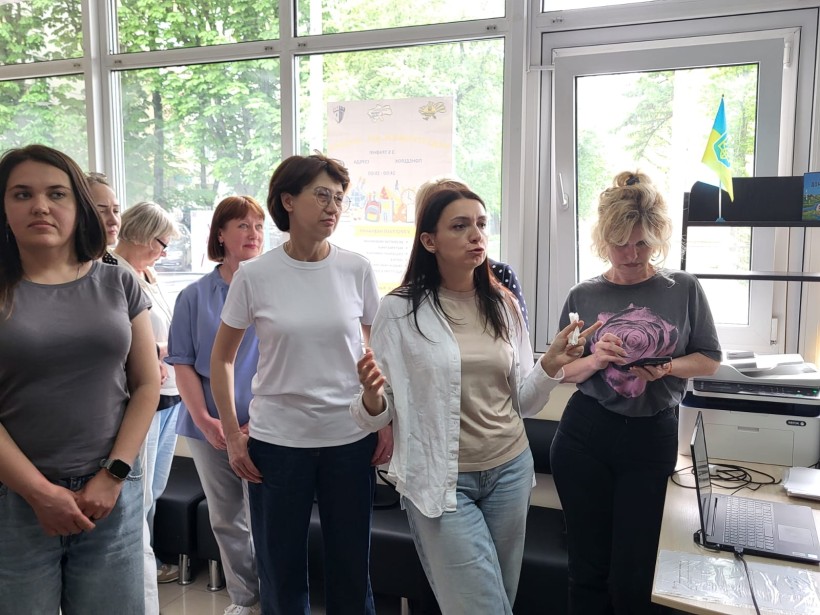
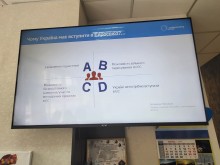
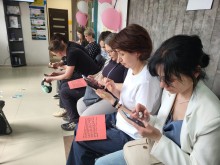
The training program began with interactive networking, where special icebreakers helped participants establish effective communication from the very first minutes. During the “4 Corners” discussion panel, there was an open exchange of views on personal perceptions of Europe and the shared values that unite Ukraine and the EU. Participants explored the history of the European Union’s formation through a game-based historical tour that successfully combined theoretical segments with team-building activities.
Particular attention was paid to the “construction workshop,” where event participants “assembled” the structure of European institutions themselves, gaining a detailed understanding of the decision-making mechanisms and areas of responsibility of each institution.
The final stage consisted of teamwork and a creative presentation, during which mixed groups of local government officials, youth workers, and active residents of the region presented their own vision of modern Europe and the role of Donetsk Oblast in pan-European processes.