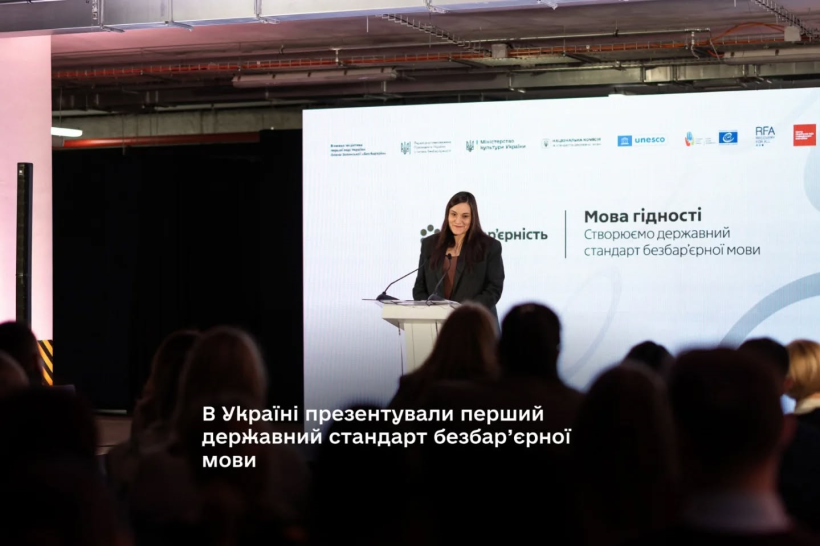
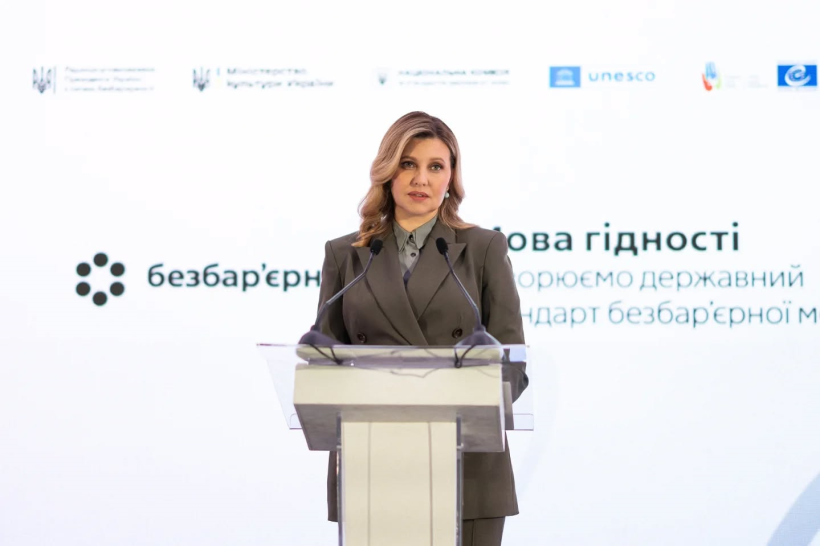
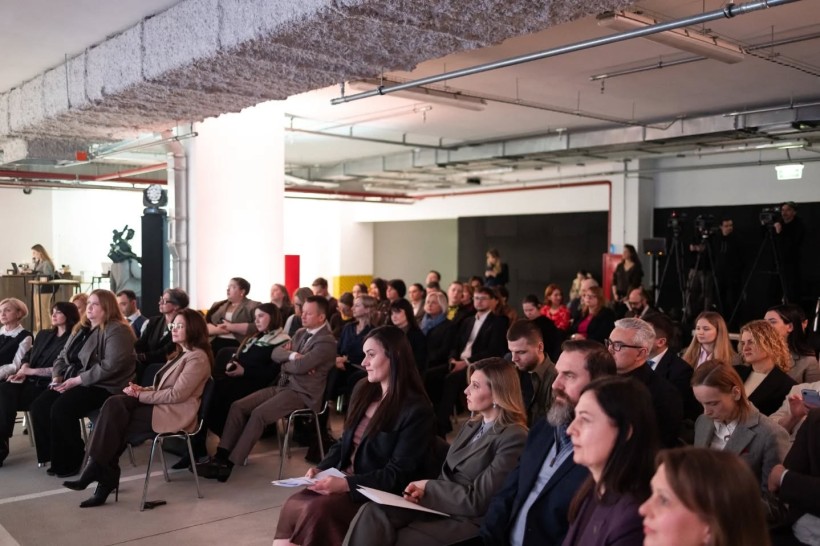
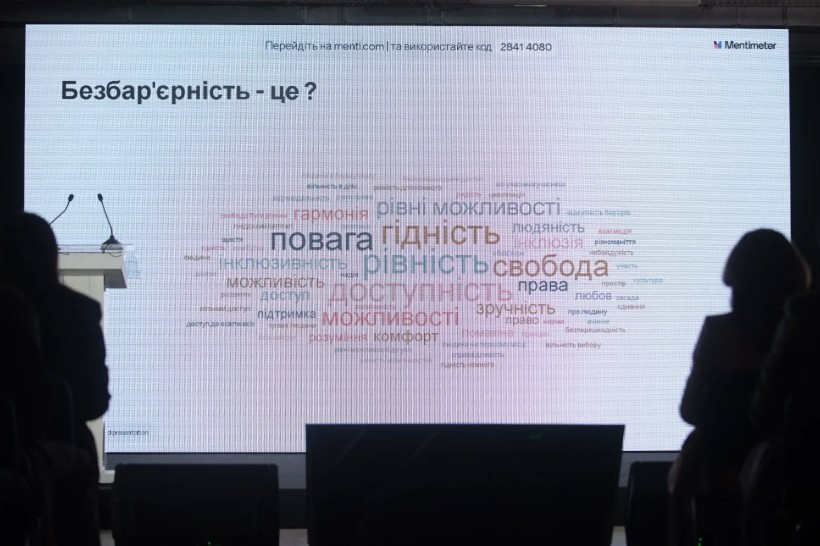
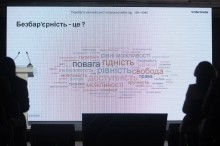
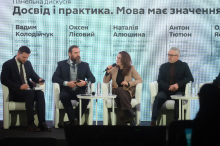
The document is the result of a year-long effort by an expert group formed by the National Commission on State Language Standards and continues the initiative of Ukraine's First Lady Olena Zelenska, "Without Barriers." For the first time, non-discriminatory vocabulary in official communication has been standardized at the regulatory level.
The standard covers about 100 terms related to the rights and opportunities of people with disabilities, people with limited mobility, neurodiverse people, veterans, parents with children, and other citizens who may face prejudice.
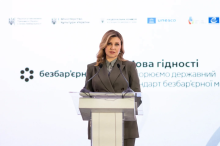
During the presentation, Olena Zelenska emphasized that accessibility begins with words:
"By introducing a single standard for accessible vocabulary, we are creating a common space of respect for the entire country. True accessibility begins when we stop describing people in terms of barriers and consciously choose the language of dignity."
In her speech, Deputy Prime Minister for Humanitarian Policy of Ukraine – Minister of Culture of Ukraine Tetiana Berezhna called language the foundation of accessibility. She noted that a state is measured not only by the quality of its services or infrastructure, but also by how it speaks to its citizens:
"Language shapes public opinion. Words can create barriers, or they can break them down. We are working to ensure that the state's words are words of respect," she emphasized.
The content of the standard was developed with the participation of experts from the Council of Europe, UNESCO, and the Recovery for All (RFA) project, which is funded by the Government of Canada and implemented by Alinea International.
The document is already available on the website of the National Commission for State Language Standards: https://bit.ly/40Dvvoh
The presentation of the standard marks the start of an educational and informational program on non-discriminatory language, which is being implemented by the National Agency for Civil Service of Ukraine as part of the "State Without Barriers" project.
Barrier-free access begins with words — and the state is shaping this standard of respect.
Based on materials from the Ministry of Culture of Ukraine